Sitedesk targets mobile BIM market

Sitedesk is a new name in the BIM and collaboration world, marketing a mobile solution that has just been adopted for a Balfour Beatty coastal defence project.

Model view of coastal defencesWyre Council in Lancashire has selected collaboration technology from a Manchester-based company Sitedesk to support Level 2 building information modelling (BIM) during a five-year contract to construct and maintain the Rossall coastal defence scheme, part of the £73 million Fylde Peninsular Coastal Programme in north west England.*

Predominately funded by the Environment agency, the £53m Rossall scheme covers approximately 2km of coastline and will protect 7500 low lying properties from flooding. The area is subjected to some of the largest waves and strongest currents on the Fylde coast. Wyre Council is one of the leaders in the UK public sector push towards BIM adoption by 2016. Balfour Beatty, the main contractor on the programme, is fully utilising BIM to deliver the project.

Sitedesk’s technology can be deployed in the office or in the field. Using it, Wyre Council’s project team will capture data about the coastal defences during construction and will then reuse it to optimise operation and maintenance throughout the defences’ working life, says Sitedesk sales director Rob Umphray.

Sitedesk background

Sitedesk logoSitedesk is a Manchester-based company specialising in the development of software tools to support building information modelling and collaboration in construction projects. Founded in 2012 and backed by £435,000 from the North West Fund for Digital & Creative (managed by AXM Venture Capital) in April 2013, it draws on employees’ experience in the construction industry and collaboration software development.

Previous development of Sitedesk had been funded by two directors at ACS Construction Group, a regional contractor based in Cheadle Hulme, Greater Manchester (both are now non-execs and retain 27% stakes in the company). Sitedesk is chaired by former Eleco Software COO Craig Slater (Eleco’s subsidiaries include Asta Development, the developer of Asta PowerProject). Another director is former Yuuguu (web conferencing and screen-sharing software) CTO Chris Sewart.
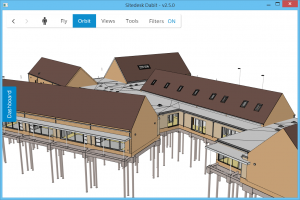
Sitedesk BIM - fully federated schoolRob told me the company had taken a conscious decision not to market itself aggressively in its early days, wanting to be sure that the product was right and to build up some customer adoption stories. However, sources tell me Rob was at BIMShowLive in Manchester in June, talking about use of Sitedesk on a school project in Waterlooville, Hampshire, following a presentation by Allister Lewis of Hampshire County Council. Rob tells me that the school has been completed and the final accounts are in; savings of £48,000 and the achievement of zero rework on the project have been directly attributed to Sitedesk by Jon Chew, Balfour Beatty’s site manager, he says.

Sitedesk provides secure access to data stored in a remote hosted environment and is accessible from mobile platforms (Windows and Apple iOS) as well as desktops or laptops. Being app-based, Sitedesk can also be used out on site even when there is no internet connectivity, and the interface is designed to be used even when workers are encumbered by hard-hats, safety glasses and gloves and working with devices in protective cases in poor weather.

The platform supports outputs from all the common BIM authoring tools – from Autodesk’s Revit and Civil 3D to Bentley Microstation, plus the IFC format – and is able to handle large, highly detailed, federated models. Sitedesk also enables users to deploy existing ‘paper-based’ forms and templates electronically as well as an inbuilt digital forms and workflow creator that allows automation of site processes (permits, quality, method statements and health and safety) without users having to change their workflows (and the notifications stay in Sitedesk, not being pushed as email – Should construction dump email?). The platform provides access to COBie data too, and Sitedesk have developed tools that allow subcontractors to provide required information in the right format direct to the data model.

My view

I have yet to see a live demonstration of the technology, but from what I’ve learned to date Sitedesk appears a robust and user-friendly addition to the mobile BIM market. At last week’s COMIT community day, I heard BAM Nuttall’s Victor Snook talk enthusiastically about how his company was using Autodesk’s BIM 360 Field to capture data onsite, and Sitedesk seems to compete in the same market, along with Bentley Navigator Mobile (among others). Mobile-centric BIM collaboration is also attracting UK-based start-ups – this year, for example, I’ve talked about Basestone and about Cadbeam – while I expect the existing SaaS construction collaboration vendors will be thinking about adding mobile BIM capabilities to complement their existing platforms and mobile tools. Instead of trying to develop their own solutions, perhaps working with Sitedesk might prove a quicker way to deliver such capabilities?

[* Disclosure: I was contacted by Sitedesk and provided PR consultancy services to the company including work on its news release. This blog post was not part of the deal.]

Permanent link to this article: https://extranetevolution.com/2014/10/sitedesk-targeting-mobile-bim-market/

Nemetscheck nets Bluebeam for $100m

Nemetschek logoBluebeam logoNemetschek, the Munich, Germany-based software group which includes Allplan, Vectorworks, Graphisoft, SCIA and Maxon, has announced that it is acquiring the US business Bluebeam Software, a provider of PDF-based collaboration solutions for architecture, engineering and construction professionals, for $100 million, creating a portfolio offering both BIM authoring and drawing-based workflow solutions.

Richard Lee, CEO of Bluebeam said:

“Today is an exciting day for Bluebeam Software and Bluebeam users alike. With its Open BIM philosophy, Nemetschek is committed to making project information available to everyone, a belief strongly held by Bluebeam as well. I look forward to working together to make digital project collaboration easier than ever.”

While Nemetschek solutions are extensively used in Europe and Asia, it has less penetration in north America. Bluebeam PDF editing, mark-up and conversion tools (eg Revu, Vu) are used by 74% of top US contractors and 64% of top US design Firms, according to Engineering News-Record top 50 firm rankings, so this acquisition will reinforce Nemetschek’s market presence in north America.  Nemetschek AG CFOO Patrik Heider said

“Bluebeam is a perfect addition that strengthens our solution portfolio across the life cycle in the building process by adding drawing-based workflows to augment our model-based BIM workflows. As a result of the acquisition, we reinforce our goal of rising to become the world-leading open standards provider in the AEC market.”

According to the news release, Bluebeam will continue operating with its current management team and as an independent brand company – this is pretty much in line with Nemetschek’s normal strategy which allows its brands to function relatively autonomously. It will be interesting to see how this develops particularly in relation to Adobe and to Nemetschek’s BIM authoring rivals such as Autodesk and Bentley – I recall Bentley had a close working relationship with Bluebeam (AEC Magazine covered this in its account of the 2011 Bentley BE Inspired event).

Permanent link to this article: https://extranetevolution.com/2014/10/nemetscheck-nets-bluebeam-for-100m/

Should construction dump email?

FieldLens identifies the time-sink that is email and reopens discussion about the role of email in construction projects.

“Should the construction industry dump email?” is the provocative title of a blog post by Kelly Lignos Ziv writing for New York-based mobile construction collaboration vendor FieldLens, and it returns to a topic I’ve discussed many times (my anti-email argument started in 2006, and it’s a theme I’ve returned to frequently).

FieldLens New York officeKelly points out that for many people a big part of the construction communication problem “is the overwhelming number of emails received by just about anyone who has anything to do with the job”. She quotes the example of an Irish education technology organisation, profiled on Fastcompany, which decided to opt out of email, relying instead on social media and on various project and task management platforms, depending on the type of communications that needed to take place. Kelly says FieldLens staff use their own platform – described in 2013 as Facebook for construction – to run their internal projects, not email (read Doug Chambers’ post), and Daryl Lang mentioned it when I visited the FieldLens office (above) in August (it only looks quiet as most of the developers are in a stand-up meeting in the office at the back!).

“Pull” and “filter”

I would add another example I found this week – thanks to Twitter – and also based on a Fastcompany article: Inside the company that got rid of email. Finding that email was absorbing 30% of every working day, Christian Rennella banned email and replaced it with a custom-built project management platform. This presents a list of projects that each individual and team is working on, showing what needs to get done, what’s been completed, and how long it should take; it also shows what everyone is working on at a given time. Importantly, the site has no notifications. To see an update or a new project, employees have to login – to “pull” the work: “employees select their day’s work, and are not motivated by an urge to click a blinking icon”.

Luis SuarezDiscussing that article with EngD researcher Natasha Watson on Twitter, I cited the example of Luis Suarez, an IBM executive who decided to opt out of email (read this 2012 Wired article), and within minutes Luis (@Elsua, right) joined our Twitter conversation (I met Luis after hearing him speak at a social media event in London a couple of years ago; I first heard about him in 2008 when social technologist Suw Charman-Anderson mentioned him when talking about “Death to Email” at the very first Be2camp). Luis confirmed that it was perfectly possible for individuals to work for eight years (so far) without email.

In a discussion at last week’s COMIT conference about information overload, I swiftly responded with Clay Shirky’s famous “There is no such thing as information overload, only filter failure“. I said that I use Twitter for many email-type exchanges (I even negotiated a project yesterday with a prospective client via Twitter Direct Messages), use Gmail tabs and other tools to filter my emails, and use Google Alerts and Twitter searches to find just the news I want to see.

“Email: that’s so last century.”

At the same event I had earlier talked about Gen Y and Gen Z approaches to communication, and if I think about my children’s use of technology, it is clear we have a cohort of natural collaborators and communicators who are intuitive multi-taskers and users of real-time VOIP, chat and other instant messaging tools. This generation will be entering the professions over the next decade or so, and will be frustrated if corporates try to stifle their natural instincts for near-instant sharing of information.

A new wave of technology businesses – FieldLens is one of several I’ve looked at over the past year or so – are clearly gearing up to offer environments that facilitate 21st century collaboration, not continue to drive it into silos through email. As my daughter once told me: “Email: that’s so last century.”

(A note for your diaries: 5 May 2015 is No Email Day.)

Permanent link to this article: https://extranetevolution.com/2014/10/should-construction-dump-email/

NoteVault extends daily reporting reach

NoteVault logoNoteVault is a California-based developer of mobile daily reporting technologies for the US construction industry, growing its market partly through a solution integration strategy.

One of the first major acquisitions in the SaaS construction collaboration sector was Autodesk’s $46m purchase of Constructware in February 2006 (post). Competitors’ fears that the powerful workflow features of Constructware would be migrated to a revitalised Buzzsaw proved unfounded, and three years later there was considerable industry discussion about whether Autodesk would even continue support for Constructware (April 2009). These rumours were hastily denied by Autodesk executives, and new Constructware releases were rolled out, but with little or no marketing fanfare.

It was therefore something of a surprise when a long-dormant Google Alert suddenly pinged a news release into my inbox: NoteVault Completes Integration with Autodesk Constructware. But at least it’s put mobile technology provider NoteVault on my radar.

NoteVault

NoteVault system integrationFounded in 2007 and employing (May 2014) 24 people, NoteVault is a San Diego, California-based provider of voice-to-text-based mobile daily reporting solutions for the commercial construction industry. Its integration with the “widely used” (its words) Constructware is the latest in a string of tie-ups with other US-based construction software vendors, the product development part-funded by an April 2014 investment from West Partners.

Instead of relying on hand-written notes often compiled from memory, time and date-stamped daily reports (effectively, site diary entries) can be rapidly created by voice, text, email, app (iOS and Android options) or Evernote, and are then securely stored in NoteVault, from where they can be viewed online, issued as alerts or notifications, or published as PDF reports with searchable data.

The data can be shared with solutions including CMiC, Trimble’s Prolog, Viewpoint, Spectrum (and now Constructware), while the PDFs can also be filed to user-specified Box or Sharepoint locations.

NoteVault appears to be only marketed in the US (the company has further offices in Boston, Chicago, Dallas, Houston, Los Angeles, Phoenix, Seattle and Tampa), though customers include some international names such as Aecom, URS and Atkins. Pricing starts at $20/month per user for standard reporting (which excludes human transcription of voice notes), or $80/month with unlimited professional transcription.

Permanent link to this article: https://extranetevolution.com/2014/10/notevault-extends-daily-reporting-reach/

Specifiedby’s Beta advanced product search

specifiedby.comSpecifiedby continues to develop its construction product selection tools, testing an advanced product search tool to help specifiers find exactly the product and associated information they need.
I met Darren Lester, CEO of Specifiedby, on Monday for a quick lunchtime beer in London. He gave me an update on how the platform had moved forward since we last spoke, following the seed funding round announced in April 2104.

SpecifiedBy (based in Edinburgh and Newcastle) aims to affect the construction industry in the same way TripAdvisor has affected the travel sector. SpecifiedBy gives architects and other construction professionals an online platform that combines smart search, project management and access to the shared knowledge and – vitally – recommendations of other industry professionals regarding building products and materials. It also provides the associated building product information and design data, such as BIM and CAD content.

Specifiedby-advancedproductsearchAdvanced search

The advanced smart search is now working, although it is very much at a Beta testing stage (Darren said there were “some bugs and quirks still to work out, but … we believe in giving our members access to what we’re working on early, to ensure we build the best tool possible”). Results are also limited by the amount of data Specifiedby has for the searched products (clearly, the more manufacturers that sign up, the more comprehensive the range of products that will be displayed). Once refined and polished, the test design will be ‘baked’ into Specifiedby’s core search and filters. Darren also told me the overall platform would also be getting a bit of a revamp to make the user experience more coherent and intuitive.

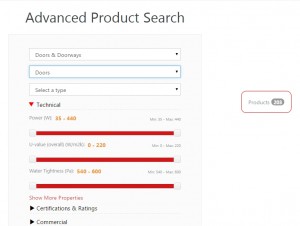
I tested it out. Drop-down menus allow you to focus your search very quickly first on broad groups of products (eg: doors and doorways), then select relevant subcategories (eg: doors), and types.

Specifiedby advanced product search resultsSlider controls can also be used to narrow searches to particular technical parameters (power, u-values, water-tightness), and, depending on the product sought, the drill-down extends to several other properties (certifications and ratings, size and weight, sustainability, etc). A product counter displays how many items remain in the remit of the search, with the figure automatically reducing as you narrow down your requirements.

Once you submit a search, all the products that still meet the criteria are displayed, along with lists of manufacturers and types of file content that might be downloaded from SpecifiedBy, including 2D and 3D CAD blocks, BIM object files, specifications, case studies and brochures. Particular manufacturers and file types can be selected to narrow down the search further, perhaps to only include those that offer BIM object data, for example.

(If you want to test out this new feature, email Darren).

Permanent link to this article: https://extranetevolution.com/2014/10/specifiedbys-beta-advanced-product-search/

COMIT combining forces with Fiatech

FiatechCOMITEarlier this year, I attended and spoke at the first European summit of Fiatech, the US-based but now increasingly international body focused on development and adoption of innovative practices and technologies to deliver business value throughout the life cycle of capital assets. The organisation is also closely aligned with the UK-based COMIT group, and next month the two will be holding a joint two-day annual conference at The Crystal, London on 30-31 October 2014.

This is a welcome expansion of what has for the past two years been one of the best – and most cost-effective – construction IT conferences I have attended (OK, disclosure: I am a member of the COMIT management team). The 2014 event will pick up the BIM, collaboration and mobile themes of previous years within an all-encompassing title: “Efficiency Through Digital Projects”, and I am told will feature presentations from Shell, Bechtel, Skanska, Balfour Beatty, Carillion, Crossrail, Morgan Sindall, Murphy, Costain, CCC, Ch2mHill, Laing O’Rourke, Mott Macdonald, HS2, Vinci and KPMG. It will also be an opportunity to learn more about the work of the joint COMIT/Fiatech Mobile IT Community of Interest group and subgroup.

Early bird booking for the conference will close shortly (attend a two day conference for just £150 plus VAT) – you can register here.


Permanent link to this article: https://extranetevolution.com/2014/09/comit-combining-forces-with-fiatech/

iSite grows revenues 33%

iSiteThe financial fortunes of the smaller players in the UK SaaS construction collaboration technology market are often a good indication of the overall health of the sector. Having seen major vendor Conject UK report 2013 turnover up 16% earlier this month, Styles & Wood’s specialist information management subsidiary iSite has also reported revenues growing.

In the first six months of 2014, according to an interim statement reported on the London Stock Exchange, it generated revenues of £0.843m, up 33% on £0.632m for the same period in 2013. Margins were slightly under pressure: iSite generated £21k in profit in the same period, as against £41k last year. The report noted that iSite’s  Building Intelligence Hub was now live for the largest banking group in South Africa.

As the business usually has a better second half, on this performance, it should finish comfortably ahead of last year’s closing revenue figure of £1.711m (profit: £279k), itself a historic high for the Nottingham-based company.

Permanent link to this article: https://extranetevolution.com/2014/09/isite-grows-revenues-33/

Aconex in November IPO?

Aconex logo 2014Industry rumours suggest Melbourne, Australia-based SaaS construction collaboration technology vendor Aconex may be listed on the Australian Stock Exchange in November, with road shows underway this month (according to The Australian). Talk of a possible IPO first emerged in mid-July (post).

Australian publications are suggesting investment banks Macquarie and UBS will take the company to the analyst road show in late September and the management road show in mid to late October. The book build is slated for late October, but the size of the offer has yet to be disclosed.

The company apparently received favourable feedback from a non-deal road show in July, especially with Asian investors who liked the story of taking Australian expertise global. Aconex has expanded aggresively overseas, with a strong push in north America in recent years.

Update (7 October 2014) – Australian newspapers have been speculating that the IPO will value Aconex in the range of AU$400m-AU$700m, with founders Leigh Jasper and Rob Phillpot retaining a minimum 15% stake (see also this Smart Company article).

Permanent link to this article: https://extranetevolution.com/2014/09/aconex-in-november-ipo/

VFA enters UK SaaS asset management market

Capturing and analysing data about existing built assets is being enabled by mobile and SaaS technologies. VFA is now competing in the UK market.

While much of the UK debate about building information modelling has been about accommodating the varying needs of people involved in the design and construction phases of an asset’s lifecycle, only in the last year or so has there been deeper discussion of the owner/operator’s longer-term asset information requirements. The publication of PAS1192 Part 3 in March 2014 has helped with this (as have various conferences covering operation and maintenance needs – thinkBIM in Leeds on 9 July returned to the topic for a third time), and I think the industry is also beginning to understand that BIM can also be retrospectively applied to existing buildings and other facilities.

This is a central argument made by Kykloud‘s Ed Bartlett, among others, who argues that design geometry is just part of the information needed to run capital assets (post). Powerful Software-as-a-Service data aggregation, analysis and reporting toolsets can help owners and facility managers make informed decisions about their assets, and US-based VFA is now providing facilities assessments, using “cloud-based software with analytic tools that drive actionable capital plans” in the UK.

VFA

VFA logoChris Low (VFA UK)Over the past 15 years since it was founded in Boston, VFA has shown over 800 organisations how to ensure that their facilities optimally support their strategic business objectives, helping reduce risk, lower costs, improve service quality and customer satisfaction, and satisfy compliance requirements. Its facilities assessments are tailored to organisational needs, and can be delivered online by VFA’s or the client’s staff. VFA has now started growing a Reading-based UK business, managed by Chris Low. Formerly EMEA sales and key accounts manager at MRI Software, and with a background in property consultancy services, Chris explained to me how VFA’s suite of software tools can be used.
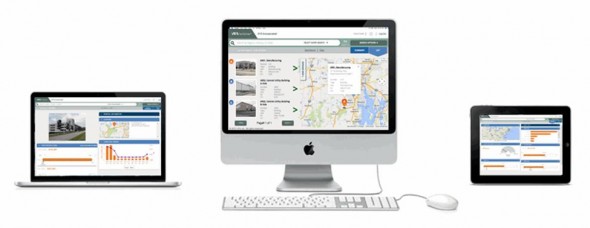
    1. First, he said, data is collected through a cloud-based guided self-assessment solution, VFA.auditor, that creates surveys to rapidly collect facility and building condition data via an iPad or Android tablet. Users can collate wide-ranging asset information including location, structure, type, uses, conditions, requirements and associated costs, and related projects and plans.
    2. Next, that data can be imported into VFA.facility, a cloud-based configurable dashboard solution for facilities capital planning and management which helps facility managers, capital planners, financial analysts and executives visualise their data and make optimal decisions about facility spending, sustainability investments and capital planning.
    3. Real estate data from VFA.facility can also be quickly and securely shared with selected stakeholders, via a further application, VFA FacilityView.

FacilityView

  • Asset information can also be integrated, via AssetFusion, with information held in computerised maintenance management systems such as IBM’s Maximo.

The VFA tools thus enable users to quickly and easily search for assets meeting certain criteria, see summary statistics about a selected assets, view locations on a map, and dive into key asset details, including requirements by priority, category or system.

In the UK, Chris told me VFA is successfully winning work from large PFI stakeholders, in market sectors such as healthcare, and with major owners of distributed assets. He also highlighted that the VFA product suite wasn’t just about buildings but included a module for linear and infrastructure assets (steam, water, electrical distribution systems, sanitary and storm sewers, carparking, pedestrian paving, etc).

What-if scenario planning

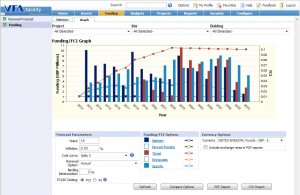
screenshot1With Chris’s VFA colleague, director of product marketing David Isaacson, we also looked at how the system uses industry-standard Facility Condition Index metrics to set targets for investment programmes. VFA uses CIBSE-defined standard condition ratings, and BCIS cost data to define the lifecycle costs for each system in a building, and calculates the FCI (calculated by taking the capital needs and dividing by the replacement value of the building – see Wikipedia article); the lower the FCI value, the better the condition of the building. With this information, clients can calculate how much funding will be required to achieve a particular FCI, and scenarios can be defined that show – scientifically, transparently and defensibly – the impact of different funding levels.

Capital needs prioritisation

VFA screenshot 2VFA also helps clients decide where, when, and how much to invest by demonstrating that these investments align with the their objectives. VFA’s Capital Budgeting and Ranking Module allows clients to develop multiple strategies to assess different prioritisation approaches. These strategies can include data elements beyond condition, assessing, say, how mission-critical the asset is, what the risk and impact of failure might be, and how well the asset meets the client’s functional needs. Pair-wise analysis processes are deployed, testing the relative importance of individual items in order to achieve an overall rank ordering.

As a result, strategies can be developed to rank all capital needs with budget as an overall constraint. This helps ‘depoliticise’ prioritisation decisions, helps clients develop different strategies for different projects, different parts of the estate, and different investment objects, and allows multiple objectives to be met while making sure that the most important issues are addressed in a timely fashion.

Permanent link to this article: https://extranetevolution.com/2014/09/vfa-enters-uk-saas-asset-management-market/

GTeam added to Trimble Buildings portfolio

Trimble logoTrimble has made another significant move, acquiring (for an undisclosed amount) the software business Gehry Technologies (GT), the software and consulting services business that has been key to cost-effectively delivering US-based architect Frank Gehry’s ground-breaking designs (also, last month, Trimble announced it had acquired London-based FM software developer Manhattan Software).

In April 2012, industry watchers were surprised when Trimble added Google’s Sketchup application to its portfolio of built environment applications, which already included Tekla and the (formerly Meridian-branded) project collaboration tools, Proliance and Prolog (see post). Some six months later it added the 5D BIM solution Vico and established the Trimble Buildings design-build-operate (DBO) division to manage them all (post), and underlined its ‘Open BIM’ approach.

GTeam

Gehry’s practice has deployed Dassault Systemes’ CATIA platform, but the Digital Project design authoring suite does not appear to be part of the transaction (GT’s website says “GT no longer develops Digital Project, but our colleagues over at DPI would be happy to help you“). The Los Angeles-based GT’s main product, therefore, is a web-based file management and project collaboration platform, GTeam, which is supported by a 10-office GT network offering professional services. It seems, then, that GTeam will add some more BIM-oriented capabilities to complement Trimble’s existing project and programme management offerings.

Trimble will integrate the design tools and professional services of Gehry Technologies into its own forthcoming DBO software solutions platform, according to Trimble CEO Steven W. Berglund:

“Frank [Gehry] has built what amounts to a collaboration platform which enables various project members to share the entire model. It’s a good fit for our emerging DBO platform. … Professional services is not historically a part of Trimble. But the ambition is that [Gehry Technologies] will become a platform for the wider growth of Trimble in engineering and construction realm. We would hope that these offices can become a platform for engaging the international construction industry.”

Permanent link to this article: https://extranetevolution.com/2014/09/gteam-added-to-trimble-buildings-portfolio/

Load more