Live from GroupBC user conference 2017

GroupBC #GBCconf17Today, I am at the user conference of GroupBC, previously Business Collaborator, at the Coin Street Conference Centre in London’s South Bank – and will be updating during the day. As well as an overview of recent company and software developments, the day will see presentations from customers Thames Water, Sainsbury’s and Balfour Beatty, plus partners CEMAR and PCSG.

10:15am BST – CEO Sanjeev Shah has welcomed people to the day, and he updated delegates about progress since the November 2014 management buy-out. As previously posted, GroupBC revenues are growing – up 72% since the MBO – with 21 new named customers added (including Sainsbury’s, Kier and WSP). The latest release of the core software platform, BC 7.0 (“a common data environment for engineering collaboration on documents, data and geometry – that’s it! A pre-requisite to BIM Level 2 and essential for ‘Better Information Management”), is the result of over 22 man-years of development, and new sofware release cycles are down to three months.

Sales and marketing director Stuart Bell highlighted the integration potential of the core product – showing how it can be the glue between numerous different products throughout the built asset life-cycle. He talked about changing technologies (PropTech, the Internet of Things), but admitted the reality for many people is still focused around documents, while GDPR and cyber-security are posing new organisational challenges. “The power of location” is a new opportunity, he said, talking about moving from chaos to control (control of documents, data and spatial information), and showed elements of an ongoing rebranding process within the company. GroupBC remains committed to open standards and interoperability, integrations, accessibility and mobility, usability and security, Bell said.

10:25am BST – Head of account management Gavin O’Neill followed Stuart (having also followed Stuart from Union Square to GroupBC). He explained why he felt passionate about collaboration and digital construction, drawing on past project experiences (in one, a helicopter, rather than a crane, had to be used to lift ventilation equipment onto a building as an unanticipated result of design changes). What’s changed? He says we have better hardware and software, sensors, cloud hosting, AR/VR, etc – but we are generating even larger volumes of information, and not always collaborating better. This is where GroupBC can help, he says, talking about GDPR (the company has established a special interest group on this), but inviting suggestions of other areas customers are concerned about.

The BC 7.0 developments

11:20am BST – CTO Stephen Crompton presented BC 7.0, a step-change since BC 6.1 was launched in December 2011, he said. Web services integrations (with Sharepoint and Unit4’s ERP system, for example) were being developed by December 2013 (before the MBO), and then from 2014 onwards, GroupBC began intense development of its platform’s BIM capabilities – with clash detection within a browser delivered in 2015. As customer demands for new functionality grew, the business decided to do “a new shiny update, absolutely packed with tools, to help you do your jobs better” and, after two years, “BC 7.0 is finally here”.
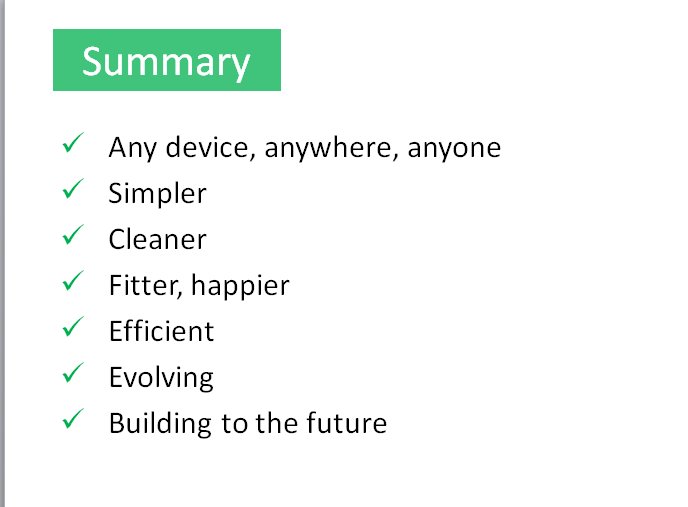
Head of user experience, Paul Houghton looked back to the “pre-Google” days of Business Collaborator, when it was full of buttons, and the “Graphite” interface introduced with version 6.1 in 2011. This was never designed for mobile devices, so a separate, simpler interface had to be developed. Today, he introduced BC 7.0 or “Quartz” – a new “crystal clear” user experience that is less cluttered and more intuitive – “on any device, anywhere and by anyone (from novices to expert users)”. Neat enhancements include thumbnail previews of photos that show the file-size so users are warned about items that are slow to download. The full power of BC has also been refined for tablet and smartphone use, optimised for touch, and allowing users to create and send workflows. Workflows are now much more like emails when sending documents – Beta testing feedback elicited a customer comment: “we don’t need to use email for project documents anymore”. Before finishing, Houghton also mused about the future user experience potential for voice activation, NFC, wearables, VR and AR, and machine learning.

Crompton did a live demo of BC 7.0, which “starts with the end in mind,” he said. “Being able to cut through to the key information you need is really important,” and in 15 minutes showed a lot of new features. He quickly navigated to a page about a project set up for the conference venue in Coin Street, created a new project, added suppliers, dragged and dropped (BS1192-compliant filenamed) documents into the project, imported metadata, then created a workflow (issue for comment), and added placeholders for requested drawings, before then reviewing and marking up the drawings, and comparing different versions in the browser.

Thames Water customer story

12:30pm BST – Paul Meredith of Thames Water talked about use since 2005 of BC at the utility, which manages around £1bn of capital investment work annually, with an alliance, “eight2O” of eight businesses delivering the current AMP6 five year programme. In Thames, BC is TWEXnet and is the contractual common data environment for eight2O.

The Graphite version of TWEXnet was “quite scary” to new users at Thames Water, Meredith said (also showing the company’s BC Assure module). When Quartz was initially discussed with him, he wanted to be sure that it didn’t deter existing users, so first impressions were important, as well as improving the whole user experience. Reducing support and training costs was an objective, as well as providing a new platform for new functionality and eventual PAS 1192 compliance, and providing a common interface across all devices.
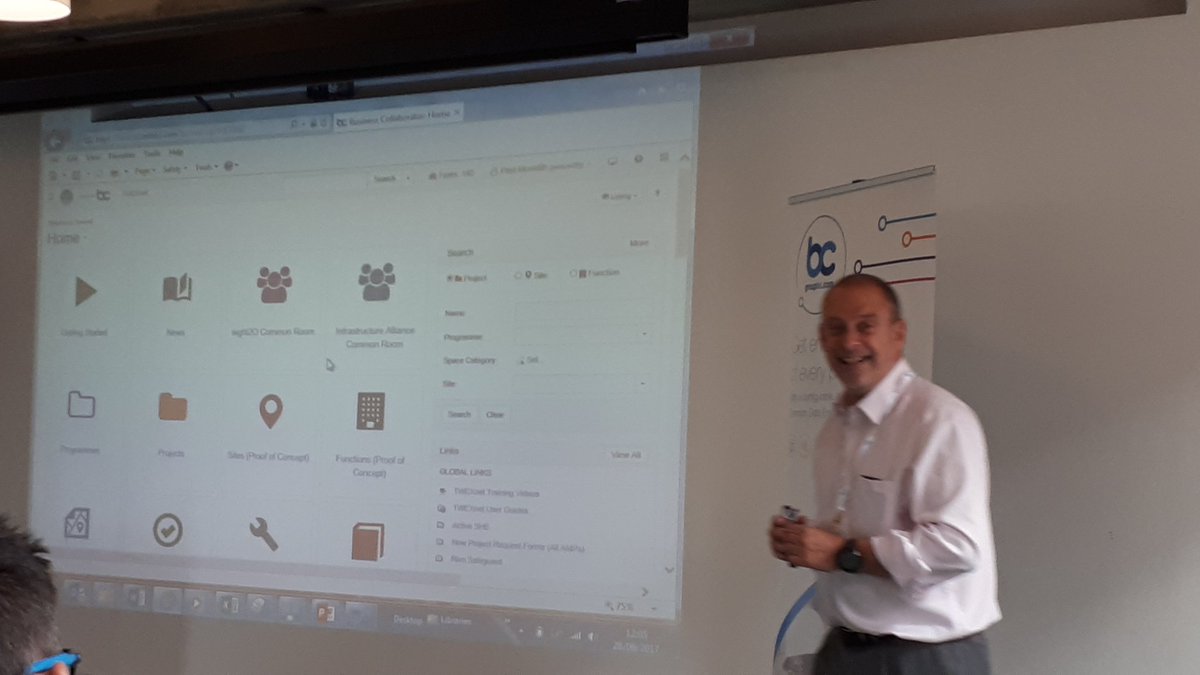
Thames has three options to roll-out Quartz: soft (leaving Graphite as default with Quartz as an option), transitional (change the default at a future date) and hard. Meredith showed the Thames implementation of Quartz, where the configurable landing screen features a number of icons including: getting started, news, an Eight2O ‘common room’, programmes, projects (usually the most widely used), sites (drawing data from internal Thames systems), functions, map, BC Assure, and a solutions hub. The default TWEXnet interface will be changed to Quartz in about a month’s time.
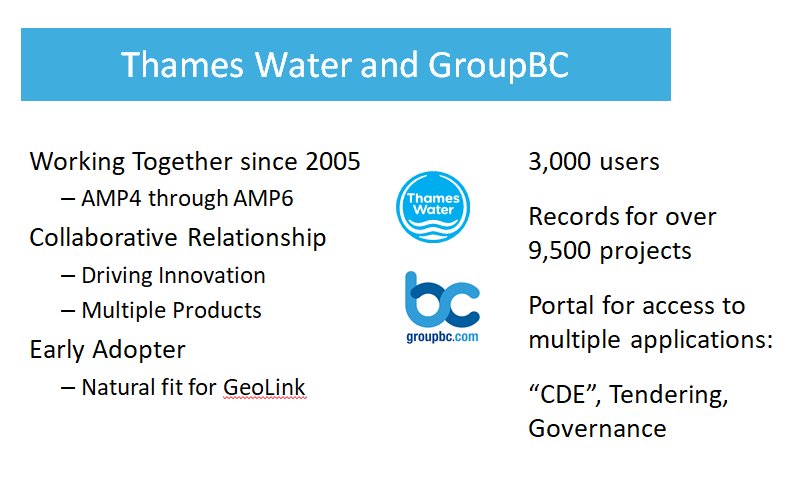
Meredith then talked further about the map function – aka GeoLink or GeoConnect+ – helping Thames identify risks such as where its projects might be adjacent to listed buildings or sites of special scientific interest – presenting lots of geographical data (legal, administrative, natural and environmental risks, plus information about other projects). GeoLink presents rich sources of GIS data in one coherent, easily searchable interface; GIS data sources include internal databases, licensed third parties, and publicly available open data. So far, about 80% of Thames projects are loaded into the system, all represented by coloured dots (depending on their type) in the application, and can be displayed in the context of a wide assortment of other data (listed buildings, ancient woodland, nature reserves, areas of outstanding natural beauty, flood plains, heritage, local authority boundaries, etc). Users can quickly navigate to particular projects and then drill into the Quartz app.

14:30pm BST – After lunch, CTO Steve Crompton talked “all about the future” (and modules and integrations). He stressed that BC is about providing a configurable, extensible platform., highlighting its process compliance and viewing tools. BC Assure is one of the modules that can be used to extend core BC capability, but it is easily adaptable, recognising real-life challenges: people don’t like change, people don’t like being told what to do, “our project is different”, etc. The BC model viewer “allows the entire supply chain to navigate, check and contribute to the Digital Twin” – and a new BIM viewer (v1.2.1) has just been released.

Modules and integration

Paid-for additional modules include the market-leading Adobe Sign, avoiding the need for wet signatures as manual steps in otherwise digital processes. SAML (Security Assertion Markup Language – an open standard for exchanging authentication and authorisation data between parties) enables users to work with a single set of login credentials (eg: Office365), while two-factor authentication provides an additional layer of security for sensitive information stored in a CDE.

Nick Woodrow, COO of CEMAR, then described how this secure SaaS contract management solution could be used to complement BC and manage NEC contract processs (see this blog post). It is currently being used to manage over £100bn worth of major projects, he said. Integration makes sense, with single sign-on, better audit trails, less double-handling of information, connecting to relevant associated data, driving actions between applications (eg: payment applications in CEMAR driving payment processes in SAP), and sharing reporting analytics. A BC-CEMAR Connector is now available as an optional module for the platform.

‘Coming soon’

Crompton talked repeatedly about connecting data in the future. Increasingly, the application will be developed to be mobile, device-independent and interoperable, and new capabilities will be added to BC in regular quarterly releases. BC 7.1 is now in testing, with enhanced security compliance (BC is moving from Unit4 facilities to Secura) and lower process overheads. Mass geolocation services are also being developed, and the reporting capabilities will be enhanced in BC 7.2.

In another live demo GroupBC showcased the incorporation of 3D viewing of information as part of the GeoConnect+ module, importing KML data from Google Earth – something developed by BC customer Mackley to manage coastal defence projects. Icons on map views were used as hyperlinks into the BC application for drawings and photographs. Sanjeev Shah showed how a 3D model could be placed into a map view so that users can then see it in context and access related information about the surrounding area.

Sainsbury’s customer story

15:00pm BST – Mike Barber, Sainsbury’s property information and systems development manager, talked about Sainsbury’s “digital estate” and its BIM adoption journey. The “Digital estate” is a digital enabler, letting people get information quickly, accurately and completely, he said – critical in a business which has expanded its number of outlets rapidly both through organic growth and through acquisition. The company’s technology stack was massive, but the demand for business insights was also growing. Construction consultancy PCSG helped Sainsbury’s on the journey, particularly in relation to BIM, but Sainsbury’s also faced challenges in (re)discovering legacy information.

Sainsbury’s has been working on the BC CDE platform for 18 months (after an 18 month selection process), looking to develop a consistent approach to managing and classifying its estate data, ensuring consistent BS1192 file naming, looking at processes, and – importantly – also looking at the company culture and considering engagement and communications. Data was cleansed and imported into the company’s StoreSpace toolset, validated, then consolidated into the BC CDE, branded in Sainsbury’s as OneProperty. Auditing and maintaining the integrity of this data is now an ongoing obligation.

Balfour Beatty’s Simon Fraser presented a powerful case study on the contractor group’s implementation of BC and its use of the platform’s database tools and integration with third-party platforms (as some of the content wasn’t for public sharing, I have not covered it here). The following session was a panel/Q&A discussion with the key speakers so far, plus Adrian Burgess, technical director of PCSG. Mandating use of particular technologies was discussed at some length – with the importance of senior sponsors driving adoption underlined by Fraser, while Sainsbury’s Barber said acceptance happens if you successfully address “what’s in it for me” from the users’ perspective.

Digital Built Britain

17:15pm BST – The day finished with a keynote from PCSG’s Adrian Burgess, providing some views on BIM Level 2 and Digital Built Britain. The latter is about moving from BIM to a digital economy in infrastructure and city programmes, he said. It is aligned with the Construction 2025 strategy and its stretch targets, but he stressed this wasn’t just about BIM – it involves procurement, contracts, design for manufacture and assembly, etc. For UK government, it potentially impacts on 43% of UK GDP (if you add CapEx, Opex and service provision based on the built environment), and improvements in the UK are vital, particularly as our productivity lags behind those of rival economies (France, US, etc).

Talking about BIM Level 2, Burgess said: “What we have done so far with BIM is an enormous improvement on where we were in 2011,” citing case studies from the MoJ, Building Schools for the Future, and Crossrail programmes (“bringing in a £14.8bn programme roughly on time and budget was helped by its BS1192 adoption”). In some businesses, BIM is now business as usual, he said, and UK experiences have been echoed by similar adoption approaches in other parts of the world.

BIM Level 2 and Smart City packages will be leveraged to enable information feed-forward and feedback loops, Burgess said, enabling even greater economic output. There won’t be radical changes in the next 2-3 years, but there will be beyond 2020, he predicted, as we shift from moving documents to moving data, and interacting with centralised databases and information models. This is part of a gradual industry transition from being output-focused to being outcome-focused.

PCSG has been collaborating with GroupBC on connecting data, and Burgess talked about the GeoConnect+ project, showing how laser scan data can be used in conjunction with mapping data and BIM IFC data.

As these integrations grow, they will involve huge volumes of data, so the next generation of viewing technologies will therefore need to stream data rather than download huge single models, CTO Steve Crompton added. City-scale models may incorporate millions of polygons compared to the tens of polygons in many model files.

[Disclosure: I have provided marketing consultancy services to GroupBC.]

Permanent link to this article: https://extranetevolution.com/2017/09/live-from-groupbc-user-conference-2017/

How is disruptive technology changing construction?

Earlier this year, I was asked three questions by Copenhagen, Denmark-based construction technology vendor GenieBelt for a blog post they were planning. Below are my responses, penned at a time when I was thinking about how construction businesses might add value and differentiate themselves with their customers.

In what ways do you think disruptive technology is changing construction?

Construction lags every other industry sector in terms of digital transformation, and so is ripe for change. But it’s not just about technology, it’s about changing industry cultures and processes.

Unless we can get people prepared to change “how we’ve always done things,” then the industry is doomed to remain wasteful and inefficient, and unattractive to new recruits.

Too many in construction still regard technology as ‘disruptive’ rather than ‘differentiating’. The successful construction businesses of the 21st century will be the ones that rapidly adopt digital technologies as normal, and deploy them better than their competitors to meet their clients’ business needs – which will not be about delivering built assets at lowest price, but about helping deliver clients’ long-term business outcomes.

How has software improved the construction industry?

We have started on a journey from paper-based communication towards more data-driven communications, but, too often and particularly in the small and medium-sized business sector, all that we have done is switch from sharing paper to sharing electronic paper, with no change to contractual mentalities. Software will really improve the construction industry when we also change how we procure our projects and how we collaborate.

The successful clients of the future will be ones that demand data as an intrinsic part of their project deliverables so that they can operate and maintain their built assets more efficiently, and – in the process – ascertain how well their suppliers are helping them meet their long-term objectives. Software on its own won’t improve the construction industry, but it can provide data that astute clients can use to be more discerning.

What is one thing any construction company could do right now to improve their business? (a tool, software, marketing, business dev decision, templating, etc).

Ask: “how does my business add value?” Clients will increasingly look beyond ‘lowest price,’ and want to do what’s best for their business across the whole life of their built asset.

If your business isn’t helping them deliver better whole life value, then you won’t be one of their preferred suppliers.

Please feel free to comment on any of my responses. You might also be interested to look at the views of the other contributors: Neil Parsons (CEO of Design Build Pros), Jim Lillig (community manager at BeThePro) and Aarni Haiskanen (managing partner at AE Partners and AEC Business blogger).

Permanent link to this article: https://extranetevolution.com/2017/09/how-is-disruptive-technology-changing-construction/

CEMAR sticks to its NEC expertise

CEMAR is focused purely on contract management and its expertise in NEC contracts has helped it achieve leadership in this specialist cloud-based software market.

Gloucester, UK-based construction contract management software vendor CEMAR is single-minded in its focus on construction contracts and on the NEC suite in particular. This focus has seen the company enjoy year-on-year double-digit revenue growth – it generated around £3m in the 2016/17 year to 30 April 2017, and director and COO Nick Woodrow told me it expected revenues to grow 50% to around £4.5m in the current year.

Woodrow joined CEMAR as director and COO in October 2015, when the business had 15 staff. Its success since then has seen its headcount grow to 46 staff, and Woodrow expected it would be over 50 before the end of the financial year. Much of this personnel growth has been in software development, with Agile methodologies strongly favoured, judging from the many whiteboards on the upper floor of CEMAR’s modern office in Barnwood, to which the company moved two years ago.

The NEC battleground

Ben Walker, CEMAR CEOCEMAR was founded by NEC contract expert and civil engineer Ben Walker (now CEO, right) and his father Andy (now retired); Ben’s brother, Dan, is CEMAR’s CIO (Ben and Dan Walker and Nick Woodrow are the business’s shareholders). The business was incorporated in 2005 and initially developed traditional on-premise software (formerly CMToolkit, its CEMAR name is derived from Contract Event Management And Reporting) to track contract events (“it’s about event management, not document management”, Woodrow said – read Ben Walker’s post “Think event, not document”). However, by the end of the decade, the company had switched to a Software-as-a-Service model, competing against collaboration vendors 4Projects and Conject (both awarded NEC3 content provider status in December 2010), plus Asite (not similarly favoured by the NEC but nonetheless providing NEC3 contract support to clients such as Transport for London) and other UK-based NEC3 specialists including Sypro (December 2010 post)* and MPS, plus South Africa’s Contract Communicator.

By this stage, contract change/workflow management had become a fiercely contested battleground among the ‘extranet’ vendors. Sypro sought to differentiate itself by promoting its NEC process reporting tools, and in early 2012 established a partnership with Unit 4/Business Collaborator (the subject of an MBO in late 2014), after MPS had pursued a similar relationship with Denmark’s Docia (acquired by RIB, also in 2014).

While the NEC battleground has quietened in recent years (largely overtaken by the BIM push, of course), CEMAR’s growth suggests contract tools remains a lucrative market. Woodrow told me the business had made significant inroads in market sectors including water and other infrastructure, and in higher education (maps in the company’s business development office were peppered with multiple client locations).

And as international interest in the NEC suite accelerates, partly due to the new and expanding NEC4 suite (which includes a Design Build and Operate variant and is set to include an Alliancing version), Woodrow is optimistic about CEMAR’s future prospects. He highlighted UK prospects in the so-called 6 H’s (HS2, Hinkley, Heathrow, Highways, Housing and Heritage), and about new/revised NEC4 workflows (eg: contractor proposals, proposed instructions, task ordering). CEO Ben Walker is one of NEC’s drafting team, a consultant, tutor and ICE examiner, and CEMAR is acknowledged by name in all NEC4 contracts – something of a marketing coup, in my view (note: the CEMAR solution can also support FIDIC and other contract forms).

Woodrow talked about opportunities in southeast Asia and in New Zealand (coincidentally markets successfully targeted by Conject before its acquisition by Australia’s Aconex in March 2016), and an integration with GroupBC’s Business Collaborator platform, displacing Sypro and set to be presented to BC users at its user conference (28 September 2017). CEMAR’s preferred approach is integration rather than trying to add functionality to cover every need (read Dan Walker’s blog post “One size does not fit all”). We also talked about integrations with ERP solutions, taking advantage of CEMAR’s detailed handling of NEC-related payment application and certification processes – encroaching into the territory of Oracle’s Textura application, among others.

(And while we are on the subject of Oracle, tighter integration with Primavera P6 has to be a consideration – scheduling tools have for too long sat outside the collaboration environment – something that I discussed with Aconex’s Leigh Jasper in May 2017.)

CEMAR in action

Woodrow guided me through the main CEMAR capabilities, concentrating on its core contract management capabilities and on its reporting tools, CEMAR Analytics. Once logged in, authorised users are presented with a dashboard view of their current projects and can then drill down to particular contracts, with their access to information and functions tightly controlled by a highly granular user profile administration system (security provision options include two-factor authentication).

The company prides itself on what Woodrow described as its “obsession” with using the correct contractual terminology (even down to the use of italics or capitalisation of certain words). While CEMAR users might initially be looking to emulate the creation of notifications that resembe familar paper-based correspondence (which it does by way of .pdf letter versions of all communication), Woodrow says they quickly gravitate towards viewing processes as events rather than as series of documents (we talked about demographic changes shifting from paper-oriented user tendencies towards a preference for real-time online information visibility). He also underlined commercial managers’ wish to separate sharing of associated documents or drawings as contractually significant versus including these items for more general “knowledge sharing” purposes (nonetheless, he demonstrated the GroupBC Business Collaborator integration to show how it would be possible to connect recipients to relevant background documentation).

CEMAR Analytics presents powerful summaries of recent and ongoing processes, and can be used to help set the agendas for meetings, Woodrow said. He showed how search tools could be used across processes to, for example, show the aggregated impact of weather events in a set period of time. As well as a wealth of reporting tools, CEMAR includes ‘group reports’ allowing frequently required selections of reports to be combined into longer reports. The existing, already comprehensive presentation of bar and pie-charts and line graphs could improve still further – CEMAR is looking at potential integration of business reporting tools such as Microsoft’s PowerBI (also mentioned by Bentley in November 2017).

The application is peppered with contextual help buttons, helping explain how users can do things and ensuring compliance with the relevant NEC contract – “many of our help desk queries are not about how to use the software but how to manage things under the NEC,” Woodrow told me – and the Zendesk-driven support system also provides numerous video tutorials.

My view

Contracts, and by implication contract change management software, can seem a somewhat dry area of expertise, but compliance with contracts is often critical to the successful delivery of construction projects. While the CEMAR solution may lack the pizzazz of drawing and model sharing environments, it is a modern and user-friendly application in which colour-coded contractual information is logically presented, and the attention to detail (both in terms of contractual terminology as well as software presentation) is one of its major strengths.

The former 4Projects and Conject NEC toolsets no longer enjoy NEC licensed content provider status, and, it seems to me, neither of these (now rebranded) businesses today promote their contract process support quite so overtly – instead they seem happier to talk about BIM, solution ‘ecosystems’ and integration. Maybe the GroupBC relationship might set a precedent (assuming there’s no exclusivity agreement), with CEMAR becoming the standard contract change module for other collaboration/’common data environment’ (CDE) platforms? Meanwhile, CEMAR’s double-digit revenue growth is also impressive – matching, even surpassing, the figures trumpeted by CDE vendors, and suggesting that contract management is just as lucrative a construction SaaS market.

* Disclosure: Sypro is a past client of pwcom.co.uk Ltd, as are Conject (now part of Aconex) and 4Projects (now Viewpoint). I have also provided consultancy services to GroupBC.

Permanent link to this article: https://extranetevolution.com/2017/09/cemar-sticks-to-its-nec-expertise/

It came from out of Space: Warboard

Space Group’s Warboard offers BIM model issue management, potentially helping teams not using a more fully featured common data environment, CDE.

Newcastle, UK-based architectural services business, Space Group (which includes Space Architects, consultancy BIM Technologies, and BIM object provider BIMstore.co.uk, and promotes the BIMShowLive events) has been developing its own cloud-based BIM collaboration software, called Warboard.

This cloud-based software platform manages issues in federated models helping collaboration and communication across a project team on complex construction projects. It was first developed in 2013 for internal BIM issue management by the group’s in-house Space Applied Technologies team for its sister company BIM Technologies, and was showcased by the company at Autodesk University in 2015

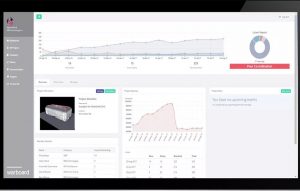
Warboard screenshotSince then, it has been developed further. The latest version features a newly built interface, multiple project management capabilities and advanced expandable clash results for customised reporting. Warboard can be used in conjunction with design authoring and coordination platforms such as Autodesk’s Revit and Navisworks products via native plugins, and works with Navisworks’ standard XML clash report, as well as the BCF (BIM Collaboration Format) open format. The application can generate real-time reports which can be exported as PDFs at any stage of the project’s lifecycle; these depict the ‘issue’ image, as well as supporting information, statistics and historical data.

Rob Charlton, chief executive of Space Group, says:

“We initially developed Warboard to allow clients to monitor project progress through a simple dashboard. Over the years the platform has grown into something much more valuable, the functionality has been devolved by many users on many live projects and this latest release delivers enhanced functionality and is particularly focused on helping designers workflows.”

Pricing starts from £50 per month for up to 10 users managing unlimited clashes. Warboard potentially competes with the BIM issue reporting tools incorporated in SaaS common data environments, CDEs, such as Viewpoint For Projects, which also allow models to be federated and viewed, while issues can be marked up (using BCF) and allocated, with model version control to track what has been changed, deleted or added (May 2016 post).

The development of software by architectural firms, of course, is nothing new. One of the earliest building information modelling applications, RUCAPS, was developed at GMW Architects in the 1970s and 1980s, while more recently Frank Gehry’s architectural practice established a business called Gehry Technologies in 2002 and developed the CATIA-based Digital Project and GTeam applications. The GTeam solution was acquired by Trimble in 2014.


Permanent link to this article: https://extranetevolution.com/2017/09/it-came-from-out-of-space-warboard/

Bridgit adds mobile project insights

Canada’s Bridgit is now offering more detailed reporting capabilities to support its mobile construction solution users.

Bridgit logoOntario, Canada-based mobile-first software developer Bridgit has been on my radar since August 2014 when, to support its core Closeout application, it started testing wearable technologies. Since then, its announcements have mainly related to funding and to core software developments – closing a US$1.7 million seed round in April 2016, for example, and launching an Android version of its Closeout application in June 2017.

This week (18 September 2017) it has announced the launch of a new data-driven feature: Project Insights collects real numbers from the site, and uses them to present a high-level summary of the project. Bridgit says developers and general contractors can use Project Insights to:

  • Share progress with stakeholders
  • Monitor overdue tasks
  • Identify problem areas and bottlenecks
  • Hold subcontractors accountable with performance metrics

Mallorie Brodie, Bridgit Co-founder and CEO (right) says:

Mallorie Brodie - Bridgit CEO“This is a game-changer for Bridgit Closeout. Our users have always had access to reports that filter and summarize the tasks on site. Project Insights is different; it calculates high-level progress metrics that give quick insight about a project’s status and team performance.”

Project Insights pulls numbers from the task lists on site, and uses them to calculate project metrics that are not available in a typical site management report. With a quick glance at the Bridgit web application, users can see how many tasks are completed, the average age of incomplete tasks, and subcontractor performance week-over-week.

These features will be familiar to the users of other mobile-first construction applications I’ve featured in recent months (see, for example, my post on Construct.pm), while they are also common to the mobile tools supporting the leading SaaS collaboration platforms (eg: Aconex Field, Viewpoint Field View). Bridgit says it plans to expand the metrics available in Project Insights; “This is just the beginning,” confirms Brodie. “We plan to grow the feature further, using feedback and suggestions from our users.”


Permanent link to this article: https://extranetevolution.com/2017/09/bridgit-adds-mobile-project-insights/

Mobile-first Raken builds its niche

US-based Raken is one of a recent generation of mobile-first construction software developers seeking to automate manual onsite reporting and monitoring tasks, and says it differentiates itself by its deep niche functionality.

Just over three years ago (August 2014), I visited FieldLens‘s New York headquarters and talked to one of the marketing team about their business, the north American construction industry, and competitors in the field or mobile application market. One of the businesses he mentioned was California-based Raken.

Raken background

Raken logoAt the time, both FieldLens and Raken were relative newcomers to the sector. FieldLens had launched in 2013 and was one of several mobile-first developers I talked to then (FluidCM and GenieBelt were two others). According to Raken CTO and co-founder Dr Sergey Sundukovskiy, who I spoke to this week, the Raken daily reporting app was developed by CEO Kyle Slager and also launched in 2013. It was developed initially on the Apple iOS platform, with an Android version released the following year. Slager marketed the app to industry contacts working as job foremen and superintendents in general contracting businesses in and around the San Diego area to start with. However, the user-base quickly grew through organic expansion as users jumped at the chance of switching from pen and paper to using mobile reporting.

Four years later, the paid-for edition of Raken is used by over 3000 companies, covering over 12,000 individual users (the application and its associated web reporting platform is licensed on a per-seat basis). “Often a general contractor will mandate the application to subcontractors,” Sundukovskiy told me, “and it then goes ‘viral’, with the subcontractors adopting Raken to work on their own projects.” About 10% of Raken’s customers were on enterprise deals, he said, talking about substantial “mid-market” adoption and a “long tail” of small/medium sized business users. The business is apparently adding around 100 new company customers a month.

From its Californian origins, Raken adoption has expanded across the US and into Canada, with users also located in United Kingdom (and elsewhere in western Europe), plus Australia, New Zealand and South Africa. Most of this expansion has been organic but Sundukovskiy didn’t rule out establishing direct marketing operations in other English-speaking markets (a serial entrepreneur focused on small business marketing and e-commerce, Sundukovskiy has a master’s degree in information technology from the University of Liverpool). Earlier this year (March 2017), Raken announced it had raised US$2 million to accelerate its product development.

Niche specialist

The basic app – which includes automatic weather capture, unlimited HD photos, voice-to-text, and emailed daily reports, for unlimited projects – costs US$12 per calendar month per user, billed annually, while there are progressively more fully-featured price bands of Professional (US$30) and Performance (US$37). Enterprise licences can also be negotiated offering some volume discounts depending on the numbers of users and scope of functionality required, Sundukovskiy said.

Raken also offers integrations with project management software and cloud providers such as Procore (post),
Prolog (part of the Trimble Connect ecosystem), Egnyte, and Box – “We’re not competing with these applications; where users have strong adoption of tools like Procore, they can carry on using it, but use Raken for their mobile reporting needs”.

Sundukovskiy said it differed from some reporting tools by being heavily focused on the field reporting needs of contractors and project management businesses. “It’s also less expensive then competing products, and it’s aimed at a niche sector of the construction vertical – it doesn’t offer wide but thin levels of functionality, this is inch-wide but a mile deep.” The user-base is around 65% iOS and 35% Android, he added, while the web reporting platform is hosted in Amazon Web Services facilities in the US (“we’re bi-coastal”), and he accepted that the business might need to evolve its hosting approach if it wants to compete in Europe or other markets resistant to US-based hosting.

My view

Sundukovskiy touched on the low-tech nature of its competitive marketplace when he talked about replacing pen and paper rather than competing solutions. As I have pointed out before, construction lags behind other industry sectors in terms of its adoption of digital technologies, and, in just about every country, it remains a deeply fragmented market largely comprised of small- to medium-sized businesses generally operating on thin profit margins. As a result, affordable technologies that can help such businesses save time and money while also providing visibility of issues and progress will quickly find favour.

Raken is not challenging the SaaS construction collaboration players; it is looking to complement their solutions, possibly providing strong mobile-first alternatives to the field solutions that some of them offer. But it is not the only one, and there are other well-funded mobile-first players. For example, in the US, the afore-mentioned FieldLens closed a US$8m funding round in 2014 and was recently acquired by WeWork, while Plangrid has also been strongly backed by investors (US$18m two years ago); further afield, France’s FinalCAD secured €20m (US$22.4m) Series B funding just a year ago (other players include GenieBelt, TidyBuild, Small Builders, eSUB, Corecon, Jobsite Unite, Builderstorm and SiteReportPro – this post listed some others).

But, if these applications are still automating user tasks previously undertaken manually using pen and paper and spreadsheets, there is still an untapped market to be penetrated before vendors have to start attracting users away from competing solutions.

Permanent link to this article: https://extranetevolution.com/2017/09/mobile-first-raken-builds-its-niche/

More mobile AEC tools

The mobile construction app market continues to grow: a look at how Asta Site Progress complements desktop software, and a form management app for SMEs.

Asta Site Progress

Elecosoft’s Asta Powerproject competes in the same project management sector as Oracle’s Primavera and MS Project, but is specifically designed to support construction planners’ work. Primarily a desktop/laptop-based product, it is a powerful scheduling platform, but there is also a cloud service option, allowing users to access Asta Powerproject as a Citrix-based service via Windows PC, Mac, Android and iOS devices – useful for those working on short-term projects or needing access from multiple devices.

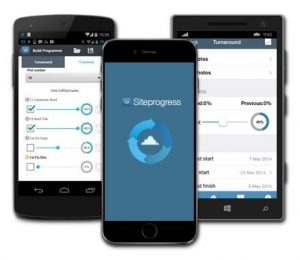
Site Progress Mobile - Asta PowerprojectHowever, Asta Powerproject also offers a mobile Site Progress application (available for Android, iOS and Windows Phone devices, plus web access). This can be used to help users record the progress of tasks and repetitive events against their Asta Powerproject schedules. Recently added features include the ability to export tasks to mobile devices based on resource assignments (ie: per contractor or trade) and review reported progress and approve/review submissions before applying them to the programme. The app is free to install, with use of the service charged according to the number of active jobs exported to a secure cloud storage area.

Update (4 April 2019) – “Rewritten from the ground up, the second generation of Site Progress Mobile includes improved navigation and search, progress reporting via quantity completed, editing and annotating of photos, adding new tasks into plans remotely, and clearer progress import and review tools.

Trappco

The increasing ubiquity of mobile devices continues to prompt new startups to target the construction market with applications. I was recently alerted, for example, to Trappco.

TrappcoThis Worcestershire, UK-based company, incorporated in 2016, is aiming to help construction businesses digitise existing paper-based processes by capturing and emulating the forms they currently use for inspection check lists, handover sheets and certificates. Founder Richard Hulbert told me that a key differentiator is the use of current document layouts and text content to create templates, so that the PDFs produced by the app immediately resemble existing forms (and could be augmented by associating images taken with the host device’s camera). He said the app also captured authorising signatures in real time, improving auditability.

The app has been deployed on UK building projects in Birmingham and Northampton, having been developed in partnership with Able 3 Ventures, using its AppSheet platform (seemingly similar to the Formotus toolset I’ve seen used by Crossrail – May 2013 post). This provides a simple way for individuals or organisations to develop new mobile applications, using existing spreadsheets, shared in a cloud-based storage environment (Dropbox, Google Drive, OneDrive, Box, etc), as a foundation. Able 3’s AppEditor is then used to add features to the application, after which the app can be shared with users. Trappco uses this platform to provide a service to its construction industry customers, with costs starting from £250 (a one-off setup fee covering some consultation and basic user training, document uploads into the app, app customisation, and access to an Admin version of the app), plus monthly subscriptions from £20 per user per month.

As I have previously written (recently in relation to SiteReportPro and BuilderStorm, for example), given the size and fragmentation of the AEC SME market, and its still only-gradual adoption of BIM and other more data-driven processes, there is likely to be a ready market for such tools, at least for a few years.


Permanent link to this article: https://extranetevolution.com/2017/09/mobile-aec-tools-asta-site-progress/

Simple mobile reporting via SiteReportPro

SiteReportProA very recent addition to the growing market for mobile site reporting apps is Site Report Pro, developed by Wilmslow, Cheshire, UK-based Pipe Flow Software (aka Daxesoft Ltd). First released on 4 July 2017, the app is currently only available for use on Apple iOS devices (iPhones and iPads), though the website says “support for Android devices is under consideration”.

The app can apparently be used for punch lists, snag lists, site audits, on-site inspections (including health & safety, and housing), building surveys, house inventories, etc, and allows users to track and manage issues and produce PDF reports. Issues can be captured by photographing them, then annotating the image. The issuer can then set due dates, give the issue a priority and status, add details and comments and then assign the issue to another user (the app lets users share by email, message or via third party apps such as Dropbox), and is said to allow “easy sharing and issue management for teams”.

Interestingly, it says no cloud service is needed and there are no monthly licence or subscription fees. The app is free to download, but is limited to up to 3 projects and 3 issues per project. To do more (‘unlimited’ projects and up to 500 issues per project), requires unlocking via a $1.99 add-on, while the app’s premium reporting themes cost an additional $4.99.

SiteReportPro appears targeted at small-to-medium-sized businesses (95% of UK construction), and faces some strong competition, including from vendors supporting non-iOS apps – important given that the UK smartphone market is almost equally split between Apple and the Android OS. I recently looked at 24OnOff’s time management app, and mentioned others in the same AEC SME realm, including GenieBelt, TidyBuild, Small Builders, eSUB, Corecon, Jobsite Unite and Builderstorm.

There are also numerous snagging or defects reporting and inspection tools – some high-powered and connected to SaaS collaboration platforms (eg: Aconex, Asite, Viewpoint), others more stand-alone, such as APE Mobile, BaseStone, Bridgit, EviFile, FinalCAD, Go-Cam, iSnag, PlanGrid, SnagR, and TIM: The Inspection Manager (all previously covered on this blog).

Permanent link to this article: https://extranetevolution.com/2017/08/simple-mobile-reporting-via-sitereportpro/

Aconex continues 31% growth trend

Aconex continues to grow revenues, effectively doubling in two years. Two-thirds of its business now comes from outside Australasia.

Aconex logo 2014Melbourne, Australia-based Software-as-a-Service construction collaboration software vendor Aconex has announced its financial results for the year to 30 June 2017, reporting 31% revenue growth for the second year running (results were affected by exchange rates: at a constant currency, growth was 36%). Helped by a better second half-year performance, total revenues were Au$161.2 million (c. £99.3m, US$127.6m, or €108.3m), compared to the previous year‘s Au$123.4m.

EBITDA from core operations was up 10% to Au$15.0 million (c. £9.2m, US$11.9m, or €10.1m). After tax, however, the company recorded a Au$10m statutory loss, mainly due to integration expenses relating to the Conject deal and “amortisation of acquired intangibles”; from core operations, the business posted a net profit of Au$5m.

In the company’s investor presentation, Aconex highlighted that revenues had effectively doubled in two years. It says its platform has managed projects valued at over one trillion dollars in project value across 70 countries, and has 5.3 million project users managing 2.4 billion documents.

CEO Leigh Jasper said that the solid FY17 result reflected a stronger second half performance, a full year contribution from Conject and further penetration of the Company’s international markets which together have significantly strengthened its leading global position.

Leigh Jasper“Revenue increased in the second half of the year as market conditions improved and we continued to transition project customers to enterprise agreements, especially in ANZ. With Conject fully integrated into the business we also saw stronger revenue growth in Europe. We are truly a global business with two-thirds of our revenues now generated outside Australia and New Zealand.

“To drive greater returns and take advantage of the rapid growth in technology adoption across the industry, we have ramped up our investment in sales & marketing and our operational infrastructure. We have also significantly increased investment in our product, with 22% of revenue committed to research and development. We enhanced our offering and developed several new modules, including Connected Cost [launched in April 2017], and extended our ecosystem. Connected Cost alone has considerably increased our total addressable market and improved our overall win rates in all our regions.

“Meanwhile, our certification for the Federal Risk and Authorization Management Program (FedRAMP) is in process, which will enable us to service government projects with the highest compliance requirements in the world. This is a major competitive advantage.

“In the coming year, we will continue to extend our leadership position through further investment in our international markets and ongoing product development. We expect to grow revenue by 15 to 19% while increasing EBITDA and generating positive cash.”

The company says the revenue uplift was driven by the 2016 Conject acquisition, strong growth in its international markets and an improved second half performance in ANZ (despite competitive pressures in its home market). The company’s EBITDA margin reduced slightly from 11.0% in 2016 to 9.3% in 2017, due to the acquisition of the Conject business (Aconex says it incurred Au$7.9m in related acquisition, restructure and integration costs) and ongoing investment in product, sales, marketing and client service.

Sales and marketing expenses grew 28% to Au$59.2m as Aconex bolstered its international sales teams to drive further market penetration. The company also increased investment in engineering and product development – partly due to addition of the Worksite and Conject engineering teams.

Regional performance

International revenues were up 45% year-on-year, while revenues in the ANZ region increased 9% from Au$48.8m in FY16 to Au$53.3m in FY17 due to new business growth and the ongoing conversion of customers to enterprise agreements (with 36 new deals signed), which now represent more than 65% of the region’s revenue. Elsewhere:

  • Revenues in Europe and Africa increased 143% from Au$17.5m to $42.6m, principally driven by the full-year contribution of Conject (though revenue was impacted by adverse foreign currency movements, particularly the depreciation of the pound and Euro against the Australian Dollar). The business is now securing larger contracts in mainland Europe, and the UK pipeline was said to be “growing in a challenging market” (in January 2017, the company talked of Brexit uncertainty and revised its October 2016 forecasts causing its shares to slump).
  • Middle East revenues increased 11% from Au$22.4m to Au$24.9m.
  • Americas revenues increased 16% from Au$21.3m to Au$24.6m.
  • Asia revenues increased 19% from Au$13.3m to Au$15.8m.

The Americas and Asia businesses are operating at negative margins as they invest in sales and marketing for future growth, looking to eventually replicate Aconex’s strong performance in the Australasian market.

In the medium term, Aconex says it expects revenue growth of more than 20% with increasing EBITDA.

Market reaction

After the January 2017 slump – to a low of Au$2.92 – Aconex’s shares gradually recovered to hover around Au$4 for most of the past six months. Prior to the results announcement, they were trading on the Australian Securities Exchange at around Au$4.60, but the share closed at Au$4.14, down 10% (and less than half the Au$8.38 high reached just over a year ago), as investors digested the results and reflected on the statutory loss and on Aconex’s sub-20% forecast for FY18 growth (read the AFR‘s Yolanda Redrup and what The Australian said).

Aconex share price 22Aug2017

Permanent link to this article: https://extranetevolution.com/2017/08/aconex-continues-31-growth-trend/

RIB revamps iTWOcx

RIB’s cloud-based construction collaboration platform has been updated, with its SaaS operations contributing about 13% of total group revenues.

RIB software logoIn a previous post, I mentioned RIB‘s iTWOcx (the product formerly known as Australia’s ProjectCentre – acquired by Germany’s RIB in October 2012). A new release of the cloud-based platform was recently launched, with the business “thrilled to announce the much-awaited update to the Register Module … the Publication Space” (read the 1 August 2017 news announcement). This is apparently the result of nearly three years of collaborative development between RIB’s development centres around the globe, and incorporates several highly requested new features:

  • New look and feel – document management is now more simple and intuitive to use, and there.
  • Drag and drop uploading – with the ability to fill out metadata for documents while they upload in the background (“Upload and walk away”), and to send documents into the correct workflow and put them in front of relevant reviewers.
  • Improved searching and reporting – including a new purpose-built search engine providing “intelligent search” tools and “Suggested Searches”.
  • Mobile apps – a RIB iTWOcx app (in Apple iOS and Android versions) links users to projects running the Publication Space, allowing them to access, view, and store documents on their devices for online or offline access.

These updates follow improvements to the platform’s tendering module, announced in June 2017.

RIB financial update

The main RIB group, which describes itself as “the world’s leading provider of 5D BIM Big Data technology for the construction industry,” generated revenues of €97.9m (c. £89m or US$115m) in 2016, up 19% from €82.1m in 2015, returning a pre-tax profit of €33m, against €20.9m in 2015 (read the news release). However, the group’s Software-as-a-Service revenues comprise a relatively small amount of total revenues: €12.5m (c. £11.4m or US$14.7m) in 2016, and – with no acquisitions to boost revenues as we saw in previous years (with the Docia deal, for example) – grew more modestly, up 4.2% from 2015’s €12.0m.

Permanent link to this article: https://extranetevolution.com/2017/08/rib-revamps-itwocx/

Load more