Bentley announces its ‘Totex’ AssetWise solution

At Bentley Systems’ 2016 Year in Infrastructure conference in London this week, the company has announced the availability of its whole-life data solution, AssetWise CONNECT Edition, complementing the ProjectWise CONNECT Edition launched a year ago (post). Connected data is a recurring theme.

A connected data environment

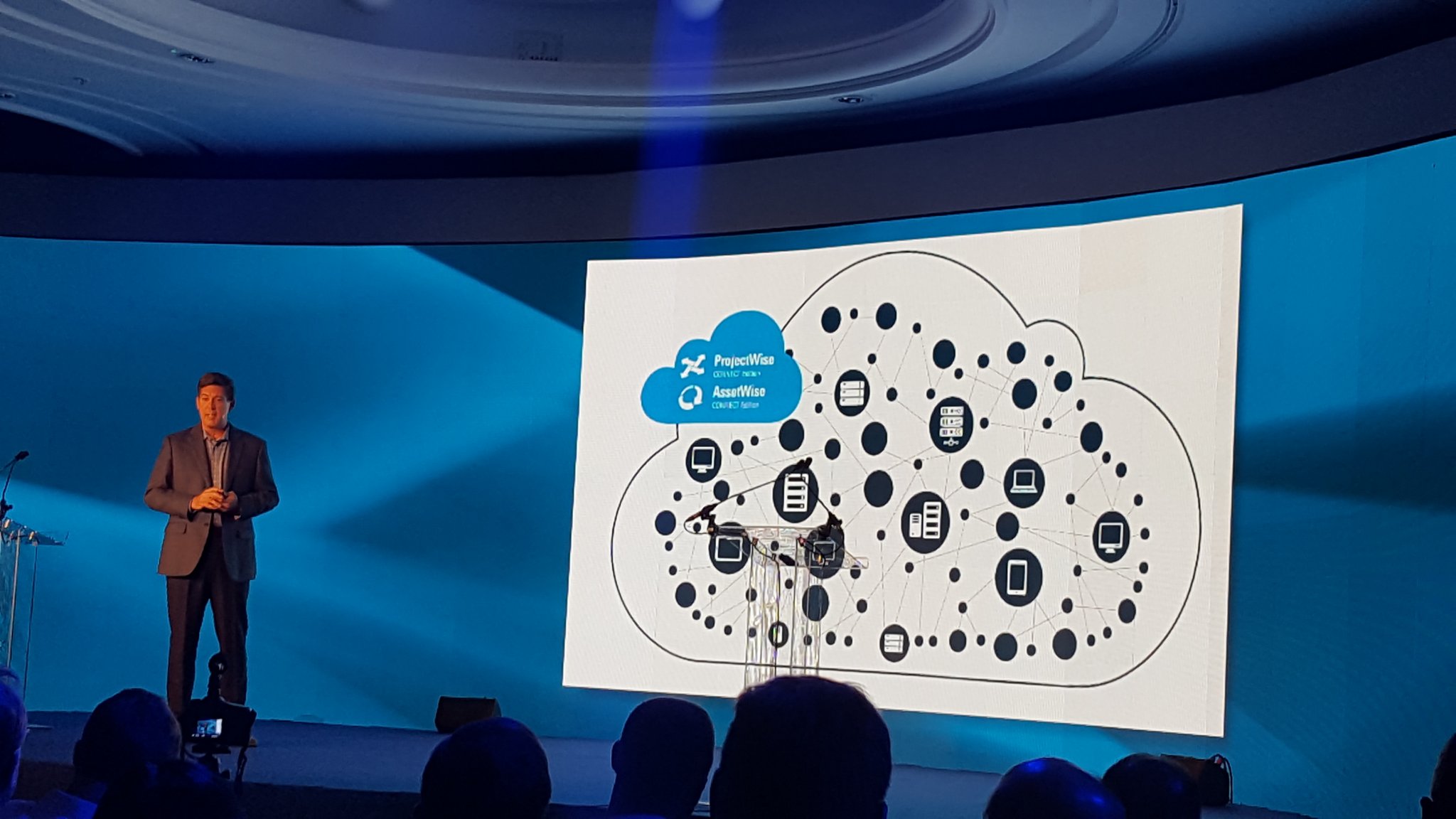
Bentley-advancing infrastructureGreg Bentley said the CONNECT Editions of AssetWise and ProjectWise provide and share a “connected data environment” (as distinct from a ‘common data environment’), helping users capture the BIM potential of digital engineering models created during CAPEX, for continuous benefits throughout the OPEX lifecycle. Microsoft’s Azure cloud was repeatedly referenced as part of the enabling technology.

AssetWise CONNECT Edition’s asset lifecycle information management services support capabilities previously offered separately through several Bentley products including eB, Exor and Amulet, and the company says these are already utilised by 25 of the 50 largest Bentley Infrastructure 500 Top Owners (in a building and construction press briefing yesterday, Bentley’s Harry Vitelli talked about a growing number of owner/operators now hosting their own data, or getting Bentley to host it for them).

The connected data environment is made possible by technologies shared between design, construction, and operations work: intrinsic 3D geocoordination; engineering precision; self-describing data; information mobility; and work process automation. Accordingly, Bentley says information maintained through AssetWise CONNECT Edition inherently understands and can act upon its:

  • geospatial context (navigating to asset data via conventional maps, for example)
  • reality context (at the conference today, Alan Kiraly and colleagues showed how asset data could be navigated to intuitively using imagery from reality capture tools – a big theme at last year’s event)
  • kiraly-dashboardsnetwork and linear context
  • digital engineering model context
  • change integrity context
  • reliability context
  • enterprise IT context, and
  • lifecycle context.

AssetWise CONNECT Edition helps owner-operators manage their infrastructure assets for engineering integrity, compliance, and performance modeling, through new subscription offerings, sized based on the scope of assets covered:

  • Asset Lifecycle Information Management: providing structured control of asset information and managed change throughout the asset lifecycle
  • Asset Reliability: reducing risk associated with asset failure through proactive inspection and maintenance programs and smarter decisions for improved asset reliability, integrity, and performance
  • Operational Analytics: automating better operational decisions with data mining, aggregation, and calculation tools for right-time predictions and actions; and
  • Enterprise Interoperability: facilitating the interoperation of multiple data sources for visibility of mission-critical asset information.

Commercial aspects of ProjectWise CONNECT Edition
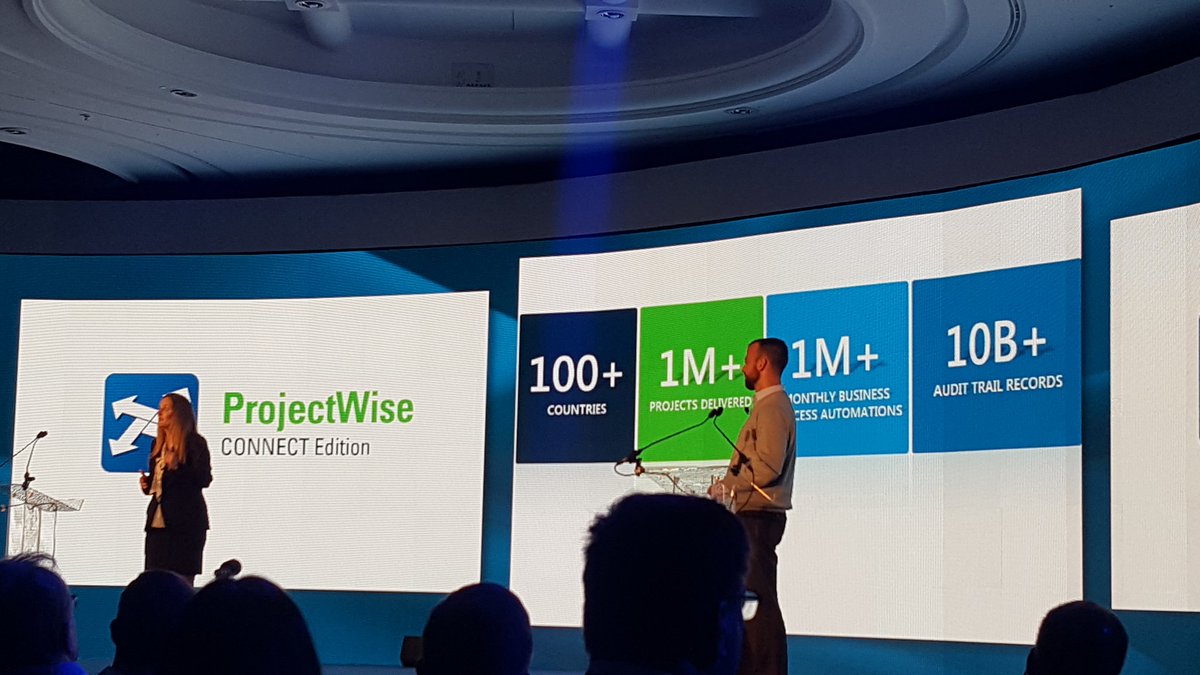
Bentley says ProjectWise is already used by 44 of the 50 largest, and by 355 of the 641 ENR Top Design Firms globally. Since its launch in the late 1990s, it has been used in over 100 countries, to deliver over one million projects, to automate over a million business processes per month, and accumulate over ten billion audit trail records. For a long time, it was primarily a customer-hosted document collaboration solution, but in recent years, facing competition from pure SaaS vendors such as Aconex, Viewpoint, etc, as well as rival software house platforms such as Autodesk’s Buzzsaw and more recently BIM 360 Docs – it has gradually extended to encompass BIM and more SaaS-type implementations: ProjectWise Essentials was launched in November 2014, for example.

ProjectWise CONNECT Edition, introduced in 2015, uses Azure cloud services to extend its BIM-enabling capabilities beyond organisations and users of on-premise servers. To date in 2016, Azure-provisioned ProjectWise and AssetWise services have achieved availability service levels above 99.8 percent, according to Bentley.

CONNECT Edition servers are, Bentley says, “unlimited,” with no licensing charges for those Azure-provisioned, deployed on-premises, or in any hybrid combination.

ProjectWise services are instead charged for the value generated through their “consumption,” based on actual usage determined after every calendar quarter. Each unique user is charged for a Passport which “universally” entitles access to, and usage of, connected environment data, including through “apps” for issue resolution, submittal and/or transmittal of deliverables, dashboard visibility, and more. Users may also be charged in a quarter for Visas to the extent of their actual usage of additional functionality. Accordingly, ProjectWise user organizations no longer bear fixed costs and charges are aligned with realized BIM outcomes.

At the conference, Bentley introduced new ProjectWise CONNECT Edition cloud services for organisations seeking to institutionalise BIM advancements, purposefully propagating best practices in “going digital” through shared resources:

  • Automation Center for standardizing repeatable workflows and deliverables
  • Components Center to share catalogs and to accumulate intelligence across design, fabrication, asset registry, and reliability experience; and
  • Optioneering Center for leveraging parallel computing resources, including for cross-discipline design and analytical scenarios and insights

Microsoft integration

A recurring theme to today’s technology presentations has been not only growing use of Microsoft Azure to connect users, but also increased integration with various Microsoft tools. At the office level, these include Office365, OneDrive and SharePoint (some readers may recall Bentley had a Sharepoint integration, StartPoint, ten years ago), but the Bentley-Microsoft relationship also extends to more specialist platforms such as Microsoft’s Power BI anayltics platform and to the HoloLens VR platform (launched only 18 months ago but already a staple part of construction events including last week’s Digital Construction Week as well as Bentley’s Year in Infrastructure).

Update (2 November 2016) – The Microsoft push continued today, with a presentation about the growing network of Azure data centres (now with centres in the UK and Germany, for example) and repeated references to connections with Office365 and other Microsoft products. Online today, I also noticed a news item about a forthcoming new Office365 collaborative chat-based application: Microsoft Teams:

[Disclosure: I was a juror at the Bentley Year in Infrastructure Be Inspired Awards; Bentley paid my hotel and subsistence expenses to attend the conference.]

Permanent link to this article: https://extranetevolution.com/2016/11/bentley-announces-its-totex-assetwise-solution/

Newforma: collaboration more important than ever

Collaboration is now more critical than ever as British firms look to other global markets to understand how best to adapt post-Bexit, says Newforma.

Newforma logo 2015I talked to Newforma co-founder Jim Forester when he was in London recently. With the UK political establishment still in turmoil after the EU Referendum result, and the construction industry concerned about possible Brexit impacts on already chronic UK construction skills shortages, part of Forester’s message is that collaboration is now more critical than ever as British firms look to other global markets to understand how best to adapt.

Also vice president of business development, Forester is one of six co-founders of Newforma who started the company with CEO Ian Howell in 2003 to provide the North American AEC sector with project information management (PIM) tools to facilitate collaboration on projects. The company’s initial focus was on managing internal project collaboration, and it was (c. 2006) initially dismissive of web-based ‘extranet’ applications (Forester said this was based on experiences of people dumping lots of content into project folders – “Buzzsaw was the classic example” – a different experience to users of systems based on relational databases). However, as I have reported in recent 2016 posts (Newforma now playing cloud catch-up? and Newforma gets connected), Forester feels its culture of listening carefully to the changing needs of its design customers caused it to consciously embrace the cloud alongside its in-house file indexing and management server solutions in a “hybrid” scenario (“we can’t force those who don’t want to go to the cloud – there will probably be a few hold-outs for the foreseeable future”), helping firms with offices in different cities, even countries to quickly share project information.

Hybrid project information management

Jim ForesterForester regards Newforma as having a different approach to other software firms, including what were once regarded as ‘project extranet’ providers. The company’s core offering is built around a powerful indexing engine and search tools, not on provision of a document management platform (UK document control requirements were met via a Newforma configuration, we learned in October 2012), while Newforma has also applied a subscription-based software licensing model from the outset. However, like the ‘extranet’ products, its early adopters tended to be professional architectural and engineering practices (“the design space”) and, much later, contractors – ie: the organisations typically involved in a design-build project – though Forester says the level of Newforma awareness among owners/operators (eg: hospitals and universities) is now growing, particularly where they are applying IPD (integrated project delivery) approaches.

Mobile, connected, standards-based

A key requirement in his view is the need to move data quickly to support project team collaboration. He says the growing Newforma mobile footprint has helped, while the company’s Cloud Services Connector strategy also helps businesses to rapidly connect to other platforms (eg: Dropbox) that project team members might also be deploying.

A further strand of Newforma’s approach to speeding data flow is support for open data formats. He and Howells were both heavily involved with the early days of the International Alliance for Interoperability (today buildingSMART International) – “it’s in our DNA” – and, while he admitted that Newforma didn’t yet meet the UK requirements of a ‘Common Data Environment’ (CDE) supporting BIM processes (“we’re waiting for that time when our customers start asking for this stuff”), he talked enthusiastically about opportunities created by BCF (BIM Collaboration Format) and wider related developments such as Smart Cities strategies and the industry’s adoption of lean planning (Newforma goes Lean, October 2015).

Newforma stresses cross-stakeholder collaboration

A short time after I interviewed Jim Forester, at London’s Digital Construction Week, Newforma discussed the findings of the latest annual survey they’d undertaken based on in-depth interviews with 100 UK-based professionals working for organisations with over 20 employees in the AEC sector (news release). Given the on-premise, single organisation nature of many Newforma deployments, the survey results particularly highlighted internal collaboration issues.

For example, less than one in ten (8%) AEC professionals feel that levels of cross-stakeholder collaboration is highly effective within their organisation; 95% of respondents said that changes could be made within their organisation to be more effective collaboration on today’s projects. Client projects are being heavily impacted, with projects overrunning their deadlines or going over budget, and AEC firms affected too – afflicted by increased staff turnover, lost clients, or repeat business opportunities missed.

And while the results did indicate strong industry investment in new digital tools over the past 12 months (partly as a result of the UK BIM drive), the majority (85%) of respondents experienced challenges – notably a lack of digital skills within the workforce, reported by 44% of respondents. Additionally, 34% said that a lack of digital training offered by the company hampered the integration process.

Firms are struggling to collaborate effectively thanks to the explosion of information across projects, says Newforma. AEC professionals are spending an average of four hours per week dealing with administrative tasks, such as finding emails and searching for project files, with one in ten spending more than five hours doing this each week. Paul Daynes, regional director, UK and Northern Europe at Newforma (who participated in my Forester interview), pointed to the power of indexing content for discovery (a key part of Newforma’s offering), saying:

“While the AEC industry appears to have mastered the art of capturing all the information it was struggling with this time last year, sifting through it to find the information needed is still taking up a significant proportion of time. As AEC firms express trepidation about the period ahead thanks to Brexit, they should ensure their time is spent on strategic activities that benefit the business.”

… Firms simply cannot afford to waste any more time because, as this research reveals, this lack of collaboration is harming businesses’ project and client retention. Efficiency-boosting project information management tools that integrate seamlessly across all existing systems can simplify the information discovery process, and in turn ensure the collaboration of project stakeholders.”


Permanent link to this article: https://extranetevolution.com/2016/11/newforma-collaboration-more-important-than-ever/

Conject UK grew 12% in 2015

ConjectFollowing the parent group’s March 2016 acquisition by Aconex, I overlooked the July 2016 publication of Conject UK‘s financial results for the year ending 31 December 2015. These show the Woking, Surrey-based business grew revenues by 12% from 2014‘s £5.696m to £6.385m (c US$9.48m or €8.71m at 2015 rates), and also increased profitability, returning a pre-tax profit of £102,275 (Note: I have updated the UK revenues chart published last Monday in my post about Viewpoint’s results).

The directors’ report by UK MD Steve Cooper returns to its FY2014 theme of pricing pressures (post), but says the business was still able to grow its customer base, partly due to customers valuing its quality of service and security provisions:

Steve CooperIn addition to new successes in enterprise and programme appointments, the UK team enjoyed a greater level of success around individual project deals than in previous years. Whilst in general competitor activities have depressed average pricing for project appointments in a number of niche markets, we secured an increase in new appointments, at good price levels, with teams who placed extra value on service quality.

… Across the company’s markets, the organisation continued to grow its client base, and secured new enterprise and programme engagements with organisations such as Barratt Developments, Manchester Airports Group, ISG, Investment Corporation of Dubai, Gleeds USA, Changi Airport Group, Lend Lease and Interserve.

In addition, a number of appointments were achieved from customers with high information security demands on the back of a 12-month internal investment cycle focused on achieving considerably higher capabilities in this area across the company’s platforms and support services.”

The Conject UK business accounted for around a third of total Conject group revenues in 2015 (€24.5m). Its order book grew 5% to £13.35m at the year end, while headcount grew from 52 to 56, though I understand that since the acquisition some employees (in marketing and other support roles) have left the business. In July 2016, it changed its name to Aconex Services Ltd.

In recent years, Conject has tended to publish its UK results in the autumn, but presumably now it is an Aconex company it needed to complete its reporting earlier so that its numbers could be correctly summarised in the parent company’s reporting processes. Its financial year end has, subsequently, been adjusted to match the parent’s year-end of 30 June.

Permanent link to this article: https://extranetevolution.com/2016/10/conject-uk-grew-12-in-2015/

Aconex forecasts 39% growth

Aconex logo 2014Melbourne, Australia-based SaaS construction collaboration vendor, Aconex, provided a trading update covering the quarter ending 30 September 2016 on Monday (25 October announcement). Gross cash receipts totalling Au$41.8 million (US$31.65m, £26.1m or €29.01m), showing an increase of 44% from the first quarter last year (clearly boosted by now including Conject revenues). Net operating cash flow from core operations was Au$2.0 million, excluding acquisition and integration costs of Au$1.6 million related to the Conject acquisition.

Aconex is forecasting 2017 year-end revenues in the range of Au$172 to Au$180 million and EBITDA in the range of Au$22 to Au$25 million, excluding acquisition costs. Anticipated full-year 39% growth is up on the 31% core organic growth Aconex saw in 2016 – also emulated by competitors such as Viewpoint and Think Project! (post). Longer-term, the company is looking at 20-25% growth in 2018 and 2019.

Aconex’s outlook took into account, among other things:

  • lower than expected growth of the European business (“Brexit” uncertainty and accelerated transition to selling Aconex in the UK)
  • the impact of GBP and Euro currency movements on revenue … and
  • oil price uncertainty – delays in decision making in the Middle East.

Conject integration

Regarding the “lower than expected growth” in Europe, CEO Leigh Jasper told this week’s Aconex AGM about the integration of Conject and the “transition from selling Conject to selling Aconex product”:

Leigh JasperThe integration has been progressing very well at a customer and people level. We have retained all customers and key staff and have very good cultural alignment between the two businesses. We are also making solid progress on operational integration, moving toward one single operating platform and set of standards for the company globally.

As part of the integration process we are conducting a review of the European operations, including Conject’s facilities management business, which provides on premise software rather than software-as-aservice model.

Growth in the short term has been lower than expected. We are working to complete the transition to selling Aconex, particularly in the UK, to reset the upward growth trend.

Speaking to industry contacts at Digital Construction Week events in London this week, I heard rumours of some Conject users being “resistant” or “hesitant” about shifting from their preferred system to the Aconex platform; in Australia, brokers also suggested Conject’s acquisition by Aconex had impacted Conject’s pipeline of new business opportunities. Clearly, any customer’s Conject-to-Aconex migration plans will vary according to whether projects are just starting or nearing completion and whether customers are on enterprise deals, and rivals will be quick to pounce if customers decide to review their options – but Jasper seemed confident about customer retention.

The review of Conject’s FM business is not unexpected. At the time of the acquisition, I said: “I would not be surprised if Aconex disposed of some of the non-SaaS elements of Conject’s German operation, while looking to expand its own whole-life asset and data management capabilities in the cloud.”

Conject slips behind Think Project!

Incidentally, I did some more number-crunching to look at revenue trends experienced by the leading players and to include Conject group figures in my analysis. It is clear that in the past couple of years the Conject business as a whole was not growing revenues as quickly as its peers. The gap between the Munich-based business and its main rival across the city narrowed, with Think Project! finally moving ahead in 2015 (something it started talking about doing in May 2013):

saas-leaders-revenues-oct2016a


Permanent link to this article: https://extranetevolution.com/2016/10/aconex-forecasts-39-growth/

Viewpoint UK revenues up 48% in 2015

Viewpoint For Projects2015 was a bumper year for Viewpoint‘s EMEA-based collaboration business, with revenues up 48% and a return to operational profitability. According to accounts filed at UK Companies House, total revenue for the year to 31 December 2015 was £11.457m (about US$16.84m or €15.58m at 2015 exchange rates) up from £7.717m in 2014 (post).

Positive trends

In a conference call last week, Viewpoint’s EMEA commercial director Steve Spark told me that the jump in growth reflected an acceleration in several positive trends including:

  • growing adoption of Viewpoint collaboration solution by asset owners (EDF, Emaar and IKEA were mentioned, as were “London-based developers”)
  • more consistent approaches to data collection by both Tier 1 main contractors, and Tier 2 contractors (firms with an annual turnover in the range of £100m-£300m); Spark said:

Steve Spark“Willmott Dixon, Carillion, Morgan Sindall and Galliford Try are all enterprise customers using both our Viewpoint for Projects (VfP) and Field View solutions…. Building information modelling, BIM, is acting as a catalyst. We are getting a growing number of approaches specifying compliance with PAS1192, with contractors looking to have a more controlled and consistent approach to document collaboration, common data environments and field data management.”

  • growing use of “satellite” collaboration solutions by subcontractors for information management to support civil, structural or MEP work packages.

UK FD Chris Baty said the jump in revenues also marked the first full year of contribution from the former Mobile Computing Systems business (acquired in December 2014) – a third of the 48% could be attributed to Field View revenues, but this still left a very healthy 32% increase in core collaboration revenues for the Newcastle, UK-headquartered business. Company headcount grew from 70 in 2014 to 96 in 2015, with total employee numbers now over the 100 mark despite competitor rumours that the business was losing staff (see 4 May 2016 post).

collaboration-revenues-28oct2016


Underlying trends in system use showed a 26% increase in the number of documents stored on the VfP system, while BIM helped contribute to a 32% increase in the volume of data stored. The number of Field View users was up 26% in a year, with a 45% increase in the number of data capture processes completed.

Spark would not be drawn on detailed performance since the end of the 2015, but said “double digit” growth for 2016 was “very encouraging”, with no impact detected as yet from Brexit-related uncertainty. Internationally, the company was doing “incredibly well” in the Middle East, and had been growing its partner network in mainland Europe.

Exceptional item

In 2014, Viewpoint reported its first loss after seven consecutive years of £1m-plus profits, mainly due to a sharp increase in headcount, plus investments in R&D and in marketing in the US and Australia.

The company returned an operating profit of £0.367m in 2015, but this was wiped out by an £0.742m exceptional item (“relating to legal and other costs incurred in the year to settle a legal dispute”), resulting in reported pre-tax loss of £0.375m. The Viewpoint team said they could not comment on this item due to a confidentiality clause, but I believe this relates to the July 2015 settlement of an action brought by Melbourne-based Project Collaboration (see 4Projects facing Au$9m reseller claim).

Enterprise adoption

US Viewpoint executives were also on the conference call, and CEO Manolis Kotzabasakis highlighted another dimension of Viewpoint’s UK growth: enterprise-level adoption. He told me:

Manolis Kotzabasakis, Viewpoint CEO“We have seen significant movement from project-based collaboration to enterprise deals. At one time, UK construction project managers regarded collaboration as good but optional; now they see it as mandatory and standard across all their projects. In the US, we are also seeing growing interest in VfP and Field View from US contractors looking to adopt Viewpoint for ERP.”

Spark reckoned that around 75% of VfP and FV revenues were now flowing from enterprise deals.

The Viewpoint for Projects and Field View operation is, of course, just part of a much bigger US-headquartered business now employing over 700 people worldwide. At the time of a US$230m investment from Bain Capital in April 2014, the business, which provides financial compliance, project management, estimating, and content management software as well as project collaboration, BIM and mobile tools, was forecasting revenues of US$140m. For 2016, global Viewpoint revenues are forecast to be nearly US$150m.

Digital transformation

In the week when the next phase of the UK’s Digital Built Britain programme (post) was announced (news release), Kotzabasakis also highlighted how digital transformation was now beginning to influence IT investments by construction businesses on both sides of the Atlantic. He said the latest Viewpoint user conference had been the most successful yet, with 1700 delegates in attendance and 53 partners exhibiting at the Portland, Oregon event, and his keynote had highlighted the opportunity for construction to raise its game through digitisation (we briefly disussed recent McKinsey reports showing construction lagging behind other industries in terms of its digital transformation; see also Construction mainly technology laggards).

His Viewpoint colleague Maury Plumlee, VP of global marketing, said construction was beginning to move forward with digitisation because the AEC information technology ecosystem is becoming less fragmented. A veteran watcher of the ERP space, he recalled that the US construction ERP space in 2000 had about 20 software providers specialising in AEC ERP, in addition to generic ERP solution providers. This number was now down to six or seven, he said, meaning some vendors now had the necessary critical mass to bring about change across the construction supply chain (a view shared by Kotzabasakis in May 2016). The UK was leading on digital transformation due to its headstart with BIM but the US was also “really heating up” I was told.

Competitive comparisons

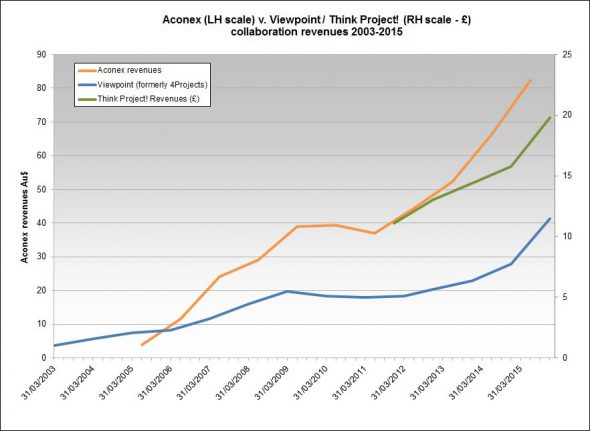
Inevitably, comparisons will be made between the performance of Viewpoint and those of construction SaaS competitors, particularly Australia’s Aconex. In the year to 30 June 2016, Aconex announced underlying organic revenue growth of 31%, with the acquisition of Conject boosting total revenue growth to 50% (read Conject deal boosts Aconex revenue growth). Viewpoint matches these figures closely – underlying growth of 32% with the MCS acquisition pushing total growth to 48%. Earlier this year, Germany’s Think Project! reported 2015 revenue growth of 33% (post), so we have something of a benchmark of 30%-plus revenue growth to use to assess others’ performance. Of course, the scale differs but recent revenue trajectories across the three businesses appear very similar (see below); at the top of the market, this looks currently to be a buoyant and fast-growing sector.

collaboration-revenues-22oct2016

ad_bim_uk_header_800x158

Permanent link to this article: https://extranetevolution.com/2016/10/viewpoint-uk-revenues-up-48-in-2015/

Think Project! strengthens European base

Thinkproject-logoThink Project! CEO Thomas Bachmaier is optimistic about his business’s prospects in the increasingly competitive European SaaS construction collaboration technology market. The Munich, Germany-based company is now facing stronger competition in its core markets following the acquisition of key competitor Conject by the international market leader Aconex in March 2016, but has been busy expanding its own European footprint in recent months.

Thomas BachmaierIn an exclusive Extranet Evolution interview, Bachmaier listed a string of recent moves:

German market consolidation

Bachmaier was particularly pleased about the Conetics deal:

“In Germany, we have a number of smaller construction collaboration businesses, and also ‘point solution’ providers in fields such as defects management. Conetics is one of the oldest – it was started in 2002 by a property and construction business, the Bauwens Group, managed by the grandson of former German Chancellor Konrad Adenauer. The acquisition has strengthened our position in north, western and central Germany, and while we have a good customer base in construction and engineering, Conetics had strong relationships with several German property developers where we were less strong.”

The deal added ten employees to the Think Project! workforce, and will boost revenues by around €2m a year, he said. Further deals may follow in 2017, but the immediate plan was to consolidate the existing group businesses.

European expansion

Existing Think Project! customers have helped the company establish a footprint in projects in France (in addition to its involvement in product lifecycle management, PLM, vendor Lascom), in Benelux (“a very mature market”) and in Denmark and Sweden, Bachmaier said.

ProjectCenter-logoHowever, customers in some markets are sensitive about working with vendors from outside their own country. This provided the rationale for establishing a joint venture with – rather than acquiring – Spain’s ProjectCentre. “It is the strongest player in a recovering market that has yet to adopt SaaS collaboration to the same extent as countries in northern and central Europe,” Bachmaier said.

Poland also appears to be ripe for rapid growth in SaaS adoption in construction, he continued, highlighting opportunities in infrastructure projects there and in nearby central and eastern European countries such as the Czech Republic.

Digital transformation

Bachmaier said there was also growing investor interest in European construction software businesses. The Aconex acquisition of Conject had increased focus on the sector, buoyed also by German interest in ‘Industry 4.0,’ or digital transformation, of an industry which had hitherto been regarded as somewhat conservative. “We started to see changes in the market in 2015,” Bachmaier said. “We are now having lots of ‘C level’ meetings with organisations interested in investing in BIM and digital transformation to improve industry productivity.”

Such German interest in digitisation parallels the “Digital Built Britain” strategy in the UK – first launched in February 2015 (post), and strengthened by the launch at the ICE BIM conference (19 October 2016) of a new Digital Built Britain body (see news release). This stresses that the continued development of the sector’s IT capabilities is not just a BIM or even a construction issue, but also anticipates the development of wider strategies encompassing Smart Cities and the digital economy.

Permanent link to this article: https://extranetevolution.com/2016/10/think-project-strengthens-european-base/

ConstructPM talks up mobile tech

Construct.pm logoDigital Construction Week is taking place in London next week, and one of last year’s exhibitors, London-based Construct.pm has been in touch. I talked to the mobile-first construction project management app business in late December 2015 when it was working with early adopter customer ISG. A case study based on a project at London’s Broadgate suggests:

  • the technology removes £1 million of non-productive time
  • Construct app savies 1.5 hours per employee per day, and
  • could “save construction industry hundreds of millions of pounds” of non-productive time in the future.

ISG trialled the Construct.pm app on Europe’s largest office fit-out, 5 Broadgate in the City of London, a 700,000 sq ft project. Matt Blowers, managing director of ISG’s UK fit-out business said:

“The built environment sector has been languishing behind many other industries when it comes to improvements in productivity, which has risen just 1.4 percent in the past 20 years. This trend cannot continue into the future and we’re absolutely committed as a business to explore every new technology and working methodology that can help us raise our game and that of the industry as a whole.

“We took an ambitious approach when we trialled the Construct app on one of the UK’s largest ever fit-out projects at 5 Broadgate – but the results clearly demonstrate the wider capacity for this technology to ratchet up productivity and save the industry hundreds of millions of pounds.”

Anthony Erwin, founder of Construct Technologies, said:

“This technology has the ability to change the future of construction as we know it. We have taken the BIM revolution to another level and created a one-stop-shop app for an entire complex project. The ISG trial has been vital in the evolution of the app and the results have exceeded all of our expectations. We’re now in a position to roll out this technology to the wider industry in 2017.”

Construct claims to be “the first end-to-end fully customisable information and process management system for on-site construction work,” helping sites to become completely paperless, and so reducing costs, administration and inefficiency (something that numerous AEC SaaS vendors have been proclaiming since the late 1990s). It says it “makes forms, processes, tasks, snags, drawings, files and programme details available instantly on a user’s mobile device or tablet and therefore ensures that they always have the latest information at all times”.

As regular readers will know, this is an intensely competitive market, with several start-ups as well as more mature businesses providing mobile-oriented project management applications, including UK and Europe-based Basestone, Finalcad, GenieBelt, SherLayer and BuildCloud (and mobile offerings from mature players includng Aconex, Viewpoint, Conject and Think Project!), plus US-based Plangrid, FieldLens, Jobsite Unite and Skysite, among others.


Permanent link to this article: https://extranetevolution.com/2016/10/constructpm-talks-up-mobile-tech/

Saas budget management with Budget4cast

budget4cast logoLaunched in the US at the recent Construction Management Association of America (CMAA) conference in San Diego, California, is a new cloud-based project budget management application, Budget4cast.

Denver, Colorado-based CEO Bryan Carruthers (a career project manager turned AEC software entrepreneur) believes it’s something of a unique product, which he says generated a lot of interest and excitement at the CMAA event. He told me:

“the application is solely for managing project budgets and is geared mostly towards owners, developers, or owners’ representatives rather than contractors. We are not trying to be a complete extranet but are instead focussing on providing the best platform for a specific task.”

He continues:

“We have a robust ability to forecast costs (as well as, of course, track actual incurred costs) and some unique features allowing documents to be linked to line items, customized ‘one click’ reporting and an ‘auto balance’ feature.”

budget4cast-screengrabAccording to the Budget4cast website, the application allows users to:

  • Customize, change and reorganize budget codes easily
  • Track all forecasted costs (committed, uncommitted, potential changes, and changes)
  • Attach supporting pdf’s to all line items for easy future reference.
  • Track actual costs and tie to commitments, changes, or direct to budget line items.
  • Reallocate between lines with a full audit trail of When, Why and Who made a change.
  • Collaborate with your team and stakeholders by inviting them to participate on your project with edit or view only user.
  • ‘Auto Balance’ lines you know will be spent through toggling on or off our feature that will automatically create an uncommitted placeholder and update it as you update other costs.
  • Filter all of your data to quickly find exactly what you’re looking for.

The product also has a “clean and minimal user interface so navigation is intuitive and efficient,” while the product is competitively priced (at least for this launch phase) – at US$49 per calendar month “no matter how many users and collaborators you have”. A free 30-day trial is also offered.

Competition?

I have previously discussed other project cost control applications in the cloud, but they have tended to be integrated with collaboration solutions and focused on the needs of contractors and project managers. For example, the UK’s BIW Technologies (later Conject, now Aconex) was one of the first to move into this market in the early 2000s, providing a project financial control module to support some key contractor customers, including Lendlease and Mace. California project management consultancy ARES developed a cloud-based project cost controls platform, Worksite, launched in November 2014 and acquired the following year by Aconex. At the time of this latter deal, I also identified a handful of other vendors with interests in this field (including Viewpoint, e-Builder and Bentley Systems’ EADOC).

Marketing

It is good to see a simple, SaaS-based solution launched for the construction industry that allows a customer to buy and start to use the service almost immediately, and at a price that encourages trial usage (this contrasts with many of the multi-function construction collaboration platforms which typically involve negotiation with a direct sales team, then implementation and training consultants before a project can even properly start – and with a timelag and hefty price tag to match). In a technologically astute world where customers increasingly expect to start using cloud-based services as soon as they’ve signed up and paid for them, that software sales process introduces friction.

Bryan’s business, and ‘mobile-first’ vendors such as Denmark-based GenieBelt (post) and the US’s Plangrid and FieldLens (post), get this. In short, I like Budget4cast’s straightforward marketing approach: doing one thing really well, targeting that niche, and then making it quick, easy and inexpensive for people to start using it.

Permanent link to this article: https://extranetevolution.com/2016/10/saas-budget-management-with-budget4cast/

Createmaster targets project handover

createmaster-logoLondon-based Createmaster describe themselves as “experts in process led, construction information handover management”. The business provides a combination of hands-on document management services and software-based services; its digital handover documentation services are managed using an online application called DocumentPark, and include:

  • Operation & Maintenance Manuals (O&Ms)
  • Health & Safety Files
  • Asset Registers & Planned Preventative Maintenance Schedules
  • BIM integration
  • Hosting & archiving

Such services pitch them directly against another London-based firm, Dome Consulting’s Dome Connect, which built on the parent company’s experience in providing commissioning and handover consultancy (see my February 2014 post). The online document hosting also pitches them against the handover information services included in SaaS construction collaboration vendors’ platforms. BIW Technologies (later Conject, and now part of Aconex) pioneered the online compilation of Health and Safety File information in the early 2000s (post), while Aconex initially (2011) partnered with and later (June 2012) acquired an Australian based online manuals business called Grazer. Similar services are also provided by UK-based rivals such as Viewpoint for Projects, Asite and Business Collaborator.

As well as DocumentPark, Createmaster also provides a cloud-based platform aimed at building residents called Resi-Sense, and – alongside its document-centric support services and software – has some building information modelling (BIM) capabilities; it has worked with BIM consultancy partner Ibsecad to create a hosted model environment linked to its DocumentPark solution.

QA Teambinder logoCreatemaster also has links with Melbourne, Australia-based QA Software, provider of the Teambinder collaboration application (July 2013 post). Createmaster managing director Brian Dodsworth is also MD of QA Software (UK) Ltd (formerly Createmaster Solutions), and the two businesses share a City of London address in Paul Street. The London-centric nature of the business is clear from the range of case studies shown on the website – the vast majority of its projects have been in London and the south-east of England. Clients used in recent Createmaster publicity include BAM, Carillion and Sir Robert McAlpine.

Permanent link to this article: https://extranetevolution.com/2016/10/createmaster-targets-project-handover/

Aconex connects to Dropbox

Aconex logo 2014At the end of August 2016, Dropbox and Australia-based SaaS construction collaboration vendor Aconex announced (Dropbox news release; Aconex news release) a global partnership to provide integrated cloud-based collaboration solutions to the construction and engineering industry.

As part of this agreement, Aconex and Dropbox will deliver better data integration between the two platforms, allowing users to save time and be more productive when managing capital projects of all sizes.

dropbox_blueAconex users will now be able to securely move documents, drawings, photos, and other files from Dropbox to Aconex with a few simple clicks. Once on the Aconex platform, the files can be shared, distributed, updated, tracked, and searched in controlled workflows across many different organizations connected on projects. The Dropbox integration is one of many API-powered solutions that enable Aconex users to exchange data with both internal and external systems.

Chris Dobbyn, senior vice president of the Americas at Aconex, said:

“We saw an opportunity to work more closely with Dropbox to improve the user experience. Many Aconex customers, particularly in the mid-market, use Dropbox for secure storage of project files before uploading them to the Aconex platform for project-wide collaboration. Our goal was to help them drive even greater efficiencies in the project environment.”

The integration will see Aconex join Dropbox’s ecosystem of thousands of API developers, which is helping users to collaborate and work smarter by allowing companies to seamlessly incorporate Dropbox Business into their core IT processes.

Commenting on the partnership, Thomas Hansen, Dropbox global vice president of revenue, said:

“Dropbox’s integration with Aconex builds on our broader aim to engage in partnerships that deliver additional value to our global customers. By investing in strategic partnerships, we are working towards our mission to build the world’s largest collaboration platform that allows users to simplify workflows and work the way they want, anytime and anywhere.”

The integration will be available to Aconex customers on request.

My view

Looking back, I see that I first mentioned Dropbox in the context of construction-related file-sharing in 2010 – two years after the service was launched. In January 2010, I also wrote about its rival Box.net (and about FileGenius) and other free and low-cost cloud-based file-sharing services (including SkyDrive – later OneDrive – and Google Drive) offering an apparently easy way for individuals and teams to share documents, drawings and other files with each other.

Of course, such services are not pre-configured to work seamlessly and efficiently with construction-oriented documentation – they don’t include CAD file viewers, version control is often rudimentary (if it exists at all), there will be little or no support for construction workflow processes, and if large numbers of files are shared, it can be time-consuming to search for specific items.

Nonetheless, they have become a common part of the AEC ecosystem, particularly for small projects or small teams which only need to share files (and will be preferable to network shared folders or FTP). This has prompted some AEC-specific vendors to emulate Dropbox-style file management processes (for example, SME collaboration specialist Collabor8online introduced file synchronisation in June 2013) or provide integration options with the more popular platforms (eg: Newforma included Box.net and DropBox support in a July 2014 update of its internally hosted Project Center product, and in September 2016 announced its Cloud Services Connector extended support for the same two services).

Aconex’s integration with Dropbox is a significant move, with the leading SaaS construction player developing a relationship with perhaps the most well-known of the generic cloud-based file sharing platforms. It potentially provides a migration pathway for Dropbox users to transition to a more fully-featured and construction-oriented platform, while also helping link the Aconex platform to internal teams, individual companies or supply chain groupings that might be using Dropbox for file-sharing and collaboration in advance of issuing their deliverables via the Aconex platform.

Permanent link to this article: https://extranetevolution.com/2016/10/aconex-connects-to-dropbox/

Load more