 In the biggest deal yet seen in the construction SaaS market, the Melbourne, Australia-based collaboration technology provider Aconex has acquired Munich, Germany-based rival Conject for A$96m (c. €65m or £51m or US$73.3m).
Aconex announced the agreement to acquire Conject Holding GmbH earlier today, along with its intention to launch a fully underwritten placement to raise approximately A$120m to cover the deal costs (read The Australian). The deal eclipses the previous biggest acquisition seen in the sector, the February 2006 purchase of Constructware by Autodesk, then valued at US$46m.
 The transaction is expected to close on or about 31 March 2016, subject to customary closing conditions, including approval by Germany’s Federal Ministry of Economics and Technology. According to Aconex, in the financial year ended 31 December 2015, Conject generated €24.5m (A$36.1m – £19.3m or US$27.6m) in total revenue and €0.8m (A$1.1m – £0.7m or US$0.8m) in earnings before interest, taxes, depreciation, and amortisation (EBITDA). The acquisition price implies a trailing revenue multiple of 2.7x.
Aconex anticipates the acquisition will help grow its revenues and profits, and will accelerate its business in Europe and other regions with a larger customer base, expanded sales and product development teams, and increased scale of operations. It does, though, expect to incur some one-time transaction and restructuring costs.
Strategic Synergies
Aconex CEO Leigh Jasper said:
 “This acquisition will significantly expand our market penetration and user network throughout Europe, and will further consolidate our position as a leader in the global market for cloud-based construction collaboration solutions,” said Aconex CEO Leigh Jasper. “We believe that the strategic, operational and financial synergies of the business combination will substantially increase the long-term value that we are able to deliver to Aconex customers and shareholders. The addition of Conject will reinforce our strategic focus of growing the network, expanding product breadth and driving scale.”
The acquisition is consistent with our strategy of market consolidation, and Conject provides the primary market consolidation opportunity available today. Conject’s customer base, business and culture are highly complementary to ours. Their footprint across Europe’s largest construction and infrastructure markets, particularly Germany and the UK, will strengthen our presence and further increase our global economies of scale by leveraging our existing infrastructure. We believe that the transaction will provide opportunities to improve Conject’s operating performance and drive margin expansion and growth over time. We look forward to welcoming their management and employees, integrating their operations, and serving their customers.”
Outlook for Conject’s Business Integrated with Aconex
Conject recorded compound annual revenue growth (CAGR) of 18% over the last three calendar years (read my report on its 2014 performance). For the year ended 31 December 2015, Conject achieved gross margin of 73% and EBITDA margin of 3%. Aconex believes that under its ownership and management, the Conject business can achieve 15-20% revenue growth over the next four years, with gross margin of 70-72% in the near term and 73-75% in the medium term. With improvements in operating performance and the effects of product and operational synergies, Aconex expects the EBITDA margin to improve, reaching 11-16% in the near term and 20-25% in the medium term on an ongoing operations basis, excluding the impact of one-time costs related to the acquisition and integration.
“Leading the Construction Collaboration Market in Europe”
 Conject, the Infrastructure Lifecycle Management (ILM) Group – described by Aconex in its release as “Leading the Construction Collaboration Market in Europe” (a claim that might be disputed by its fast-growing rival Think Project!, also based in Munich) – was founded in 2000 in Germany and in December 2010 it acquired BIW Technologies, a Woking, UK-based construction collaboration software provider founded in 1999. Headquartered in Munich, Conject currently has approximately 210 employees located in 12 offices in nine countries. The company has served large, complex construction and infrastructure projects throughout Europe and other regions, with a customer base of more than 670 asset owners/operators and contractors and users in approximately 50 countries. Major customers include:
- ArcelorMittal/Nippon Steel (Germany)
- Stiftung Zollverein (Germany)
- Bank Austria
- The National Grid (U.K.)
- University of Manchester (U.K.)
- Groupe Vinci (France)
- BNP Paribas Residentiel (France)
- Spectrum Holding (Russia)
- Mace (Poland)
- Changi Airport Authority (Singapore)
- Hyundai (United Arab Emirates).
Conject’s current product portfolio supports the plan-build-operate lifecycle of assets. For project management, the company provides a cross-company collaboration platform which operates both on premise and in the cloud. Conject also provides solutions for mobility, cost control, mobile inspections (launched in the UK in May 2014, following its Wapp6 acquisition), and facility management.
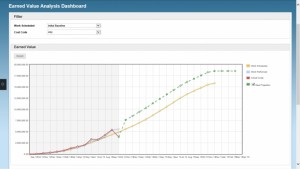 Aconex believes that Conject’s successful experience in marketing, selling and supporting its Project Controls solution will benefit the commercial launch of the Aconex connected cost module later in calendar year 2016. This module will provide unified cost control across the project lifecycle, including claims and payments, contract administration, earned value management (EVM – post), budgeting, cost performance, and forecasting. The cloud-based cost control solution was acquired with Worksite in July 2015 and has been subsequently integrated with the Aconex collaboration platform.
Aconex also believes that the Conject acquisition will help drive penetration of its Aconex Connected BIM solution in the UK and other European markets leading the adoption of building information modelling (BIM) for construction projects. Aconex Connected BIM (launched in October 2014) manages BIM data and processes for project-wide collaboration between design and construction teams and handover to the asset owner. The company envisions similar leverage for Aconex Field, which enables field safety and quality inspections and defects management on mobile devices.
My reaction
The deal consolidates Aconex’s global leadership position among the SaaS collaboration pure plays, and it may also re-energise the Conject business. I have been hearing industry rumours about Conject being put up for sale and/or looking for new investment for some months; while the early signs of a resurgence were strong following the December 2010 acquisition of BIW Technologies, I think that initial dynamism has dissipated in recent years.
Despite the heavy losses BIW experienced when the Global Financial Crisis devastated the construction market in 2008 (read BIW – Battered in Woking), it retained a strong management team led by Colin Smith. After BIW plc went into administration, it recapitalised in late 2009. Effectively a ‘pre-pack’ deal was done that allowed previous directors and shareholders to acquire the operating company, BIW Technologies Ltd, and start afresh, free of the loan notes that brought the holding company down (while also destroying any equity held by many employees – myself included).
The acquisition of BIW by Conject a year later gave the Munich-based company a strong footprint in the UK and in the Middle East and other markets, and there also appeared to be a good ‘fit’ between the construction and FM strengths of the two firms. Rivals perhaps expected the UK management team to disappear but during the first 15 months, BIW CEO Colin Smith (below right) quickly replaced Martin Reents as Conject CEO, BIW sales director Steve Cooper also joined the holding company’s board, and the BIW SaaS product suite remained the strongest in the group’s portfolio, with investments in a new SaaS FM application and, later, BIM, set to strengthen the offering.
 However, after Colin Smith left in December 2013 (later joining Textura), the business, in my view, lost momentum. UK revenues were growing, but Conject lagged technologically behind its rivals in responding to industry demands for BIM capabilities (it finally joined the BIM race just a year ago) and for mobile functionality; a UK launch of the SaaS FM solution was repeatedly postponed; and despite rebranding to Conject many UK end-users still tended to refer to the core platform as “BIW”. In April 2015, Smith’s successor Ralf Händl talked fairly conservatively about the polarisation created by BIM and about industry consolidation, perhaps hinting that Conject was open to suitors. Today, we have seen how that consolidation forecast has worked out.
Aconex’s founders and other members of its management team share some of the dynamism and ambition personified in Colin Smith, I think. I believe they will re-energise what became a somewhat staid Conject business, while also dramatically increasing the Aconex group’s penetration into Europe, particularly in the UK and in the central and eastern European markets where Conject has long retained a strong presence.
In terms of technology, the cost management capabilities of Conject’s Financial Control application, developed in the early 2000s to meet a major contractor’s exacting demands, have long been a strength and will accelerate the availability of tried and tested project cost control technology for contractor organisations and other industry clients. Conject’s UK team has led the group’s BIM developments, and with UK BIM practices now increasingly being emulated in other countries, this will add strength to Aconex’s BIM offering. However, I would not be surprised if Aconex disposed of some of the non-SaaS elements of Conject’s German operation, while looking to expand its own whole-life asset and data management capabilities in the cloud.
Update (22 March 2016) – A snippet from the transcript of the Aconex teleconference regarding the acquisition, quoting Leigh Jasper, and covering the integration aspects of the deal:
As part of this acquisition, we have put together a detailed plan to fully integrate Conject and the Aconex business, driving overall profit growth for the combined entity. We have factored in a one-time operational integration investment to bring Conject up to Aconex operating standards, which will ultimately drive more efficiency and productivity into the team. We will leverage synergy to improve operating performance and increase global economies of scale.
We will consolidate the platforms in much the same way that we have consolidated the INCITE Keystone platform; continuing to operate the Conject platform in the near term, but then fully aligning customers and integrating the platforms over the long term, ultimately resulting in one platform for all customers on the Aconex network. The success of the INCITE Keystone acquisition has provided a strong template for how this can work with the Conject-Aconex integration.
[Disclosure: As mentioned, I am a former employee of BIW Technologies (2000- May 2009). I have also undertaken consultancy work for Conject.] Apologies also to anyone affected by a short datacentre outage around noon GMT, 17 March.

 I have written occasionally about construction software vendors’ activities in southern Africa, but a factor in expansion into that region, particularly for Software-as-a-Service vendors, has been internet connectivity. As a result, it has lagged behind other parts of the developing world in adopting and using cloud-based technologies, but there have been some encouraging signs in recent years.
“As Africa’s construction industry continues to evolve, there have been significant technological improvements, but BIM is still very much a new acronym to the industry.

 Preventing disputes with Go-Cam Video Reporting
 Bridgit was founded in 2012 by Brodie, right, and Lauren Lake. Both founders’ families are in the construction industry, and the women suspected it was ripe for innovation. The pair proved the validity of their concept by talking to workers about their challenges and frustrations. Contractors kept track of to-do lists on sticky notes and scribbles on plans nailed to the wall. More organized contractors kept spreadsheets of different tasks and notes, and then emailed or phoned in requests to the appropriate subcontractors.
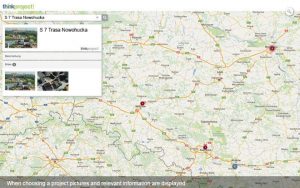 MapDash is an entirely new optional interface that puts visual representation of their project at users’ fingertips. Projects can be displayed on a Google Map to provide quick overviews of their current status as well as project details, photographs, project progress, deadlines, costs and related documents.
 BIM Exchange simplifies exchange of models between project participants
 “
“
 With a few honourable exceptions (some mentioned in the
 The compilation of operation and maintenance information for handover to the owner/operator of a built asset used to involve retrospective collation of large volumes of documentation, with much of the information duplicated across different sections, and often more than copy of the whole O&M manual needing to be delivered.
 In short, this requirement is already being targeted by several SaaS technology vendors, but that doesn’t mean there isn’t room for others. I was recently contacted by Brenton Wiberg, a partner in California, US-based

 The merging of Conject with Aconex creates a significant and positive development for our customers and users, wherever in the world they are located. Together with Aconex, we become a truly global provider:
 Is it a game-changer? “It’s huge and has a very exciting outcome, but it was only a matter of time. When Aconex raised their last round of funding they were expected to acquire. I spoke with Leigh about this at the time – I’m just surprised it took so long.”
 “As one of the leading CDEs available, GroupBC is delighted to see that our once niche industry has matured to such an extent that acquisitions of this scale are now happening.
 “The deal set off some strong feelings. I founded BIW Technologies and was CEO of Conject for three years of intense change. It was a memorable experience and I retain many good friends among its colleagues and customers.
 I gave the tool a quick test, downloading the Android version of the app (v0.0.3) to my Samsung Galaxy S6. After entering some contact details and a password, I was able to film a short video (uploaded over my wifi) and then email a link to that video to an email address I own (strangely, it also offered the option of sharing the video to Facebook – a legacy, it appears, of a sister product called AngelCam). The email gave a location link but this only included half of the coordinates in the URL so the mapping didn’t work. Clicking on the video link opened up the video in my browser, but it was far from “clear” – it was tiny, and there was no obvious way to expand the image.