Los Angeles, US-based FluidCM (Fluid Contract Manager), which I wrote about in October 2013, is releasing several free cloud-based tools allowing companies to sample its mobile-first, intuitive-to-use construction software. The FluidCM Free Tool Campaign allows contractors, project owners, and architecture and engineering teams to store up to 1GB of data with unlimited users. This will give cloud newcomers a taste of what such applications can do for them (just last week, I highlighted how US AEC SaaS specialist Procore had instigated a similar free app programme).
FluidCM’s president Don Speedie says:
“The tools we are releasing not only save personnel time, but speed up your project by digitizing the workflow. Sending files like RFIs, Submittals and posting Daily Logs digitally can save weeks on a project timeline. The system helps users understand who is responsible for processing the information allowing managers to drill down to problem areas quickly.”
Update (22 July 2014) – As part of its free use campaign, FluidCM has released a complimentary cloud-based Daily Log tool, which allows users to automatically track the weather on their projects, track key site activities like crews on site, inspections, safety and delay issues, add photos and allow subcontractors to submit reports online.
A reaction
Free construction Software-as-a-Service applications sets off some small alarm bells for me. In the early “landgrab” days of construction SaaS applications – c. 2000 – I recall some early vendors (notably Buzzsaw, which started as an Autodesk spin-off before, eventually, and after incurring substantial losses, being brought back into the Autodesk fold) offering free use of their platform to tempt early trial users (and to tempt them away from rival paid-for offerings).
Of course, the AEC SaaS market has changed hugely over the past 15 years, but – in my view – free, or very low-cost, software is not a sustainable long-term B2B proposition. That’s not to say that you can’t run a short-term campaign or promotion, but “free” applications cost the vendor, can set low/no cost expectations among users, and, in the volatile world of SaaS, open opportunities for customers to ‘churn’ across available, increasingly commoditised solutions rather than choosing the best application for their needs.
 This tendency will be particularly strong in the cost-conscious, low-margin world of construction (sometimes rightly derided for cynically “knowing the price of everything, but the value of nothing” – Oscar Wilde). If a product or service delivers real value, then the vendors should charge, and customers should pay, a realistic price that covers the supplier’s costs and reflects the user benefits delivered. Remember: as well as being a tool for driving customer behaviour, price also serves as a tool for managing capacity, as a quality indicator, and as a signal to competitors.


 I talked to EstimateOne’s founders Andrew Ritchie, left, and Mike Ashcroft, right, recently. The duo – respectively, a banking industry project manager and a commercial estimator and project manager – started EstimateOne in 2008, and have boot-strapped the company to its current (profitable) position without additional investment. In 2012-13, the business turned over $1.27m and is forecast to achieve revenues of $2.15m in 2013-14.

 “Our appointment to the G-Cloud framework builds on our long-standing relationships providing project collaboration services in the cloud to UK government. Together with our long-standing commitment to supporting the government’s Construction Strategy and in particular the achievement of Level 2 BIM with our cBIM service, we are fully committed to the improvement of procurement in UK construction.”
 The global financial crisis and resulting recession hurt all the UK-based vendors, some more than others depending upon their exposure to certain market sectors or adversely affected regions. Growth rates – averaging around 14% up to 2009 – went into reverse, with revenues dropping by an average 7% over the next three or four years. By the time the UK construction sector began to emerge from recession, I figure the SaaS collaboration space had lost around a quarter of its value.
 The UK Ministry of Justice (MoJ) has selected
  “MOJ’s selection of 4Projects’ 4BIM will most certainly clear a path for other U.K. agencies and capital project managers in their evaluation and selection of an extremely well vetted and tested BIM collaboration system. It is a critical time for all those managing government sponsored projects with the mandate of achieving Level 2 BIM quickly approaching in 2016. We are happy to be a part of this exciting time in the U.K.’s construction history, and are proud our products are helping to deliver the functionality necessary to make a valuable impact on how key stakeholders are working collaboratively on projects, while also meeting the requirements of the regulation.”
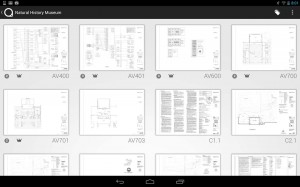 Most recently, Plangrid launched its first Android application. This currently lacks some of the features of the iOS version, but the product will quickly catch up, and enable the wider sharing of site problems across supply chains using different devices. Asked about Windows devices, Ralph said they’d found IT professionals were keen on Microsoft devices within corporates, but this enthusiasm didn’t percolate out to job sites.
 Ed Bartlett, CEO and co-founder of
  “It is great to see members of the Royal household taking a genuine interest in UK technology industry and its contribution to the economy. Whilst I appreciate some of the technology on show may have been unfamiliar to them, they seemed to have a real interest in what it was we do and the opportunities technology businesses present, asking pertinent questions and getting hands-on involved in some product demonstrations.”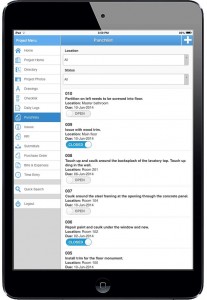
 Four months after releasing an Android app (
 “Mobility from jobsite to office is commonplace in the construction industry, and smartphones and tablets provide construction professionals with convenient, on-the- go computing ability no matter their location. With the release of the Corecon Mobile app for iPhone/iPad, project team members can reach an advanced level of real-time project management by enjoying the full capabilities of their more portable smartphone and tablet devices.”