ConjectMI – mobile inspections – launched

“The UK’s first fully integrated enterprise-level solution for defects and inspection processes” Or maybe not.

ConjectOn 1 May 2014, I attended a London breakfast briefing about Conject‘s new mobile defects management and inspection toolset, then somewhat cryptically branded “OPR6”. I have just received a news release from the Woking office of the Anglo-German SaaS construction software provider, launching the system (available from 2 June) as “the UK’s first fully integrated enterprise-level solution for defects and inspection processes in construction and engineering projects”, and it’s been renamed: conjectMI (the MI stands for mobile inspections).

The release says:

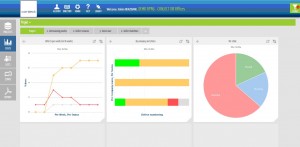
OPR6screenshot1OPR6screenshot2“The platform provides a best-in-class user interface together with the powerful back-end infrastructure that large organisations need in order to make transformative improvements to quality and on-time delivery across programmes and projects.

In the UK there is a proliferation of low-price downloadable applications, but recent CONJECT market research amongst 340 AEC industry respondents found that construction teams are making-do with inefficient tools, and that user satisfaction is low with existing tools, be they defects management apps or more traditional tools such as Excel. There is frustration with limited reporting capabilities, lack of user friendliness and difficulty managing the supply chain.

The powerful capabilities of conjectMI puts it in a class apart from single-user downloadable apps which are fit for small projects only.

UK MD Steve Cooper says:

Steve Cooper“This new version of conjectMI has impressed the clients we have shared it with. The combination of an easy-to-navigate interface and cloud hosting, dramatically improves efficiency. One customer captured 500 defects in a single morning. He was ecstatic, saying the software would save him at least one headcount on that project alone. … There are plenty of downloadable defects apps, but this solution doesn’t seek to compete with those. We want to provide major clients with a scalable solution that can be used enterprise-wide and free project teams to manage quality and improve safety through faster, real-time management of defects.”

My view

It is easy to declare some clear blue water between single-user applications and the conjectMI solution, but rival vendors will immediately contest the assertion that it is the first enterprise-level application (much will depend, of course, on how ‘enterprise-level’ is defined).

For example, Mobile Computing Solutions’ Priority1 is a mature UK product that started out as a PDA solution and has been progressively updated to today’s Android tablet application, backed with a Software-as-a-Service reporting and workflow management backend (see MCS Priority1 working with 4Projects post). It is being used across various sites by employees of contractor Willmott Dixon, for example, both for site-specific tasks such as defects management, and for multi-site reporting across projects by group staff monitoring health and safety and environmental performance. Moreover, MCS’s relationship with 4Projects means the Priority1 quality control features complement functionality already offered in 4Mobile and in the core 4Projects SaaS platform.

And there are others. In February, I wrote about Dome Consulting and its developing suite of SaaS collaboration (Dome Connect) and defects management (iSnag) tools, and last month I described Newforma’s new mobile quality control data capture and task creation tools.

[Disclosure: at different times, I have undertaken consultancy projects for Conject, MCS Priority1 and 4Projects]

Permanent link to this article: http://extranetevolution.com/2014/05/conjectmi-mobile-inspections-launched/

4Projects: the future is cloud-based everything

Now dubbed 4Projects by Viewpoint, the collaboration solution is spearheading wider adoption of SaaS across the Viewpoint portfolio.

I attended most of the second day of the 4Projects user conference in Newcastle yesterday (Thursday), hoping to hear more about the parent company Viewpoint Construction Software’s plans for its locally-based UK Software-as-a-Service construction collaboration vendor subsidiary. I wasn’t disappointed; the two breakout sessions discussed the roadmap for the 4Projects BIM Hub, and, some 15 months after Viewpoint acquired 4Projects, plans for the overall convergence of the group’s collaboration and ERP product suite. I also noted some alterations to the company branding.

‘4Projects by Viewpoint’

4Projects by Viewpoint - blueAs a marketeer, I’d noticed some subtle changes to the 4Projects branding. First, my company contacts recently switched to Viewpoint.com email addresses. And, second, the event’s literature sported a new logo – changed from “4Projects – a Viewpoint company” to “4Projects by Viewpoint” and the event was titled, somewhat inelegantly, the “4Projects by Viewpoint Customer and Partner Forum”. It appears that the business (like UK competitor BIW which rebranded 15 months after it was acquired by Conject in December 2010) is gradually moving towards being rebadged as Viewpoint, with 4Projects becoming just a European product name – at least for the time being (the Australian product, now apparently sold by a direct sales team rather than through a partner, having adopted the US branding of Viewpoint for collaboration).

4BIM

John Adams, who heads up 4Projects’ 4BIM efforts in Newcastle, led a session on the BIM product line and roadmap. He looked back to the publication of PAS1192-2 early last year, and then explained how its recommendations for a Common Data Environment are reflected in 4Projects project model information delivery processes covering Employer’s Information Requirements, BIM Execution Plans, single design models and master design models, etc (“4Projects also manages the grey boxes of workflows like approvals”).
John Adams demonstrating 4BIMJohn demonstrated (as far as the wifi of the Copthorne Hotel allowed) the 4BIM viewer showing how users could navigate around a visualisation of the model, drill into work breakdown structures and even edit COBie data. The platform has clearly matured since I saw it in March 2013, with new functionality and workflow support being added to support BIM-based collaboration.

There was a lively discussion of the partnership between 4Projects and Solibri (January 2014 post) and of how model validation fitted into BIM processes (still a lot of work to do on creating rule sets it seems, and I detected some scepticism about the industry’s overall BIM readiness, summed up by one experienced information manager:I feel like I bought a rocket to go to the moon, but I got a big box of parts and no instructions”). John then talked about the BIM Hub roadmap, describing, for example, BIM dashboards that would help users see at a glance how complete their models were for different data drop purposes. He also mentioned “social walls” that could be used to provide better quality discussions about project design, a continued integration path with other Viewpoint point solutions, and more mobile BIM.

Viewpoint see collaboration and ERP converging

I didn’t appreciate it immediately, but John’s BIM overview was a good lead-in to the afternoon session, led by Jeremy Larson, on the Viewpoint product roadmap (at lunch, Viewpoint’s VP Product Management Rob Humphreys told me that around 22% of Viewpoint ERP customers were already using the product “in the cloud”). Jeremy started by looking back briefly at the history of the Viewpoint system architecture, noting that it tended to go through major changes about once every seven years. The last big iteration of Viewpoint’s core ERP system was in 2007 when it released its V6 Windows product and the next big change would see this and other products in the company’s portfolio undergo a gradual “unification” of products (Viewpoint CEO Jay Haladay stressed this was “evolutionary not revolutionary”). The aims are:

  • provide a high quality, contemporary user experience
  • extend browser-based access across all applications and data (web-based ERP by 2017, accounting in 2018 – mostly via Viewpoint-managed hosting, but recognising that a perhaps slowly reducing minority of companies will want to keep some data in their own private clouds)
  • support workflows reflecting the realities of construction processes, and
  • integrate all parts of the Viewpoint portfolio, so that
  • customers can develop long-term relationship with Viewpoint, rather than multiple vendors of disparate point solutions.

The outlined programme stretched through to 2018, but is already under way. Viewpoint is aiming to leverage its core collaboration and ERP strengths, with the first stage – “next generation project management document control” – encompassing document control, cost control, BIM collaboration and COBie delivery, ready in March 2015. Further convergence of the two strengths would see enhanced tendering, subcontractor/vendor qualification and project opportunity tools released in September 2015, followed by cost control, contract change management, subcontractor management and change order modules in 2016.

Viewpoint’s future users are also expected to be increasingly mobile (I learned that, in addition to 4Projects’ 4Mobile – post, Viewpoint also has field data capture applications supporting its US ERP solutions, including one acquired as part of the February 2014 Maxwell Systems deal), and the business will extend access via Android and iOS devices first, then Windows. Echoing the mention of ‘social’ earlier in the day, Jeremy also stressed that “social is becoming part of construction” and he showed some user interface concepts clearly strongly influenced by current social media platforms.

These prompted some debate among the 4Projects users in the session, mostly information managers responsible for administration of the 4Projects collaboration platform across large organisations and even larger supply chain networks. Roll-out of previous upgrades of the core platform hadn’t been without occasional problems, it seemed, and the somewhat radical new ‘look and feel’ was seen as a major step change, likely to add to the disruptive effects of increasingly wider adoption of BIM for UK project delivery in 2016. Jeremy, Jay and the other 4Projects staff listened carefully to the points and promised to consult and inform as widely as possible and to roll-out new developments with as much education and support as possible, deploying new “learning services” people to assist with the process.

Four views

  1. Having met various Viewpoint and 4Projects people over the last year or so, this event confirmed the clear direction of travel – and it’s ‘into the cloud’. Software-as-a-Service collaboration is clearly not just a useful addition to the parent company’s portfolio; it has given Viewpoint a strong base to combine its core experience and its growing technical know-how in web services, and to move more of its ERP customers towards a SaaS subscription model with all the benefits that brings to them (lower IT overheads, transfer of risk, more predictable IT expenditure, etc) and to Viewpoint (economies of scale and skills, more predictable revenues, etc).
  2. The repeated references to simpler user experiences, being mobile-friendly and ‘social’ also show that the company knows collaboration platforms (and other software) run the risk of appearing out-dated and user-unfriendly in a world in which even corporate IT solutions have to be immediately available and intuitive to use. And this is particularly vital for SaaS solutions, which need to limit customer and end-user ‘churn’ and trials of alternative online products if they are to be commercially successful. I have noted before (here, for instance) how recent startups have adopted mobile-first, real-time approaches to AEC collaboration, looking to capture the current zeitgeist and supersede the email-reliant, asynchronous nature of established collaboration platforms.
  3. Having attended several SaaS collaboration user conferences, including ones for Conject, Unit4 BC and Asite, this was slightly different as it was a post-acquisition event. As such it allowed key 4Projects users who attended to get a clearer picture of how the collaboration offering fits into the future Viewpoint picture, and to be reassured it wasn’t about to lost or bundled up into something bigger. Indeed, the hosts stressed that customers could stick with the core collaboration modules if that’s all they needed. The longer-term intention, though, is clearly to provide a richer range of complementary functionality that can, if necessary, be progressively switched on as customers’ requirements evolve.
  4. In the final session of the day, CEO Jay Haladay asked delegates if they would attend a similar event in London next year, and there was a good show of hands. With earlier announcement of the date, allowing more time for attendees to plan their diaries, an increased attendance would, I think, be achieved (marketing manager Adam Page told me they’d had around 60 user registrations, though not everyone could attend the whole two days). And with communication clearly important to users when it comes to roll-out of new systems, such conferences will be even more important as Viewpoint delivers its new look applications into a market facing multiple disruptions.

[Disclosure: 4Projects paid my travel and overnight accommodation costs to attend; prior commitments prevented me joining the first day.]

Permanent link to this article: http://extranetevolution.com/2014/05/4projects-the-future-is-cloud-based-everything/

Think Project! updates – and integrates

Thinkproject-logoMunich-based SaaS construction collaboration vendor Think Project! has announced the forthcoming release of a new update to its web-based platform. The stand-out items for me are the integration features, underlining how sophisticated SaaS tools are increasingly being linked to other back-office enterprise systems, and not just by proprietary connections, to seamlessly share data between different applications.

Available to users from 10 June, the new version features:

  • a refreshed product interface – more than just a cosmetic overhaul, the updated interface incorporates numerous functional improvements, many requested by end-users
  • new version of Crystal Reports and new export formats – high quality, complex reporting outputs now possible to Crystal Reports Service 2013, and to Excel (‘business intelligence’ is a growing area of functional importance to SaaS vendors in this market, with Conject, 4Projects, Asite, McLaren and eBuilder all adding BI features – post).
  • thinkproject-mobile version checkMobile Version Check – uses QR codes and Adobe PDF Services to help determine the status of a printed document; for example, is a drawing current or obsolete, is an invoice approved, open, allocated, etc? (Unit4’s Business Collaborator has offered a similar feature since it launched BC6.1 in February 2013).

  • Deep Links services for cross-linked information – information in think project! can be linked with information in other systems (eg: internal document management or cost control systems), either statically or dynamically call up the most up-to-date version, so avoiding double-handling of information.
  • Outlook Connect – a testament to construction’s continued reliance on email correspondence is the repeated request for integration with Microsoft Outlook. think project! Outlook Connect maintains the complete structured project repository, allowing emails to be transferred into it by drag & drop.
  • RESTful API – The think project! backend has long offered an application programming interface, API, based on SOAP (the Outlook Connect uses this), but a new REST-based API has been added, opening up opportunities to dock various frontends onto the think project! backend.
  • Two factor authentication using RSA tokens – As an option, think project! offers an enhanced level of login security using RSA authentication technologies, requiring exchange of a six-digit numeric code within 60 seconds (Google’s similar two-factor Authenticator may be familiar to some readers; other SaaS construction collaboration providers also offer RSA-based services; I believe it’s an option at Conject, for example).

Permanent link to this article: http://extranetevolution.com/2014/05/think-project-updates-and-integrates/

CADBeam eyes mobile construction, adds scheduling

London-based, but French-accented, CADBEAM has a mobile-first approach that embraces construction programme management.

cadbeam logoThe London tech startup community is internationally renowned and when Paris-based CADBEAM won a UK Trade & Industry entrepreneur competition providing funding to further develop its web and mobile construction technology, its two principles, engineers Laurent Biancardini and Alex Spieser had little hesitation in moving their company to London’s Shoreditch quarter and taking some space in The Bakery accelerator space.

I walked down from “Silicon Roundabout” last Friday to learn more about this early stage company. Like other London-based AEC-oriented startups I’ve talked to so far this year (eg: Blue Ronin/Basestonepost; HANDS HQpost), CADBEAM grew out of frustration at the time wasted through relying on paper-based processes on-site. Civil engineer Laurent was working with contractor Vinci Energies and felt that mobile devices had to be better for capturing progress notes out on site and then updating systems once he got back to the site office. With systems engineer Alex, he set up CADBEAM, and, seeking funding, successfully applied to the UKTI’s Sirius Programme. Consequently, the business moved to London and is now looking to develop an application accessible from both Apple iOS and Android devices (to be launched in late 2014).

At the moment, the platform is purely a web-based Software-as-a-Service programme, with an intuitive dashboard that allows users to navigate quickly to their current projects and to get an at-a-glance overview of their project(s) progress. For CADBEAM, a key concept is the creation of zones to divide otherwise extensive large sites, particularly extensive floor-plates in multi-storey developments; editable PDFs are used for plan views of each zone. These can also be explored by specialism, meaning different subcontractors can quickly identify issues (marked by ‘pins’) that are relevant to their expertise. So far nothing that new, but as issues are reported, the application will also identify the potential time impact on the overall programme, with Gannt charts displayed to visualise delays and knock-on effects on other specialist trades. This was the stand-out difference for me.

Their mobile-first approach echoes that of FieldLens and Geniebelt (see recent post), but other vendors such as Mobile Computing Solutions Priority1 (post) have substantial adoption, already deploy pin-based navigation on Android tablets, and are adding rich levels of functionality beyond snagging and other site-based processes. In the meantime, the CADBEAM team are now engaged in growing the business, increasing their visibility, learning about the UK market and seeking their first testers and early adopters (and, despite the name, they know the future is more about BIM than CAD).

Permanent link to this article: http://extranetevolution.com/2014/05/cadbeam-eyes-mobile-construction-adds-scheduling/

Marketing moves at McLaren

McLaren-logoFurther to the marketing moves I mentioned in April, McLaren Software has been making more changes to make its engineering information management (EIM) business more responsive to the needs of its different types of customers, appointing news sales and marketing personnel and creating teams dedicated to each of its key markets – on-premise engineering document management, Software-as-a-Service construction project collaboration, and facilities management.

McLaren VP SaaS, Philippe MichardiereA civil engineer by background, Philippe Michardiere, based in Paris, has been appointed as vice-president of SaaS sales and marketing. He also acts as country manager for McLaren’s construction SaaS activities in France, Germany and Poland, having joined the group in 2010 when it was known as CTSpace as a director of its southern Europe and Germany operations. He was previously an Oracle business development  manager, and, before that, worked in ebusiness at Capgemini.

The EIM division turned over £19.2m in the year to 31 October 2013, with 51% of those revenues coming from recurring maintenance and SaaS contracts. McLaren is a subsidiary of Idox plc which, until recently, was based in London. It has now relocated its headquarters westwards to Theale, near Reading in Berkshire, and Idox talked about its reorganisation in an 8 May trading update:

The Division (EIM), where revenues have grown by 20% on H1 2013, has been the subject of a root and branch review and comprehensive reorganisation to focus on account management and improved levels of service in its core sectors of oil & gas, infrastructure and utilities. These customers are showing strong demand for our solutions which meet their current needs for improved efficiency and compliance. The first output of this new focus has been the issue of revised product roadmaps as well as improved consultation, to be followed by a major upgrade to the SaaS FusionLive offering, which will be launched in North America in Q3.

Permanent link to this article: http://extranetevolution.com/2014/05/marketing-moves-at-mclaren/

Plan2Finish marks new step for SmartBuilder

Plan2Finish logoAfter four years of trying to crack the UK and Irish market with an Android-based construction defects management (aka ‘snagging’ or ‘punchlist’) application, Dublin-based Smartbuilder has launched a new Android application under a new name and website, Plan2Finish, and has also set up shop in the USA.

On Friday it announced the launch of its “App for All” for construction, aimed at mass market adoption by main contractors, trade contractors and consultants to help improve efficiency within the construction industry, and backed up by a “Manifesto for Simple Construction Software” (much of which echoes my own thoughts on simplicity, etc – read Let’s get mobile and social in construction – “mocial”). According to the news release:

Plan2Finish allows users to manage the work of a range of sub-contractors on tablets and can save up to 25% of an engineer’s or construction manager’s time. It also helps reduce re-work which in an industry with thin margins, is a major issue.

Users of Plan2Finish can go in-field, raise defects or tasks on a tablet, add in images, mark-up drawings, record audio memos and then send all of this information, without any report writing, to sub-contractors over the internet. The data is managed on a PC and reports can be subsequently printed out.

Plan2Finish is original in that it is a very easy to use, very easy to acquire and affordable app that is focused on users in SME companies and trade contractors who comprise most of the market.

According to Smartbuilder co-founder and CEO Peter Daly:

Unlike expensive, legacy mobile systems, which need direct sales and training, our app needs no training. We believe that ease of use is a key consideration for users adopting this technology. Also, we believe our app is simpler and easier to use than any similar app in the UK or US markets. …One day, no one in construction will go in-field without their app any more than they would without their hard hat.

SmartBuilder has an office in London and has now set up its US base in Austin, Texas. We are targeting the Texas market as it is a major regional construction market in the US. It has been very resilient in the recent recession and is an ideal entry point into the wider US market for companies from the UK and Ireland.

The product is priced from $29/month ($299/year) for individual users, while team licenses start from $189/month ($1899/year). A free 30-day trial is also available. The app initially works on Android tablets (Samsung recommended) with Android smartphones and iOS based devices to follow.

Competitive mobile market

I have been following Smartbuilder developments since July 2010 when the company was prototyping an iPhone Site Clean-up app, which it later (June 2011) discontinued in favour of a similar app on the Android operating system. It was clearly difficult to launch such applications in the midst of a recession, and in the face of competition from other developers of mobile defect management applications (eg: SnagR – post, Mobile Computing Solutions’ Priority1 – postSnagList, iSnag, AccedeGlobal) and from providers of construction collaboration platforms who were extending their systems to cover mobile site-based processes (eg: Aconex – post, Docia – post, 4Projects’ 4Mobile – post, Conject’s WAPP6 – post). I have also seen some startups in this sector, and – very recently – heard that construction scheduling software vendor Asta had launched its own Site Progress Mobile app.

Meanwhile, Smartbuilder CEO Peter Daly has diligently courted members of the UK construction industry both directly and through his involvement with construction IT member organisation COMIT. Smartbuilder has been used by several major firms including Arup, Bouygues, Overbury and others and on a range of projects in the London area including the Vauxhall Tower.

Smartbuilder/Plan2Finish is not the first European firm to look at the Texan marketplace as a launchpad into north America. I recall 4Projects establishing an office in Houston in 2008, but I believe most of its US business was subsequently won through a director permanently based in Washington DC. And it launches into a market with several US-developed applications, including FieldLens – launched in March and recently funded to the tune of $8m.

 [Disclosure: I am a dissemination partner on the COMIT management team.]

Permanent link to this article: http://extranetevolution.com/2014/05/plan2finish-marks-new-step-for-smartbuilder/

Extranet Evolution – server issues

Apologies to anyone who has experienced problems viewing Extranet Evolution (or my other blog or website) over the past week. The datacentre used by my hosting provider suffered a major power outage last week which caused the server used by my sites to shutdown unexpectedly and it has had to be rebuilt. This process is continuing so readers may continue to experience slow (or no) page downloads until it is complete –  hopefully sometime in the next 48 hours.

Permanent link to this article: http://extranetevolution.com/2014/05/extranet-evolution-server-issues/

FieldLens closes $8m funding round

US-based FieldLens gets funding boost to grow adoption of its social construction collaboration platform

FieldLens, the New York City, US-based developer of FieldLens - logoa mobile field management tool for the construction industry, today announced that it had raised $8 million in capital in a Series A round led by Boston-based OpenView Venture Partners. The financing will help FieldLens accelerate product adoption while continuing to develop new features for its users.

Collaboration 2.0

Launched commercially in March 2014, FieldLens is a mobile field management app designed to help construction professionals effectively document, assign and manage site issues online using any smartphone, tablet or the Web. As I wrote in March, it is one of the first mobile-based tools I’ve seen which sets out to apply social media technologies to the construction industry.

In my view, also expressed on the FieldLens blog in March, too many systems simply replicate email-based notifications and processes rather than capitalising on the real-time capabilities of social and mobile platforms; also, arguably, adopting a mobile-first, social-savvy development strategy (fellow start-up Geniebelt has a similar perspective – post) has to be better than retrofitting ‘social’ to an existing old-school system (see preceding Exo post).

About the deal, FieldLens CEO Doug Chambers said:

“Our partnership with OpenView is a crucial step toward helping us achieve our goal of providing construction professionals with a mobile solution that will optimize efficiency where it’s needed most – right on the jobsite. All construction professionals, no matter what their role on the project team, have incredibly demanding jobs. They deserve access to technology that will make their day-to-day easier, and we are now poised to provide them with a tool that will truly serve their needs.”

Boosting SaaS adoption

The financing will help FieldLens accelerate product adoption (I am not sure if this will include internationalising and marketing the product outside north America) while continuing to develop new features for users. I am encouraged that a major emphasis will be placed on “developing virtual onboarding and coaching tools for customers.”

Some SaaS platforms, particularly those already targeting collaboration in the architecture, engineering and construction sector, are sold by direct sales teams and involve consultancy support before they can be implemented. This negates some of the economies of scale and economies of skill delivered by a SaaS approach when compared to conventional on-premise software; applications which are not easy to implement and intuitive to use hinders adoption, slows the sales process, retards revenue growth and can increase customer ‘churn’.

Planned new features focus on best practices to maximise site productivity, including analytics tools to help customers better understand the overall health of their projects and evaluate the effectiveness of project partners, along with tools specifically designed to help trade subcontractors build more efficiently. OpenView founder and senior managing director Scott Maxwell said:

“OpenView invests in B2B software companies that we believe can dramatically influence profitability and efficiency of particular market segments. That’s why we are excited to partner with FieldLens, a company that’s bringing a game-changing solution to the construction industry – a massive market that’s only beginning to benefit from the efficiencies that come with access to better technology.”

The investment round also includes participation from existing investors including Softbank Capital, High Peaks Venture Partners, Lerer Ventures, Contour Venture Partners, Borealis Ventures, and NYC Seed.

(Note: apologies for poor performance of the ExtranetEvolution site in recent days – caused by a server problem at my hosting provider.)

Permanent link to this article: http://extranetevolution.com/2014/05/fieldlens-closes-8m-funding-round/

eXo offers OEM route for ISVs wanting social collaboration

exo logoI have talked in this blog several times about the potential for collaboration to be expanded and improved by incorporating communication approaches that don’t just emulate traditional paper- and email-based processes (see, for example, my discussions about FieldLensabout GenieBelt and Comindware), and how some existing vendors of construction collaboration software have dipped their toes into more social and mobile approaches (Asite, for example).

Separately, I have also noticed how some mainstream enterprise content management, ECM, systems such as Microsoft’s Sharepoint are gradually incorporating more social media aspects into their functionality (building on Microsoft’s 2012 $1.2bn acquisition of Yammer, as well as recognising growing corporate desire for social networking tools). However, particularly in the architecture, engineering and construction industry where Microsoft has long dominated the corporate IT stack, adoption of social media still tends to lag behind other industries; the highly specialised and/or SME-dominated nature of the sector also constrains choice when it comes to internal collaboration; and AEC investment in ECM, ERP, CRM, HR and other corporate systems was also slowed by the recent recession, of course. Meanwhile, analysts such as IDC are predicting demand for social collaboration to outstrip sales in traditional enterprise software.

So, how could vendors of conventional construction software capitalise on this trend? One way would be to add a social and/or cloud layer to modernise or augment their existing applications, so that they become social intranets, with social networking-type functions not currently found in AEC-oriented platforms such as Newforma (post) or Union Square (post). For example, last month I talked to France-based Patrice Lamarque, chief product director of eXo, which has just announced an OEM programme so that independent software vendors can add social collaboration, mobile and cloud capabilities to their existing solutions.

First, who are eXo?

eXo featureseXo, now some 10 years old and with 120 employees, delivers enterprise social media applications. Its customers include international insurance, banking, telecommunications and government organisations, ranging from businesses with six people to multi-nationals creating portals serving customer bases measured in millions. Its applications are delivered:

  • through on-premise installations (its enterprise collaboration software is licensed at $27,000 per CPU core)
  • through Platform-as-a-Service – with differently priced variants ranging from $1200 (25 users) to £8000 (500 users) per annum
  • through a pure cloud-based solution costing $30 per user per year (prepaid, or $3/user/month), and
  • as mobile applications, with the platform accessed via free iOS and Android apps.

According to Patrice, the eXo solution is considerably less expensive than rival solutions from Microsoft, IBM or Jive, while its integrative capacity means the solution will not become a stand-alone IT solution. It can also be implemented very cost-effectively by small and medium-sized businesses which would not be considered by its main rivals. Our talk of Sharepoint also reminded me of AEC-oriented providers such as Cadac – post).

OEM programme

eXo’s programme supports four different scenarios:

  • Front-end portal development – eXo is leveraged to build a front-end portal that unifies one or several software suites
  • Vertical solution development – eXo provides the backbone for social collaboration needs particular to a specific industry or niche market (construction, for example), allowing vendors to build a new product around their deep understanding of the precise needs of their audience.
  • White labeling of eXo Platform to complete an existing offering – Instead of developing a SaaS application from scratch, OEM partners can – using eXo Platform UXPaaS – also accelerate delivery of their products as scalable SaaS offerings using eXo’s underlying cloud technology.
  • Reuse of specific layers of eXo Platform to augment or complement existing products – Partners take advantage of eXo’s APIs to augment their own software offerings while maintaining their own interface designs.


Permanent link to this article: http://extranetevolution.com/2014/05/exo-offers-oem-route-for-isvs-wanting-social-collaboration/

Builders’ Conference surveying UK BIM uptake

Builders Conference - logoFounded in 1935, the Builders’ Conference is a UK construction trade association, and one of the UK’s largest bodies of main contractors, sub-contractors, suppliers and consultants. It provides tender information and market intelligence, provides educational information, and champions the issues affecting members.

With the UK government mandating building information modelling (BIM) for public sector projects by 2016, the Builders’ Conference is keen to determine the potential impact of this on the industry (see news). How engaged or prepared is the industry for the forthcoming changes? The Builders’ Conference wants to assess whether BIM is creating a significant shift in firms’ approaches, or whether this will have little impact on businesses and information sharing practices. As part of its investigation, it has compiled a short online questionnaire which should take no longer than about three minutes for firms to complete. Each person replying to the survey will receive a full analysis of the results by email and will be invited to attend a dedicated webcast.

[Disclosure: I have provided some consultancy services to the Builders’ Conference and MacLaren Software regarding this survey.]

BIM Dictionary

Update (6 May 2014) – While on the subject of BIM, I have talked before (last month, for example) about SpecifiedBy and its online resources; it has just republished a BIM Dictionary – a simple A-Z of common BIM terms and acronyms – originally created by BondBryan Architects. Darren Lester told me: “Apart from learning the meaning of certain terms, we think the really useful aspect is that people can link directly to the meaning for technical terms they use in blogs and other articles.”

Permanent link to this article: http://extranetevolution.com/2014/05/builders-conference-surveying-uk-bim-uptake/

Load more