US construction collaboration SaaS technology provider Procore planned to offer its shares on the New York Stock Exchange in the near future, but its plans could be undermined by the coronavirus pandemic.
 On 28 February 2020, California, US-based construction collaboration SaaS technology provider Procore filed registration documents with the US Securities and Exchange Commission relating to a proposed initial public (IPO) offering of its common stock (news release). The company said the number of shares to be offered and the price range for the proposed offering had not yet been determined. It intended to list its common stock on The New York Stock Exchange under the ticker symbol “PCOR.” The IPO could value the company, according to Bloomberg News, at US$4 billion.
The IPO filing gives a lot of background about Procore’s finances. In 2019, revenues were US$289.2 million, up from US$186.4 million in 2018 and US$112.3 million in 2017; the company recorded net losses for all three years: US$55.5 million in 2017; US$56.7 million in 2018; and US$83.1 million in 2019. At the end of 2019, Procore had around 1.3 million users. Potential investor risks included: a history of losses, potential future decreases in construction spending, failure to compete effectively, and miscalculation of the future market opportunity.
Extranet Evolution analysis
Procore has previously raised over US$250 million through a succession of funding rounds, valuing the business at around $3 billion in December 2018 (post). These investments have helped the firm expand overseas into markets including Australasia (May 2017 post) and the UK and Ireland. It has also cultivated a substantial marketplace of complementary integrations with other solutions, and, despite the mounting losses, has made the occasional acquisition (for example, Honest Buildings in July 2019).
The revenue figures make interesting reading, not least because they enable comparisons with the financial performance of other construction SaaS vendors. For example, Aconex, prior to its December 2017 US$1.2 billion acquisition by Oracle (post), generated revenues of US$127.6m (c. Au$161.2m, £99.3m or €108.3m), in the year to 30 June 2017 (post), a figure that put it just ahead of Procore’s performance at the time. But Aconex also made an operating profit (US$11.9m – c. Au$15.0m, c. £9.2m, or €10.1m), and claimed a 5.3m-strong user base – nearly four times bigger than Procore’s current figure.
However, global events in the three weeks since Procore’s announcement may well see it shelving its IPO plans (as might Bentley Systems – post). The unfolding coronavirus pandemic has sent markets plunging and many analysts are forecasting a deep recession. Hardly the right time for an IPO. Moreover, past recessions suggest construction experiences a deeper recession than other industries, and takes longer to bounce back. So, even when things do improve, there may be other sectors that offer earlier gains from an investor point of view.
The pandemic is also likely to lead to a major slowdown in construction activity and spending (see previous post), with a corresponding impact on software vendors including Procore; its revenue growth may falter, with even bigger losses in 2020. The impacts will, of course, depend on the extent to which Procore’s current and future customers – mainly SMEs to mid-sized contracting firms – are affected by the slowdown and how far, if at all, they are supported by clients, banks and governments during the downturn.
The other investor risks – failure to compete effectively, and miscalculation of the future market opportunity – also need to be considered, particularly from a technology point of view. Building information modelling (BIM) was positioned as one of the steps necessary to modernise construction and help it emerge from the financial crisis of the late 2000s; in the UK and several other developed economies, it is seen as a foundation for digital transformation of the built environment. Procore’s platform, though, currently has little BIM functionality compared to its competitors (it has a BIM viewer). 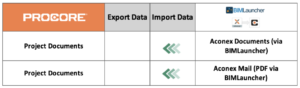 Aconex, and its acquisitions, invested substantially in BIM and associated model, data and workflow management over several years, as have most of Procore’s other key competitors (eg: Autodesk, Bentley Systems, Trimble). But there has been little demand to date from Procore’s SME to mid-sized contractor customers for BIM functionality – most are still predominantly working with conventional drawings, documents and spreadsheets. Integrations with other solutions such as Aconex may help (post), but if Procore wants to compete directly with rival platforms and support larger contractors and owner-operators, it will have to invest significantly in developing or acquiring stronger BIM object capabilities.
[Disclosure: I have written occasional freelance pieces for Procore’s Jobsite, and have provided consultancy services to Procore’s London office.]
Important!
No articles in Extranet Evolution are sponsored or paid for, though I have undertaken work (providing consultancy, writing content, producing white papers, public speaking, etc) for some of the companies discussed – always disclosed. The coronavirus pandemic is now having an impact on my business, and the UK Government’s refusal to support small limited companies deepens that impact. If you have a project that I can help with, please email me – paul.wilkinson@pwcom.co.uk – or give me a call: +44 (0)7788 445920. From my home office window* in southeast London, however, I can see tower cranes still turning on construction sites in north Greenwich. Renovations on two houses in a nearby road are continuing, and scaffolding erected for roof repairs to my house was dismantled just this morning (social distancing, I chatted through the window to one of the scaffolders, telling him I normally work from home – he joked about having to do his work from home from next week!).
 To avoid the financial impacts of a complete shutdown, some UK industry organisations (for example,
 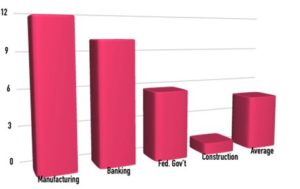 The pandemic has created huge uncertainty and clients will doubtless delay decisions about new projects, affecting every firm reliant on that pipeline of future work. And as ongoing projects are suspended or restricted to essential works only, many workers across the supply chain will be laid off and will no longer be using construction-oriented IT daily. Even in the best of times, the construction industry has historically under-invested in information technology (around a third of the pan-industry average) – often IT is regarded as an overhead not an investment – and some hard decisions will be made, perhaps postponing or delaying purchases, or terminating ongoing licenses and software subscriptions.
 Slightly further afield, in Australia (though web-based technologies are, of course, quickly adopted internationally), I have been sent news from
  Autodesk Construction Cloud, launched in November 2019 (
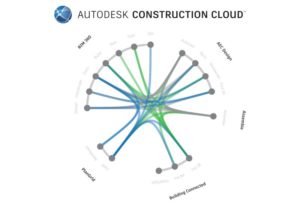 Autodesk Construction Cloud’s builders network, powered by BuildingConnected, now has over one million users, “making it the industry’s largest network of owners, designers, builders and trades, enabling each to connect with the right partners and projects”.
 Autodesk, in partnership with management consulting firm FMI Corporation, has also
 Earlier this month (

 Since October 2019, the the
 “As I see it, they think the walled garden approach to holding customer data is a strategy for success. However, in response to a maturing information management market, there is an increased demand to boost collaboration efficiency in digital construction workflows. A tightly integrated system is the means to achieve this. As a result, vendors’ integration strategies are key to their success and the conflict between providers begins as they all vie to become the one and ‘single window’ to project information management. Some vendors opt for an ‘open API’ approach making it as easy as possible for others to connect; others vet access and decide based on strategic partnerships and alliances for commercial gain. Some vendors are working under the guise of open initiatives like DIN SPEC. Some are not engaging at all.”
 Based in the UK at the Centre for Digital Innovation (C4DI), a private technology incubator in Hull, Humberside,
 The platform, accessible via

 Sanjeev Shah, co-founder of GroupBC (pictured with CEO Wes Simmons, right), said:
 “Bentley is going to provide a great new home for our products to thrive in. GroupBC have always promoted an integrated, best-of-breed approach, and being able to complement our leading software solutions with existing best-of-breed products from Bentley presents a uniquely exciting opportunity for us and our user organizations, opening the door for unparalleled integration between our solutions and bridging the gaps between design, construction and ongoing asset information management.”
 In February 2010, Unit 4 Agresso implemented a group-wide name change to UNIT4, and
  The company, originally Applied Project Experience, was founded by Matt Edwards in 2009, and initially set out to exploit the newly-launched Apple iPad tablet to support construction business processes, with
  Reece (right) took over as CEO in July 2018;* Matt Edwards remained involved as a non-exec director while pursuing a new interest in software bots at