The CIC’s new “Roadmap for Change” talks up the prospects of digital construction but gives very sketchy directions to its rosy tomorrow. Too much proptech, not enough BIM, and too little signposting to useful resources.
I went to FutureBuild 2020 at London’s ExCEL twice last week, visiting various exhibitors, taking in some presentations on the Digital Impact stages, and also participating in a BIM Open Mic event on the Tuesday evening, 3 March.
CIC’s Roadmap for Change
This latter event prevented me attending the Construction Industry Council‘s launch of its Roadmap for Change, “a new digital resource to promote industry best practice”, also held at Futurebuild at the same time. According to the CIC news release, the Roadmap for Change is “a digital platform designed to highlight the good work being done in the construction industry to bring change”.
 The initiative was created by CIC’s Diversity and Inclusion Panel, chaired by Maria Coulter, and was developed following an industry-wide CIC survey (launched in November 2018) to celebrate the organisation’s 30th anniversary. It received over 1,100 responses and six key themes were extracted from the data: image, progression, procurement, inclusive design, leadership and technology. In the digital roadmap, key initiatives and examples of best practice are displayed in relation to each theme (the website www.roadmapforchange.org.uk is now live; I couldn’t find any detailed findings from the CIC’s survey).
At the launch, Coulter emphasised that, “as an industry we work in silos, the roadmap is a way of sharing the great work the industry is doing to bring change and help others do it too. This is not the end of the journey, but the start. We … hope that all companies will engage with it and contribute so that it becomes a first port of call for good ideas and shared practice.”
CIC chair Stephen Hodder said: “The Roadmap for Change not only celebrates CIC’s thirtieth anniversary, but represents arguably one of the most comprehensive consultation exercises with a whole range of people engaged with the construction industry. This digital tool seeks to encourage progressive change and continue the debate as what we need to address to make it the industry of choice in the next thirty years. …”
The Roadmap has been produced in collaboration with Building People, an online marketplace that connects people to opportunities across the UK built environment. Building People chief executive, Rebecca Lovelace,* also spoke at the launch and very warmly welcomed the dot-joining initiative.
Where is BIM?
Naturally, as someone involved with the UK BIM Alliance and other technology initiatives, I had a look at the Roadmap site to see what it had to say about “BIM”. The answer is almost nothing, nada, barely a word. The site’s search engine apologetically admits: “Sorry there are no results matching that search.” The technology section opens with some words about the needs of SMEs that comprise the majority of the industry, then has a five-slide presentation. Digital transformation is mentioned; five trends are outlined:
- Higher definition surveying and geolocation
- “Next generation 5-D building information modeling” (the only mention of BIM – and using an unexplained abbreviation)
- Digital collaboration and mobility
- The internet of things
- Future-proof design and construction
 The presentation and example “Resources” seem to have been based almost solely on outputs developed by or with McKinsey. They are, in my view, sketchy to say the least, and over-dominated by ‘PropTech’ people and events such as James Dearsley and Unissu. These may be useful (read my November 2019 post: Is contech a subset of proptech …?), but there is far more to construction’s digital transformation than proptech.
There is no mention of any UK construction technology organisations – the CDBB, the UK BIM Alliance,* COMIT,* for example – or digital groups within CIC member organisations (such as the ICE’s information systems panel),* or Constructing Exellence’s digital group,* where industry volunteers are working hard to support change. There is no mention of the CITB’s 2018 report Unlocking Construction’s Digital Future, or the investments in industry change being made by the Construction Innovation Hub. Somewhat London-centric, there is no mention of local initiative such as Leeds-based ThinkBIM* or the network of regional UK BIM Alliance groups, the Scottish Futures Trust, or conferences such as BIMShowLive in Newcastle. AEC Magazine, Construction Computing and the CIOB’s BIM+ all provide lots of technology content too – and are not focused on proptech or BIM. Online resources such as the UK BIM Framework or the growing technology content in the Designing Buildings wiki (which is supported by several CIC members) are ignored (read my June 2019 post: Designing Buildings’ BIM Wiki: industry needs a better, wider, digital knowledge base). And, outside of ‘The Big 4’ (since when have they ever been an appropriate resource for SMEs?!), there are numerous businesses supplying built environment-specific technology consultancy services.
I appreciate this is only the start of the CIC’s Roadmap for Change and that I have mainly focused on just one of its six themes, but this isn’t an encouraging start (it reminds me of the CITB’s launch of its Go Construct website in 2015 – post – and another industry campaign launch, Construction United in 2016 – post). By all means talk up the prospects of a future industry adopting modern methods of construction, design for manufacture and assembly, digital twins, AI, etc – but SMEs and others need to be equipped with the foundations of digital working, and that means helping them shift from 2D analogue technologies to digital working, whether that’s using mobile apps or embracing collaborative approaches based on BIM processes. The Roadmap destinations may be exciting, but you first need to explain how to start the journey, and then help with signposts to help people find their way using the right resources.
 Update (9 March 2020) – From a Twitter conversation with Maria Coulter, I understand the CIC survey generated a huge volume of mainly qualitative data from which the themes were distilled. At the launch of the Roadmap, speakers asked industry to help build the resources, recognising that technology and procurement particularly needed work. SMEs are a particular target, not always well-served by membership bodies, with owners sometimes having little grasp of what technologies exist, how they might benefit, and how they adopt them efficiently. Any #contech businesses targeting SMEs and which have some good technology adoption case studies should contact the team via the website – click on the Contribute button and fill in the form.
(By the way, this poorly joined-up CIC initiative follows the recent launch of the Royal Institute of British Architects updated digital Plan of Works (2020) which, despite claiming “nearly seven years of feedback”, fails to be properly aligned with international standards and terminologies used in the UK BIM Framework – much to the chagrin of many in the UK BIM fraternity, judging from the Twitter-storm!)
[* Disclosures: I am a member of the executive team of the UK BIM Alliance, deputy chair of the ICE’s digital group, and also volunteer with COMIT, Constructing Excellence and ThinkBIM, among other initiatives. While a partner at Ethos, I worked with Rebecca Lovelace on an Innovate UK-supported project called SkillsPlanner.]


 When Extranet Evolution interviewed RIB’s COO and executive board member Mads Bording (right, also former CEO of Docia) in London in 2018 (
 RIB chairman and CEO Tom Wolf says:
 “We are pleased to have found in Schneider Electric a strategic partner who shares our vision to revolutionize the global construction industry and to create a carbon-free and sustainable living space for our children and grandchildren. Schneider is the global leader in digital transformation of energy management and automation, enabling efficiency and sustainability for its customers.
 However, this remains a competitive sector. AEC design authoring vendors such as Autodesk and Bentley have also been expanding their portfolios to better support construction delivery processes. In late 2019,
  Munich-based

 “VIM AEC is an extension of BIM helping to link design kernels such as Revit with rich data and create visualization in the cloud, on mobile devices and AR/VR much faster. This preserved design integrity, reduces risks and errors affecting re-work and efficiencies. It enables engineers and architects to use BIM 3D Models within special classes like Magic Leap, Oculus Rift or Samsung VR, combines the Design with Data out of the [RIB} MTWO platform and create a new virtual working environment for easy cooperation for the next generation of BIM supporting our strong relationship with Autodesk to get even more value out of BIM on an integrated online platform.”
 VIM AEC CEO Wolford said:
 Following some rationalisation in the AEC SaaS collaboration sector over the past three years or so (
 In the meantime, the government-appointed UK BIM Task Group was eventually disbanded and UK BIM efforts are now being led by three main organisations:
  Importantly, Ford’s guidance highlights (p.24) that, despite some vendors’ branding and marketing assertions, “the CDE is a combination of technical solutions and process workflows (later stressing “it is fundamental that workflows are developed first and solutions are selected to facilitate the workflow”). Ford notes different technologies may be involved – indeed, the CDE may comprise a combination of technologies: “document management tools for design files, contract management tools that manage commercial information, email management tools for correspondences and mobile based tools for site quality data.” He continues: “Each solution may have multiple and different workflows ensuring that information is carefully planned, shared, stored, managed and retrieved and that it is timely, correct, complete, and consistent.”
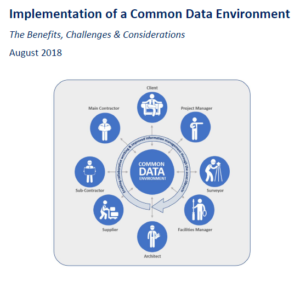 Related Technology Group conversations also covered other UK CDE guidance, notably a guide Implementation of a Common Data Environment (
 M+M will support thinkproject with sales, marketing and customer training for the DESITE BIM product suite in Germany, Austria, Switzerland, France, UK, Italy, Romania, Hungary, and Poland. MD for construction and architecture Rainer Sailer says: “The DESITE BIM product portfolio takes BIM to another level and is a great option for many customers because it integrates well with so many existing softwares. We’re excited to be working with thinkproject to sell this product and integrate it into our leading European BIM Ready training program.”
 Buildiro Direct will deliver from a list of over 20,000 items held on the Buildiro app whether that’s a tool, cable or valve, items that are necessary for the smooth running of jobs. Tradespeople can select from either the 90-minute or same-day delivery option which will run every day (including Bank Holidays) from 7.30am to 6.30pm on items which will typically be under 12kg in weight and fit on a motorbike or small van.
 This app enhancement comes on the back of substantial investment in the app from investors who became aware of Buildiro’s UK success. Luke Polach, CEO and founder, says: “We’re pleased with progress to date – tradespeople have told us that they are saving time and money in their search for supplies and, as a result, have widened the list of merchants they know and use. The trade has been crying out for innovation, “we need an UberEats or Deliveroo for the building trade”, and we are delighted to have delivered.”
 At the London Build trade show in November 2019, Autodesk followed up its Connect & Construct Summit announcement in Las Vegas, promoting its Autodesk Construction Cloud to a UK audience.
 “Despite the tremendous challenges construction companies face to connect huge volumes of data and people, no one has delivered on the promise of unified construction from design to operations – until now. With Autodesk Construction Cloud, we’re introducing a new era of connected construction and offering unrivalled integration between headquarters, office and field teams. We’ve never been more dedicated nor clearer in our mission to empower designers, contractors and owners to meet the world’s rapidly expanding construction needs, while helping to make building more predictable, safe and sustainable.”
 “It is with great sadness that we announce that Tony Ryan, Chief Executive Officer of Asite, died yesterday in London, due to unexpectedly severe complications from a recent illness. The entire Asite family mourns this loss. On behalf of our Board of Directors, management team and employees, we extend our deepest sympathies to Tony’s family.”
 With Nathan Doughty (former CTO then COO), he led Asite through a period of enormous change in the AEC SaaS space. For the most part, UK collaboration vendors survived the Global Financial Crisis of the late 2000s, after which began a series of mergers and acquisitions which, in Ryan’s view, left Asite as the only significant UK vendor that was still independent (though GroupBC might disagree). Ryan led the company to its first annual profits in
  New CEO Nathan Doughty has been with Asite throughout most of its existence. He joined the business in 2002 from another AEC SaaS startup, Bidcom (where he was a colleague of Tom Dengenis), which later merged to become part of Citadon, and was active in several of Asite’s technology initiatives, being also involved with BSI, the International Alliance for Interoperability / BuildingSMART, and the Network of Construction Collaboration Technology Providers, championing open BIM throughout.