Bentley targeting SMEs with ProjectWise Essentials

Bentley’s SaaS-based ProjectWise Essentials, “a cloud-based, instant-on integration environment,” potentially links more firms to Bentley’s ecosystem.

Bentley - logo

Last week’s Bentley Systems Year In Infrastructure conference in London saw several major announcements by Greg Bentley and his team, including a tighter integration with Trimble products for construction delivery. While there is clearly a developing relationship with Trimble, it doesn’t yet extend to the two companies’ collaboration products.

Just before Bentley’s conference, Trimble announced the launch of Trimble Connect, based on its GTeam acquisition, providing a cloud-based collaboration platform for teams involved in the design, construction and operation of buildings. Meanwhile, Bentley’s CONNECT Edition strategy included the September 2014 launch of ProjectWise Essentials, “a cloud-based, instant-on design integration environment” using Microsoft’s Azure platform, to help connect more firms into Bentley’s project ecosystem (see Bentley news release).

Bentley CONNECT Edition

Bentley CONNECT EditionThis ecosystem aims to streamline information mobility and is based on three main areas of Bentley software: the Microstation and related design authoring tools, ProjectWise CONNECT Edition, and Bentley Navigator. Bentley’s focus on a “platform approach” was a constant refrain during the conference; I heard senior vice president Bhupinder Singh describe the company’s commitment to enabling engineering content management across the ecosystem so that, regardless of their discipline, all workers (office, site or field, including via cloud services) can have instant connection to and visibility of the information they need. He talked of a common project environment underpinned by:

  • a common data environment (a term much [ab- or over-]used in the UK currently, as there is an emerging requirement for a CDE to support Level 2 BIM)
  • a common modelling environment
  • a common deliverables environment
  • a common “App-lications” environment (Navigator was particularly highlighted here as a tool that works in a consistent way whether accessed on desktop, mobile device or via the cloud)
  • a common performance environment (giving visibility to asset operation information)

Of course, there was a considerable focus on the installed software that is the core of Bentley’s revenues, on connecting separate instances of ProjectWise, and on extending the reach of this “organisation-centric”, corporately-held data to clients, supply chain workers and partners across multiple devices (by the way, Bentley’s mobile tools are on all three key operating systems: Apple iOS, Android and Windows). However, I noted last year a much-needed expansion of Bentley’s cloud-based capability to support globalisation, growth in flexible and mobile working, and the emergence of building information modelling (BIM), and it is being somewhat grudgingly expanded (as one might expect from a business founded some 30 years ago when it was all about selling upfront licenses for installed software).

ProjectWise Essentials

I talked to Bentley’s Nicole Stephano (product manager, information mobility) about ProjectWise Essentials, which offers immediate access to a cloud-based instance of ProjectWise, making it more accessible to smaller firms and their supply chains, particularly those without IT expertise or who can’t self-host. Instead the service is hosted in multiple Microsoft Azure datacentres (located in numerous geographical locations “all over the world” to – hopefully – avoid some political/safe harbor sensitivities). This SaaS capability isn’t totally new. Nicole reminded me: “We had a ProjectWise online service – providing an online instance of Projectwise but which still needed quite a bit of configuration services – and it could be provided through customers’ own hosting at, say, Amazon or Microsoft.”

The relationship with Azure has become more mature following last year’s announcement of the CONNECT services. ProjectWise Essentials Instant-on became commercially available in September 2014, and is targeting “smaller businesses, mid-sized businesses that typically do not have an IT administrator to self-host; they may not have a system administrator to manage the product itself or the user permissions required.” The Essentials package might also appeal for non-corporate requirements, Nicole said: “it’s a great opportunity to set up projects for joint ventures,” and it allows businesses to try ProjectWise ‘in the cloud’ before committing to perhaps hosting it themselves and maybe extending their reach into other Bentley services.

Each instance of ProjectWise Essentials allows up to 40 named users for a modest monthly flat fee. Nicole was unable to go into the specifics of pricing (broadly, across a team she hinted we were maybe “talking about £2 a day per engineer”, including those down a lead firm’s project supply chain) though a ‘Bentley CONNECTIONS Passport’ annual license is required for each additional named user. The license also gives access to various Bentley mobile applications such as Bentley’s ProjectWise Worksite (previously known as “Field Supervisor” – renamed to reflect its wider use) and i-Model sharing capabilities.

The ProjectWise Essentials platform is, Nicole explained, focused on design integration and collaboration for engineering professionals, and includes integration with Bentley Microstation, and with Autodesk and Adobe tools, though some of these will be mainly through some of the new capabilities of Navigator toolset to be launched in early 2015.

[Disclosure: I attended the Bentley Year in Infrastructure conference as a guest of Bentley Systems, who paid my hotel expenses. I was also a juror in the BE Inspired Awards.]


Permanent link to this article: http://extranetevolution.com/2014/11/bentley-targeting-smes-with-projectwise-essentials/

Bullish business update from MCS

Priority1 logoOn Thursday (13 November), I will be dropping in on Mobile Computing Systems 7th PriorityOne user conference, being held this year at the Building Centre in central London. Other work prevents me attending the whole event, which will include an update on the company’s performance, its plans for the future, along with product feature demonstrations and guest speakers. One of my highlights of 2013’s event, for example, was the presentation by Software-as-a-Service collaboration vendor 4Projects, revealing how the two companies were looking to develop complementary capabilities to satisfy mutual customers.

Last year MCS invested in its own SaaS capabilities, implementing a private cloud hosting facility in July 2013, and then launching a business intelligence reporting platform. It recently expanded its cloud infrastructure to support its growing users base, working with a new private cloud provider with faster, more robust and scalable storage facilities.

In the company’s fifth straight year of growth, MCS’s turnover for the financial year ending 30 June 2014 grew by 30% to £1.16M with profit up 70% on the previous year to £258K. There is clearly a strong appetite for the Priority1 mobile toolset of snagging (aka punchlists or defects management), quality control, permitting and Health & Safety and environmental reporting tools.

mace logo-new.gifUpdate (16 November 2014) – As well as sharing some mutual customers with 4Projects, Priority1’s mobile solution is also used by loyal customers of other SaaS collaboration vendors. For example, Thursday’s user conference heard an implementation case study from Mace Group – a long-term client of Conject. Steve Fearnside explained how Mace had first tried Priority1 in 2004, and, at one point, the group had seven different mobile solutions in use to report defects. Deciding to rationalise, during 2014 it reviewed 11 different systems (iSnag, Snagr and Snagmaster were among those Steve mentioned) before selecting Priority1 (which was “not the cheapest”) as its new enterprise solution.

Another interesting snippet learned during MCS’s event: 4Projects will be renamed Viewpoint from September 2015, said EMEA BD VP Steve Spark (presenting a Viewpoint branded slide-deck).

Permanent link to this article: http://extranetevolution.com/2014/11/bullish-business-update-from-mcs/

e-Business in construction survey

e-Business in ConstructionIn various ways I have been involved with eBusiness in construction since the late 1990s (I’ve even written chapters of books about construction eBusiness), and the adoption of eBusiness technologies has grown considerably over the past 15 years. But many parts of the industry are still reliant on paper-based processes when it comes to many construction business transactions – this is one area that firms such as Textura (post) are seeking to address.

And more and more IT businesses are waking up to the need to help data flow more seamlessly rather than maintaining separate and isolated business information silos. I have talked to vendor user conferences about this, identifying SaaS, mobile, BIM, social media and Big Data as among the disruptions that challenge conventional approaches to IT delivery.

Watching this space, UK group Construct IT for Business is supporting a research project, run by a task group, TG83, of the International Council for Research and Innovation in Building and Construction (CIB, for short), looking at eBusiness in construction. If you are interested in contributing, here’s a survey link (though I didn’t get the promised invitation to complete the survey – broken?). And if you are interested in the current state of mobile – remember there is an ongoing COMIT survey too (post).

Permanent link to this article: http://extranetevolution.com/2014/11/e-business-in-construction-survey/

GenieBelt construction collaboration is free forever

With GenieBelt, construction small- and medium-sized businesses can now share construction documents quickly anywhere anytime, and it’s free.

GenieBelt logo

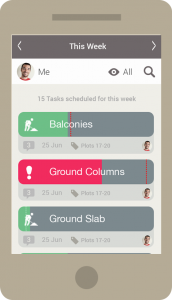
Copenhagen, Denmark-based software developer GenieBelt has launched a mobile-based construction collaboration application that will help workers and managers access construction information, including drawings and schedules, online across any computer or mobile device. Unlike other providers which sometimes offer a free 30-day trial for a basic level of service, the fully-featured GenieBelt service is available from the outset and will be free forever.

GenieBelt is a Software-as-a-Service developed by a 16-strong Copenhagen-based software company founded in 2012 and led by a British CEO, Gari Nickson (a QS and project surveyor formerly at Davis Langdon, now AECOM, and COWI – who I first encountered in October 2013, around the time GenieBelt received €0.5m in funding), who identified various gaps in the market. He says:

GenieBelt Mobile View“First, current widely-used collaboration platforms were designed primarily for desktop and laptop use, whereas GenieBelt has been expressly developed to work on mobile devices.

“Second, our competitors tend to target larger businesses and bigger projects. The simpler needs of the smaller contractor, subcontractor and tradespeople working on modest projects are often overlooked, and yet they make up the bulk of the construction industry’s workforce.

“Third, rival systems are not attractively priced to small- and medium-sized businesses. In an industry notorious for low margins, charging to use collaboration tools reduces profits. GenieBelt is free. It costs nothing to start using it and to keep using it, and the efficiency savings it enables will boost profits. And we are committed to keeping it free forever.”

GenieBelt features

GenieBelt features-notificationsGenieBelt allows users to create shared web-hosted spaces into which they can upload drawings, documents, specifications and project programmes so that teams working on a project can work off a single version of the truth. Project schedules can be imported from MS Project and Asta PowerProject, and, from the resulting Gannt chart, users can begin to monitor the progress of activities, linking to relevant documents or folders, and adding text, photographs and other information as necessary. The system also provides a searchable people directory, helping users identify every person that is working on their projects.

The platform supports multiple projects, and includes a dashboard view that provides an “at a glance” indication of task progress and issues on each project a user is working on. All interactions with the system are securely captured to provide an audit trail outlining who did what and when, while also showing the rate of progress on tasks within the schedule.

A feature which further differentiates GenieBelt from other systems is “Beats”. Instead of relying on email notifications, “Beats” provides a transparent, shared discussion space – similar to the conversation features on some social media platforms – so that authorised users are quickly notified and can easily join and track discussions about issues that are directly relevant to them.

Gari Nickson, GenieBelt CEOGenieBelt provides a high level of functionality at no cost to the contractor or to subcontractors or end-users, which Nickson believes will encourage adoption. The web platform is supported across all common smartphones and tablets (there is also a native Apple iOS app, with an Android version coming soon). Accessing GenieBelt via a desktop or laptop will allow easy upload of project information from local hard-drives or network shared folders, so that the information is then available to all authorised project users. Information cannot be accidentally deleted or over-written, and GenieBelt has invested heavily in creating a user interface that is simple, logical and intuitive to use even if working out on-site wearing protective equipment (former Woobius founder, architect and SaaS and app user experience expert Bob Leung is part of the GenieBelt team).

Of course, GenieBelt has to make money some how. It is doing this by offering premium services on the GenieBelt platform including: long term archiving, analytical reports, access to its audit trail, admin users overview, bulk data extraction, and telephone support. These are available for companies at €190 per calendar month per admin user. As one admin user may be managing multiple projects concurrently, the costs of such premium services can therefore be spread, making the service economical to use.

My view *

The idea of a free construction collaboration app is not new. In the first breathless rush into the dot.com market in October 1999, Autodesk was a 40% shareholder in a spin-off business Buzzsaw.com, which launched an online project collaboration service, ProjectPoint, soon after, having raised around $90 million. This service was, for a time, offered as a free service as vendors sought to build large industry footprints. By mid 2000, Buzzsaw had 240 employees, 10,500 projects on-line and 50,000 registered users – and was “chewing up cash at a $10 million per quarter rate” (see 2008 post). After it posted an operating loss of over $50 million in 2000 and began laying people off in May 2001, Autodesk acquired the business in July 2001 and ProjectPoint was later re-branded as an Autodesk product, Buzzsaw, and it remains part of the Autodesk portfolio.

However, the market environment for launching new applications in the construction industry has changed enormously over the past 15 years. For example:

  • Creating and launching a new web-based business is now much less expensive (hosting and storage costs have plummeted).
  • In stark contrast to the early days of what we now call Software-as-a-Service or cloud computing, persuading people to use online software is easier, and adequate bandwidth is rarely an issue.
  • Mobile software tools are now low or no-cost options that extend right down the supply chain, no longer requiring expensive devices and long-term contracts, and so only for larger businesses. There are also now hundreds, even 1000s, of construction related apps – many of them free or costing just a few dollars – across the different operating systems’ online app stores.
  • There is also a rapidly growing AEC market for mobile solutions, particularly ones that might offer a better experience to some long-established solutions that were not designed expressly for the mobile worker (maybe a sole trader or small business owner – 95% of construction businesses are SMEs, after all).
  • ‘Freemium’ business models are now better understood.

This is a bold step by GenieBelt but the company hasn’t taken it lightly. It’s looked at the industry and identified some shortcomings in existing vendors’ approaches which it thinks it can exploit commercially. As the UK market has also begun to polarise, it will also be watched carefully by some of the existing low-cost file collaboration service providers that have targeted SMEs (see post), and it will be monitored by US vendors such as Plangrid and FieldLens.

[* Disclosure: I have provided PR consultancy services to GenieBelt.]

Permanent link to this article: http://extranetevolution.com/2014/11/geniebelt-construction-collaboration-app-is-free-forever/

Now Bentley CONNECTs with Trimble

Bentley and Trimble collaborating over construction modelling, while Bentley ProjectWise CONNECT makes Bentley collaboration even more widely available.

Bentley - logoTrimble logoOn Friday afternoon, I blogged about Trimble’s new entry into the cloud-based BIM collaboration market, and it appears that one thing Trimble didn’t mention ahead of its biannual user conference in Las Vegas this week was an increasingly close relationship with Bentley Systems. Attending Bentley’s Year in Infrastructure 2014 (post) pre-conference press briefing in London today, I heard that the two companies have today publicly committed to supporting “construction modelling“.

Construction Modelling

Recognising that the building information modelling (BIM) needs of constructors are often different, but complementary, to those of designers, Bentley and Trimble are developing capabilities that support construction-specific modelling requirements including: temporary works, intelligent positioning, “splitting and sequencing,” detailing for fabrication, workface planning, construction work packaging, and support for distributed construction. Architects’ and engineers’ work is preserved and referenced, with construction modelling overlaid and as-built changes included (read Trimble’s news release here).

Bentley and Trimble are pooling resources for product development:

  • sharing schemas across design and construction applications to ensure that constructible models maintain semantic fidelity;
  • leveraging Bentley’s i-models for construction deliverables to and from the companies’ respective software and hardware, when used together in project delivery;
  • joining forces to advance standards, and
  • leveraging some common modelling software for virtual and physical alignment.

In a whirlwind of software briefings in London, I saw Bentley’s vice president, construction and field, Harry Vitelli briefly demonstrate information mobility between the two firms’ products – for example, engineers can create intelligent field data in Bentley Navigator, manage those point sets in Bentley’s ProjectWise, and securely deliver them to Trimble field solutions via Trimble Field Link, effectively connecting the the design office and positioning devices on-site. Vitelli says:

“Bentley’s ongoing collaboration with Trimble is delivering real-world solutions that will transform the design to construction workflow – for example, by enabling greatly enhanced information mobility through Bentley’s recently announced ProjectWise CONNECT Edition [see below] and Trimble’s recently announced Trimble Connect platform. Both of our companies share the belief that construction modeling will offer new levels of construction data visibility. We also share a commitment to the provision of advancements in design-to-construction workflows that bring new value to our users in the project delivery space.”

ProjectWise CONNECT

ProjectWise logoIn late September, Bentley announced the availability of ProjectWise Essentials: “a cloud-based, instant-on design integration environment” for all projects that uses Microsoft’s Azure platform to deliver the service (launched last year). Described as “Software at your service” (as distinct from Software-as-a-Service), the environment provides immediate access to ProjectWise. Bentley has been highlighting how the platform – usually internally managed – is used by 81 of the ENR Top 100 design firms, and how these firms report 14% higher professional utilisation by using ProjectWise. Now ProjectWise is being extended to all firms, with Bentley managing the system or server administration that previously may have deterred smaller firms.

In London, Huw Roberts and Nicole Stephano described the new ProjectWise service as “a leap into the future”, helping connect dispersed teams, ensure data integrity, and enable role-based access (a bit hyped, perhaps, as several other Software-as-a-Service construction collaboration providers have been delivering such capabilities since the early 2000s). Where it does differ, maybe, is that the Bentley – and now Trimble – eco-system is now much more connected. Last year’s McGraw Hill Information Mobility report (post) highlighted many organisations’ concerns about information security, said Nicole, and had created a chasm between work in progress internally and deliverables exchange externally; “ProjectWise CONNECT brings these together,” she said, helping support BIM workflows across distributed teams.

Moreover, ProjectWise Essentials lets project teams interact with project information in views that directly relate to specific task requirements, without needing the authoring applications. These views include a spatial view for map-based navigation, a web view for online browser access, a permissions view for access control management, a dependency view for understanding and managing complex file relationships, and a component view to search across 2D and 3D content.

SITEOPS

Another Bentley “Software at Your Service” is SITEOPS. Acquired in August and announced in September, SITEOPS is an impressive cloud-based optioneering toolset which allows engineers to rapidly explore and evaluate dozens of alternative approaches to site developments. In just minutes, Mike Detwiler (VP SITEOPS product development) demonstrated how conceptual site configuration can be rapidly assessed for layout, parking, grading and drainage options, providing cost-effective early stage inputs to projects.

Permanent link to this article: http://extranetevolution.com/2014/11/now-bentley-connects-with-trimble/

Trimble Connect offers cloud-based collaboration

The Common Data Environment market just got busier: acquisitive Trimble has wasted no time in launching its cloud-based collaboration platform, Trimble Connect.

Trimble logoSome seven weeks after acquiring Gehry Tchnologies, including its GTeam platform, and promising to add it to a DBO software solutions platform (post), US construction technology giant Trimble has launched Trimble Connect, based on GTeam, providing a cloud-based collaboration platform for teams involved in the design, construction and operation of buildings.

According to the news release, Trimble Connect streamlines workflows and transforms collaborative processes, allowing teams to access, analyse, manage and share project data from anywhere at any time. As a hub for Trimble Buildings‘ portfolio of Design-Build-Operate (DBO) technologies, Trimble Connect enables seamless interoperability for designers, builders, and owners/occupiers – while also providing benefits to teams involved in site preparation and management. Bryn Fosburgh, vice president responsible for Trimble’s Construction Technology Divisions, says:

“Trimble Connect creates communities of collaboration across and within disciplines, integrating data from Trimble’s wide variety of applications and devices to reduce the barriers between teams and tasks. This new platform not only reinforces Trimble’s leadership as a provider of advanced software and hardware, but positions us to transform the way the world designs, builds and operates buildings through collaboration.”

Trimble Connect centralises and provides coordinated information for users across the DBO continuum, combining Building Information Modelling (BIM), 3D and 2D models via the web. It also helps project team leaders track their staff’s progress, while building owners can also audit and report on all past and present project data and activity.

Various Trimble products are already “Trimble Connected”, including:

  • SketchUp (acquired 2012)
  • Tekla Structures
  • Tekla BIMsight
  • Vico Office (established by ex-Graphisoft execs in 2007, acquired 2012)
  • Prolog (acquired 2006)
  • Trimble Field Link
  • MEPdesigner for SketchUp, and
  • Manhattan Atrium (enterprise asset management – acquired 2014)

And, in echoes of the Aconex BIM announcement earlier this week (post), Trimble Connect also supports the platform-neutral IFC file format for OpenBIM. And, coincidentally, both vendors are branding their offerings as “connected”.

Permanent link to this article: http://extranetevolution.com/2014/10/trimble-connect-offers-cloud-based-collaboration/

Aconex upgrades BIM capabilities

Aconex has launched a ‘Connected BIM’ product, and a new Digital Manuals capability (but only if you are on Windows).

Aconex logo 2014Away from the continuing repercussions of the ‘tepid’ and therefore cancelled or postponed IPO (post), Melbourne, Australia-based Software-as-a-Service construction collaboration technology provider Aconex has launched Aconex Connected BIM, a new product extending the Aconex platform to manage building information modelling data and processes for project-wide collaboration between design and construction teams and handover to the owner.

According to the news release, Aconex co-founder Rob Phillpot (also senior vice president of product and engineering) says:

“BIM … [is] … transforming the way that capital projects are delivered. The industry is moving rapidly from 2D drawings and files to multidimensional models and data, as BIM adoption accelerates globally. On many projects today, its use is limited to designers with specialized modeling tools during the design phase of the project. While BIM improves design and constructability, the other 90% of the project team are disconnected from model data during the construction and handover phases.

“Aconex now connects all participants with BIM data and processes project-wide, enabling project teams to share, consume and enrich models on a single integrated collaboration platform in the cloud. From their web browsers and mobile devices, design and construction teams can resolve issues early and produce a fully documented visualization of the project that is ready for operation at handover. With a complete and accurate set of interconnected project data outside the model, owners can reduce operating costs, which account for up to 75% of total asset lifecycle costs. Aconex Connected BIM fulfills BIM’s true promise – improved efficiency, reduced risk, faster delivery, higher-quality built assets, and easier operability.”

With Aconex Connected BIM, designers can create and modify models in their native authoring tools and use simple software plug-ins to publish them in what it calls the ‘Aconex BIM Cloud’. Here, all members of the project team – other designers, engineers, consultants, contractors, subcontractors, and owners – can view, distribute, mark up, and contribute to model data at the object level, detecting clashes and optimising constructability.

As the project moves through design and into construction, team members can link each object in the model with relevant project documents, communications and workflows. Designers can continue using their native authoring tools for design updates via the software plug-ins. The Aconex platform apparently supports Open BIM, including IFC (Industry Foundation Classes). At practical completion, all project information – including the model, all of the documentation associated with each of its objects, and an audit trail – can be handed over to the owner for operation. Based purely on the news release, Aconex’s capabilities cover:

  • Open BIM standards
  • Secure, cloud-based platform – no software installation required
  • Fast viewing of large sets of merged models in web browsers – without specialised BIM tools or local software – and access on mobile devices
  • Version control to avoid errors based on out-of-date models
  • Real-time merging, collation and separation of component models for specific disciplines
  • Shared viewpoints and mark-ups for model review, feedback and resolution
  • Interrogation of models for clashes and coordination issues
  • Linkage of formal project communications such as RFIs with objects for resolution of clashes and issues
  • Handover of operation and maintenance (O&M) data within models.

Dynamic Manuals

On this final point, in a related announcement, Aconex also launched Dynamic Manuals, a mobile solution for owners and their facility management teams to manage digital operation and maintenance (O&M) manuals so long as they are using Windows tablets (no information has been provided about capabilities for iOS or Android users – which is strange, given that Windows is lagging a long way behind in terms of both consumer and corporate adoption).

This is regarded by Aconex as a logical extension of Smart Manuals (launched in February 2013), an online solution for contractors to build O&M manuals during the project for delivery to the owner at practical completion.

Aconex says Dynamic Manuals provides users with an intuitive graphical experience and the ability to view and update documents and technical files in the field. They can barcode or QR code each physical asset in a facility and then scan the code from a Windows tablet to access all information on that asset. They can also share asset information with subcontractors and other outside resources from the tablet desktop or via email. All document updates and communications are captured in a permanent audit trail.

Three views

Briefly, Aconex has been talking about its BIM capabilities for some years, but the functionality for a long time focused on extending its platform’s file-sharing capabilities to cover sharing of model files. ‘Connected BIM’ is a significant step forward. It delivers ‘federated’ model support – part of the UK government’s Level 2 BIM requirement (being carefully watched by other nations as they continue their own BIM journeys; see also post) – but I haven’t seen a demonstration of the platform’s capabilities so can’t compare it with, say, rival UK-based SaaS vendors 4Projects (post) or Asite’s functionalities (post). Without a briefing it is also unclear what the roadmap is for Aconex’s future BIM capabilities.

I am also bemused by the Aconex focus on MS Windows for its mobile Dynamic Manuals functionality. Why focus on a platform which is, by most surveys, the third choice (often by a long way) for corporate use? OK, Microsoft has substantial traction in the corporate construction market, but, on mobile devices, it lags a long, long way behind iOS and Android. Is Aconex going to soon release mobile tools for these platforms?

Finally, timing. These announcements could have helped push the IPO initiative forward, but they came two days after the IPO was shelved. The BIM announcement might have shown potential investors that Aconex was at the leading edge of web-based BIM and common data environments, but it’s too late for that. If I was an investor, I might also have been worried about the focus on mobile Microsoft when the rest of the world is focused on Apple iOS and Android.

(Aconex was approached for comment 12 hours before publication. No response was received.)

Permanent link to this article: http://extranetevolution.com/2014/10/aconex-upgrades-bim-capabilities/

Bentley Year in Infrastructure 2014

Bentley - logoAs well as this week’s COMIT/Fiatech two-day conference (post), I am also attending next week’s Year in Infrastructure 2014 conference, 4-6 November in central London, at the invitation of Bentley Systems (readers may have noticed a small ad for the event in my sidebar for the past two months). I was a juror in the BE Inspired Awards last year, and am filling that role again this year, with the award winners being announced on Wednesday evening.

The event provides an opportunity to learn more about how Bentley and its partners’ technologies are helping project teams collaborate, with ProjectWise and building information modelling (BIM) normally prominent. Last year, I also wrote about Bentley’s embrace of Microsoft Azure to extend its software reach further into ‘the cloud’, and about its push to promote another BIM: Better Information Mobility. The conference also plunges me into numerous meetings, media briefings with other journalists and bloggers, and networking sessions, and usually features some industry thought-leaders – this year’s event includes talks from mega-project expert Ed Merrow and a presentation by HS2’s chief engineer and technical director Andrew McNaughton.

[If any Extranet Evolution readers are going to be at the conference next week and want to meet up, please look out for me, or tweet me.]


Permanent link to this article: http://extranetevolution.com/2014/10/bentley-year-in-infrastructure-2014/

Breaking news: Aconex cancels IPO

Aconex logo 2014Just the day before it was due to publish its IPO prospectus, Melbourne-based SaaS construction collaboration technology vendor Aconex is reported to have cancelled the initial public offering planned for November. According to Bridget Carter in The Australian:

“… Aconex has cancelled plans for its initial public offering, despite its book build being covered within its pricing range. … it is understood that Aconex decided not proceed when it was told by its advisers that they were unlikely to secure sufficient demand to see the stock perform well during its debut on the Australian Securities Exchange.” [emphasis added]

Following the initial IPO announcement (July), there had subsequently been reports that potential investors had been nervous about its post-IPO offshore expansion plans (see my 15 October update to this post).

Updates (28 October 2014) – Aconex is not alone in cancelling ASX IPOs – two others (ArcPac and Hirepool) were also shelved just prior to anticipated listings (link).
(29 October 2014) – It appears there is a crowded calendar of potential IPOs, and this is giving fund managers concerns about the quality of the stocks on offer; the Australian Business Review says:

“That nervousness was underlined earlier this week when … Aconex pulled the plug on its IPO after receiving a tepid response in its institutional bookbuild. Ironically, Aconex had increased its offer size from a minimum of $120 million to $232 million after it sensed strong investor demand.

That, however, did not translate into strong bids in the bookbuild, with the offer understood to have been covered at the lower end of the price range. It is not clear yet if Aconex has cancelled its IPO altogether, or put it on hold.”

Permanent link to this article: http://extranetevolution.com/2014/10/breaking-news-aconex-cancels-ipo/

Asite to launch in South Africa

Asite logo 2012London-based Software-as-a-Service construction collaboration technology vendor Asite is starting up an operation in South Africa. A news release says it is launching the new business on 6 November at a capital projects seminar organised by hosting partner Dimension Data at its Bryanston office north of Johannesburg. Ian Saunders, previously at EasyBuild but now MD of Asite South Africa, is quoted as saying:

“We are pleased to invite you to attend the launch of Asite in South Africa, where we’ll share real-world cases of how massive capital projects have benefited from this cloud solution.”

South Africa has been targeted by other AEC SaaS collaboration vendors. Docia (since July 2014 a subsidiary of RIB Software) opened an office in Johannesburg in early 2012, for example, and 4Projects international partner strategy saw it working with CCS, also in 2012 (though that relationship has since ended – Vaughan Harris recently moved from CCS and is now at Asite as business development manager Africa). There is also an appetite for SaaS solutions among some South Africa-based corporations – iSite revealed last month that it had secured South Africa’s largest bank as a client.

Updates (18 November 2014) – Read the Asite news release about the launch (17 December 2014), or this one, which says the company’s Johannesburg office opened on 21 October, with a Cape Town office due to open in 2015.

Permanent link to this article: http://extranetevolution.com/2014/10/asite-to-launch-in-south-africa/

Load more