Sitedesk is a new name in the BIM and collaboration world, marketing a mobile solution that has just been adopted for a Balfour Beatty coastal defence project.
 Wyre Council in Lancashire has selected collaboration technology from a Manchester-based company Sitedesk to support Level 2 building information modelling (BIM) during a five-year contract to construct and maintain the Rossall coastal defence scheme, part of the £73 million Fylde Peninsular Coastal Programme in north west England.*
Predominately funded by the Environment agency, the £53m Rossall scheme covers approximately 2km of coastline and will protect 7500 low lying properties from flooding. The area is subjected to some of the largest waves and strongest currents on the Fylde coast. Wyre Council is one of the leaders in the UK public sector push towards BIM adoption by 2016. Balfour Beatty, the main contractor on the programme, is fully utilising BIM to deliver the project.
Sitedesk’s technology can be deployed in the office or in the field. Using it, Wyre Council’s project team will capture data about the coastal defences during construction and will then reuse it to optimise operation and maintenance throughout the defences’ working life, says Sitedesk sales director Rob Umphray.
Sitedesk background
 Sitedesk is a Manchester-based company specialising in the development of software tools to support building information modelling and collaboration in construction projects. Founded in 2012 and backed by £435,000 from the North West Fund for Digital & Creative (managed by AXM Venture Capital) in April 2013, it draws on employees’ experience in the construction industry and collaboration software development.
Previous development of Sitedesk had been funded by two directors at ACS Construction Group, a regional contractor based in Cheadle Hulme, Greater Manchester (both are now non-execs and retain 27% stakes in the company). Sitedesk is chaired by former Eleco Software COO Craig Slater (Eleco’s subsidiaries include Asta Development, the developer of Asta PowerProject). Another director is former Yuuguu (web conferencing and screen-sharing software) CTO Chris Sewart.
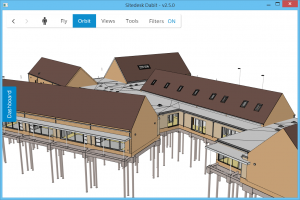 Rob told me the company had taken a conscious decision not to market itself aggressively in its early days, wanting to be sure that the product was right and to build up some customer adoption stories. However, sources tell me Rob was at BIMShowLive in Manchester in June, talking about use of Sitedesk on a school project in Waterlooville, Hampshire, following a presentation by Allister Lewis of Hampshire County Council. Rob tells me that the school has been completed and the final accounts are in; savings of £48,000 and the achievement of zero rework on the project have been directly attributed to Sitedesk by Jon Chew, Balfour Beatty’s site manager, he says.
Sitedesk provides secure access to data stored in a remote hosted environment and is accessible from mobile platforms (Windows and Apple iOS) as well as desktops or laptops. Being app-based, Sitedesk can also be used out on site even when there is no internet connectivity, and the interface is designed to be used even when workers are encumbered by hard-hats, safety glasses and gloves and working with devices in protective cases in poor weather.
The platform supports outputs from all the common BIM authoring tools – from Autodesk’s Revit and Civil 3D to Bentley Microstation, plus the IFC format – and is able to handle large, highly detailed, federated models. Sitedesk also enables users to deploy existing ‘paper-based’ forms and templates electronically as well as an inbuilt digital forms and workflow creator that allows automation of site processes (permits, quality, method statements and health and safety) without users having to change their workflows (and the notifications stay in Sitedesk, not being pushed as email – Should construction dump email?). The platform provides access to COBie data too, and Sitedesk have developed tools that allow subcontractors to provide required information in the right format direct to the data model.
My view
I have yet to see a live demonstration of the technology, but from what I’ve learned to date Sitedesk appears a robust and user-friendly addition to the mobile BIM market. At last week’s COMIT community day, I heard BAM Nuttall’s Victor Snook talk enthusiastically about how his company was using Autodesk’s BIM 360 Field to capture data onsite, and Sitedesk seems to compete in the same market, along with Bentley Navigator Mobile (among others). Mobile-centric BIM collaboration is also attracting UK-based start-ups – this year, for example, I’ve talked about Basestone and about Cadbeam – while I expect the existing SaaS construction collaboration vendors will be thinking about adding mobile BIM capabilities to complement their existing platforms and mobile tools. Instead of trying to develop their own solutions, perhaps working with Sitedesk might prove a quicker way to deliver such capabilities?
[* Disclosure: I was contacted by Sitedesk and provided PR consultancy services to the company including work on its news release. This blog post was not part of the deal.]

 Nemetschek, the Munich, Germany-based software group which includes Allplan, Vectorworks, Graphisoft, SCIA and Maxon, has announced that it is acquiring the US business Bluebeam Software, a provider of PDF-based collaboration solutions for architecture, engineering and construction professionals, for $100 million, creating a portfolio offering both BIM authoring and drawing-based workflow solutions.
 Kelly points out that for many people a big part of the construction communication problem “is the overwhelming number of emails received by just about anyone who has anything to do with the job”. She quotes the example of an Irish education technology organisation, profiled on
  Discussing that article with EngD researcher Natasha Watson on Twitter, I cited the example of Luis Suarez, an IBM executive who decided to opt out of email (read this
 Founded in 2007 and employing (May 2014) 24 people,
  Specifiedby continues to develop its construction product selection tools, testing an advanced product search tool to help specifiers find exactly the product and associated information they need.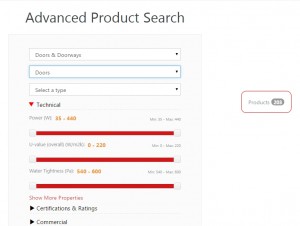



 The financial fortunes of the smaller players in the UK SaaS construction collaboration technology market are often a good indication of the overall health of the sector. Having seen major vendor Conject UK report
  Industry rumours suggest Melbourne, Australia-based SaaS construction collaboration technology vendor Aconex may be listed on the Australian Stock Exchange in November, with road shows underway this month (according to
 Over the past 15 years since it was founded in Boston, VFA has shown over 800 organisations how to ensure that their facilities optimally support their strategic business objectives, helping reduce risk, lower costs, improve service quality and customer satisfaction, and satisfy compliance requirements. Its facilities assessments are tailored to organisational needs, and can be delivered online by VFA’s or the client’s staff. VFA has now started growing a Reading-based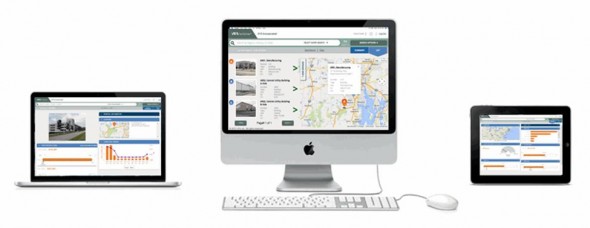
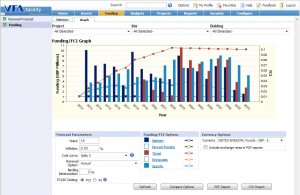 With Chris’s VFA colleague, director of product marketing David Isaacson, we also looked at how the system uses industry-standard Facility Condition Index metrics to set targets for investment programmes. VFA uses CIBSE-defined standard condition ratings, and BCIS cost data to define the lifecycle costs for each system in a building, and calculates the FCI (calculated by taking the capital needs and dividing by the replacement value of the building – see
  VFA also helps clients decide where, when, and how much to invest by demonstrating that these investments align with the their objectives. VFA’s Capital Budgeting and Ranking Module allows clients to develop multiple strategies to assess different prioritisation approaches. These strategies can include data elements beyond condition, assessing, say, how mission-critical the asset is, what the risk and impact of failure might be, and how well the asset meets the client’s functional needs. Pair-wise analysis processes are deployed, testing the relative importance of individual items in order to achieve an overall rank ordering.
 Trimble