A German research project, IFCWebServer.org, is attracting users interested in using the IFC format as a basis for open BIM collaboration.
In March 2009, I wrote about the University of Eindhoven-based open-source BIMserver.org project, then still at a relatively early stage of development. Since then, as international BIM initiatives have developed, the concept of web-based model servers has become more widespread, and I was recently contacted by Ali Ismail, a scientific researcher at the Technical University of Dresden in Germany, who, since 2011 has been developing a free-to-use BIM model server and viewing platform supporting the IFC format: IFCWebServer.org.
 “Unlike BIMserver, which is basically built for developers, IFCWebServer is initially targeting end users who would like to work with IFC models without hassle,” Ismail says.
While some of the design authoring software vendors would encourage teams to collaborate by everyone using just their proprietary model formats, IFC (Industry Foundation Classes) helps solve the problem of data interoperability when data needs to be shared between different software applications (and versions). While proprietary applications may import and export IFC models, their support for the format is not always reliable – hence the development of model serving tools supporting IFC.
 IFCWebServer provides a free model hosting platform and a browser-based BIM viewing tool (BIMviewer.com) built using Web GL technology. Once uploaded and processed server-side by the core platform, IFC models can be viewed, shared, validated, searched, filtered and interrogated to produce custom reports. “Moreover, semantic information inside IFC models (object properties) can be modified or extended with extra user-defined information inside the online BIM viewer,” says Ismail. “I have sometimes called it a ‘BIM annotator’ instead.”
Users can create a free account and upload their own models. Alternatively, there is also a demo account with access to a large collection of IFC test models.
 Advanced users and developers can write extensions and scripts to undertake more detailed tasks including conversion of IFC to COBie (example) or checking LOD (level of definition) specifications or model quality. Unlike BIMserver, IFCWebServer is not yet written completely on open-source code, but open source extensions are available via Github.
Ismail is hoping to develop a large community of users and developers focused on IFC model support, and is keen to talk to other researchers and construction software developers. His interests also extend to the use of graph databases and linked data concepts for solving complex problems like model topology analysis and comparison of information models. He will be talking about “advanced analysis and information management of BIM models based on IFC standard using graph databases” at the 12th European Conference on Product & Process Modelling conference (https://www.ecppm2018.org) in Copenhagen on 12-14th September 2018.
(Note: I recently attended a guest lecture by Prof Jakob Beetz of the University Aachen at Imperial College’s Centre for Systems Engineering and Innovation in London, where he talked about managing heterogeneous information using Big Open BIM and linked data. The CSEI is hosting an industry showcase day on 7 September 2018 – more details here.)
 (Note: The next
  London-based startup
  Kreo View
 “We have the innovative real-time project communication and collaboration software, Rehau has a lot of know-how and experience in the construction industry. Both companies want to set a new market standard for communication and collaboration on construction projects. We can see the enormous potential in improving the way projects are managed day-to-day to eliminate time waste, miscommunications and delays.



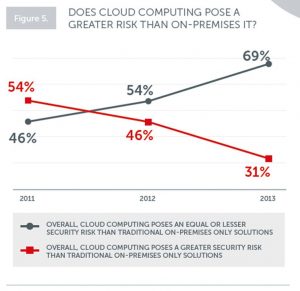 But, over time, this reluctance has reduced. Web-savvy IT managers and directors in many construction businesses realised that their core business was about undertaking construction projects, not running expensive and constantly expanding IT infrastructures. Moreover, they were able to transfer the risks and responsibilities of securely managing data and applications to outside organisations for whom this was their core business (in some of my industry talks, I use a graphic, right, which suggests the tipping point came around 2012). Simultaneously, some businesses in the traditional construction software sector began to switch from providing feature-heavy, on-premise applications with huge up-front license fees to delivering software that could be accessed remotely via browsers and mobile apps on a pay-as-you-go subscription basis.
 Just over
  In 2015, Sherlayer was described as “BIM Level 2-compliant”; the
 “We now have a roughly 50:50 split between Europe and southeast Asia,” Blaha said. Singapore was the French company’s first overseas office, and now has 15-20 people, and the company has just
  Rail projects are another area where Finalcad is being deployed – again to cover both new works and repairs to existing track and stations. Using the Finalcad Live mobile app (available on iOS and Android) on GPS-enabled mobile devices, users can capture details including geolocation data. French state-owned public transport operator RATP (which also operates some transport routes in London) is a customer in this sector.