Meridian user forum

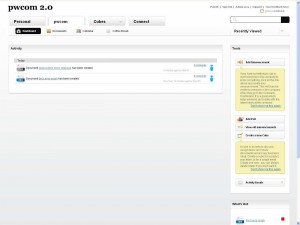
Thanks to a news release published on AECcafe.com, I have learned that Meridian Systems, US-based provider of project management solutions including Prolog and Proliance, has created an online forum for users of its products. The platform – the screenshot suggests it is essentially a discussion board – is intended to help Meridian customers collaborate and share tips, to answer technical questions and to help customers and partners connect with each other. It now has over 500 users (but doesn’t say how long it’s taken to reach that milestone).

According to the news release, Meridian is encouraging people to join the site. I’ve applied and got a message saying my “account is pending approval” – thought I’m not sure if I’ll get much further as I’m not a Meridian user. It says the forum is “a key component of the Meridian SupportLink Website… available to Meridian customers with active support and maintenance agreements”.

[Update (2 November 2009): Received email today saying: “we can only approve accounts for customers that have purchased Meridian products. As of current, I do not see any under your name. If I am mistaken, please provide me with your Meridian serial number so I can verify your purchase.”]

Contrast this closed approach with the more Web 2.0-savvy open approach adopted by UK collaboration vendor Asite who launched their online community in June (see also my pwcom post, Asite community: the first 100 days). I was able to login without approval and was soon getting direct feedback from Asite staff (even though I am not an Asite customer).

Permanent link to this article: http://extranetevolution.com/2009/10/meridian-user-forum/

Bye-bye BT Workspace, Hello Glasscubes

In early 2007, I wrote about BT Workspace, a Software-as-a-Service that the UK telecoms giant was offering to small and medium-sized businesses. Built on a modified version of the Microsoft SharePoint platform by US company SMBLive, BT Worskspace offered extranet-type project workplaces at a competitive price (£7.50 per company user per month; free for micro-teams of two), though I didn’t believe it posed a serious threat to the main construction extranet or collaboration platform providers (too many issues about collaborating on CAD drawings, version control, managing contractual processes, etc).

However, BT is going to be closing the Workspace service down from 20 November 2009, and SMBLive is collaborating with a London-based company, Glasscubes (formed a year ago), to provide an alternative service. According to the news release:

Glasscubes offer the same features as BT Workspace – private workspaces to share documents, calendars, tasks and discussions, a branded online place to manage projects and centralise customer data (contacts, sales leads and issues). In addition to these functionalities Glasscubes also provides free conference calls, a higher level of storage and most importantly, people who you can speak to if you have difficulties.

Pricing

Looking at the website, Glasscubes’ four main service offers are online collaboration, project management, contact management and intranet solutions. Pricing-wise, there is a free entry-level package for up to three users, which include two project work spaces (“Cubes”, of course), up to 100MB of storage and capacity for 100 contacts. The ‘small’ business package, priced at £15, allows any number of users, up to 10 Cubes, 4GB of storage space and 5000 contacts.

Simple, intuitive interface

GlasscubesinterfaceI’ve had access to a Glasscubes account. The interface (right) is attractively bare and intuitive to use (with yellow help panels to explain functionality just in case you’re not sure); within seconds you can start customising your site, adding a logo and changing the colour scheme. Collaboration is straightforward: inviting colleagues to the site, creating cubes, and uploading files to share is easy. There is also a whiteboard into which you paste text, words, etc and create new documents or work collaboratively. And, there is also a conference call service for which users only pay the cost of the telephone call.

When I looked at the calendar feature, I was hoping I would be able to import meetings from my Google or Outlook calendars, but this doesn’t seem to be supported (yet) in Glasscubes. Another nice-to-have would be some kind of integration with micro-blogging, perhaps Twitter or maybe Yammer for internal-only exchanges.

However, that grumble aside, from a collaboration/file-sharing/project management, there is much to like about Glasscubes, and it is inexpensive too – vital in a competitive market. Already this year, I’ve talked about several free or low-cost collaboration solutions (e-Grou, Incite Toolbox, ShowDocument, drop.io, Clouds UK, Woobius, Colaab), some of which are more focused on the AEC sector, others are more generic. What might help differentiate Glasscubes is its support for small businesses in developing new sales leads.

CRM

From my perspective as a marketing professional, Glasscubes also has potential as an inexpensive customer relationship management (CRM) system for SMEs. Its online contact management system, Glasscubes Connect can be used to manage tasks associated with contacts, and to track sales opportunities or customer issues. I experimented by trying to importing a CSV file of a small subset of my contacts, but got an email saying their appeared to be a problem (apparently, it’s best  to import a CSV that fits with the provided template). That hurdle overcome, I saw how opportunities and issues can be created and tracked (you can imagine how, say, a small architects practice could combine the document sharing features with the CRM toolset to keep on top of project management issues) , and there are simple reporting tools showing pipeline and work lost/won. (Read more about Glasscubes Connect in this ReadWriteWeb review).

Permanent link to this article: http://extranetevolution.com/2009/10/bye-bye-bt-workspace-hello-glasscubes/

Memoori upgrade

In August 2008, I wrote about Memoori (see AEC-specific search), and having since met the company’s founder Jim McHale a few times (most recently last week), I can say the product, while still a little raw in places, is developing into a much more rounded offering.

Given the wealth of generic search engine power we have at our disposal, it is certainly helpful to have something that is focused on the architecture, engineering and construction (AEC) or built environment sector. If you punch a search term into Memoori, it returns a short list of results from Bing, plus any mentions of that term in Memoori’s own indexes, including mentions in news, blogs and Tweets.

Jim told me Memoori is now being used by several AEC businesses – and not just as a search engine.

Group file-sharing

Memoori is becoming more of a ‘social’ search, information management and collaboration tool. It now has a groups function that allows users to share search results and to share uploaded files with other members of that group. This could be a private company group (monthly fees start from £10, rising according to storage requirements and the number of groups), for instance, or a public group (free). I have just opened a group for the Be2camp community, for example, and there are other public groups on topics such as Intelligent Buildings, Building Information Modelling, Building Schools for the Future, etc. Results from the Bing search, for example, can be shared with your group or emailed to a friend, and – for those like me that monitor information using a feed-reader – there is also an activity stream RSS feed for each group, useful for keeping updated about what’s recently been bookmarked or uploaded.

When I first discussed Memoori, I wondered – from a Web 2.0 perspective – if it might incorporate some kind of collaborative editing or tagging tools. In effect, I was looking for a construction-flavoured Delicious that would allow users to bookmark pages and share them with friends. Memoori is now pretty close to this, even including, like Delicious, a browser plug-in (currently only Mozilla Firefox and Google Chrome, though it also works with the Firefox-based Flock browser that I use; an Internet Explorer plug-in is being developed). It is simple to use: clicking on the toolbar widget opens a window which is pre-populated with the URL and title of the item you want to save, and you can add a note before adding it to your bookmarks.

At the moment, Memoori bookmarks don’t incorporate tags, and you don’t have the option of sharing your bookmark simultaneously with followers via Twitter (a feature of Delicious that I particularly like), but Memoori is becoming a more sophisticated and useful product, and I expect such niceties are already on Jim’s to-do list.

Permanent link to this article: http://extranetevolution.com/2009/10/memoori-upgrade/

ArchiCAD 13 and BIM collaboration

Over the past month, I have heard and read quite a bit about Graphisoft’s ArchiCAD 13:

  1. First, I read Lachmi Khemlani’s AECbytes review, telling me that, for the first time, a commercially available building information modelling (BIM) application now included server-based collaboration that potentially allows team members to work together in real-time.
  2. Next, I encountered Amonle architect John Allsopp who has opted to use ArchiCAD 13 as the BIM ‘engine’ behind a new collaborative “virtual design studio” business. Indeed, John spoke (from Barbados via Skype) about this initiative at the recent Be2camp@WorkingBuildings2009 event in London that I helped organise – memorably describing his business as a “micro-multinational”. (I hope to be meeting up with John shortly to learn more about his business and its use of social media.)
  3. And, today, I’ve been reading David Chadwick’s CAD User Online review of ArchiCAD 13, in which he tentatively suggests “Graphisoft may have found the ‘Holy Grail’ in BIM collaboration“.

What makes ArchiCAD 13 so exciting is its BIM server component. This helps maintain a complete, up-to-date BIM model of a project centrally. Team members work on copies of the model, but instead of the whole model being synchronised by copying the model back and forth, synchronisation is achieved by exchanging only the differences between the central model and the federated copies. This approach is not new (indeed, when I was at BIW, the company developed a similar ‘differencing’ or ‘Delta file’ exchange to help overcome broadband constraints on sharing large CAD files), but it is, I think, the first time it has been applied to a commercially available BIM solution. And by reducing file exchanges from megabytes down to kilobytes, it opens up the potential for construction teams to remotely share rich levels of design information almost regardless of their geographical location and on sub-optimal broadband connections.

Regular readers will know that I looked at the idea of CAD software being delivered as a service (CADaaS – see CAD in the Cloud) several times before switching focus to BIMaaS, and the pairing of BIM with ‘differencing’ technologies (also used in some server acceleration solutions – eg: Riverbed) may begin to convince sceptics that it is possible to deliver data-hungry applications and data via the web. Graphisoft is showing that broadband need not be the constraint that many think it is.

Update (20 October 2009): PS – Interested in how BIM is being adopted by a medium-sized architectural practice in the UK? Read this AECbytes article by Rahul Shah of MAAP Architects.

Permanent link to this article: http://extranetevolution.com/2009/10/archicad-13-and-bim-collaboration/

SaaS as a software protection strategy

Reading WorldCAD Access and The CAD Industry blogs this morning, I learned about the latest developments in a court case brought by Autodesk to stop an eBay trader, Tim Vernor, from selling second-hand CAD software. Ignoring the complex issues relating to copyright, it occurred to me that other software vendors are already side-stepping such issues by delivering their software as a service.

Instead of distributing disks or enabling software downloads to users’ local machines, hosting the application ‘in the cloud’ and allowing users to access the solution and its related data via the internet effectively prevents any end-user from gaining access to the underlying software code. This wasn’t a vendor benefit that I had previously identified as inherent to the SaaS model, but alongside the other advantages of SaaS – faster development and testing, easier deployment, quicker upgrades or patching, economies of scale, more efficient support, etc – perhaps protection of the vendor’s intellectual property should also be another reason to embrace the SaaS approach.

Permanent link to this article: http://extranetevolution.com/2009/10/saas-as-a-software-protection-strategy/

Coda2go + Salesforce strengthen SaaS Financials offer, but what about Business Collaborator?

This week saw news of a partnership between US based software-as-a-service CRM vendor Salesforce.com and accounting systems vendor Coda. Why should I be interested? Well, Coda – since January 2008 part of Dutch ERP vendor Unit 4 Agresso NV – is also the parent of UK construction collaboration technology provider Business Collaborator.

At the time of the merger, I did wonder how relevant Business Collaborator (BC) was to Coda’s core business and, having had a fresh look at the Coda website today, BC hardly registers (just a handful of mentions in old financial results), its corporate profile probably in line with its c. 5% contribution to group turnover. However, it could be that the developing Coda relationship with Salesforce.com – adding financials to CRM – might also be matched by similar developments with respect to BC (maybe document collaboration + financials, or even collaboration + financials + CRM). On its own, it has in recent years enjoyed steady growth and is profitable (why dispose of something that is generating revenues?). On the other hand, maybe BC might move towards another change of ownership?

Permanent link to this article: http://extranetevolution.com/2009/10/coda2go-salesforce-strengthen-saas-financials-offer-but-what-about-business-collaborator/

e-Grou Free Edition launched

Mentioned earlier this summer (see post), Portugal based e-grou launched its free Software-as-a-Service document management system yesterday (30 September). Designed as a stepping stone towards adoption of the more fully-featured Professional and Enterprise editions, e-Grou Free Edition offers an impressive-looking list of features, though the amount of collaboration possible will be constrained by a limit of just two concurrent user licenses. Total storage is also intentionally limited to 1GB. Opportunities for AEC collaboration will also be limited as the Autodesk connector is apparently only available as part of the Enterprise solution.

Permanent link to this article: http://extranetevolution.com/2009/10/e-grou-free-edition-launched/

Coming soon: tender.ly

Found through a Twitter connection:

It’s almost ready.

tender.ly is elegant and powerful web-based software, for Architecture, Engineering and Construction companies to conduct their tendering for suppliers and subcontractors.

It’s software that makes your job easier, not harder. There’s no long-term contracts, just a low monthly fee. And you’ll be up and running in minutes, not months.

We’re just putting the finishing touches on it at the moment. If you’d like us to let you know when tender.ly is ready, leave your email address…. We’ll be in touch.

Jason Langenauer tells me the service – run by a company, Constrex, based in Sydney, Australia – is due to be launched in late 2009. Constrex aims to help establish successful business connections between main contractors and subcontractors, identifying bidding opportunities and checking references of potential supply chain partners. So tender.ly appears a logical extension of this.

Permanent link to this article: http://extranetevolution.com/2009/10/coming-soon-tenderly/

Woobius wins £23,000 at PICNIC

I wrote again about Woobius a couple of weeks ago, noting that its real-time mobile collaboration solution, Woobius Eye, had reached the final of the Vodafone Mobile Click 2009 competition. Last Friday, in a Dragons Den-style appearance before judges and a 200-strong audience at the PICNIC social media event in Amsterdam, Woobius finished third, beating both the other UK finalists in the process, to win €25,000 (around £23,000). One of the co-founders, architect James Goodfellow tells me they were the first business-oriented application to win a prize in a competition hitherto dominated by social media startups.

James and CTO Daniel Tenner will be presenting Woobius Eye during the afternoon of 7 October at the Be2camp@WorkingBuildings2009 event at London Olympia (I am one of the event organisers).

Woobius is also short-listed for the 2009 Construction Computing Awards in the ‘one to watch’ company and product categories.

[Disclosure: Woobius is a client of pwcom.co.uk]

Permanent link to this article: http://extranetevolution.com/2009/10/woobius-wins-23000-at-picnic/

A first look in the Incite Toolbox

In June (as I posted), I met Sean Kaye and Michael Baker of Australia-based construction collaboration vendor Incite. We talked about Incite’s new project collaboration tool and platform, Incite Keystone, amid a wide-ranging chat about collaboration, file-sharing, social media and other topics, and we’ve stayed in contact ever since, mainly through Twitter but also through blogs and the occasional email.*

Toolbox webpageYesterday, I received a Tweet from Michael inviting me to sign up to use what I think is best described as an early or pre-Beta version of Incite’s new cloud-based file-sharing platform, Incite Toolbox (which he also blogged about yesterday).

Sean has also been writing about Incite Toolbox today on the Incite blog (linking to my preceding post about Asite and social media) and describes how Michael and his team have baked the social media concept of “the stream” into the product. For the architecture, engineering and construction (AEC) sector, he argues that social media tools need to be relevant to projects and integrated into the tools provided to the AEC industry (he cites the example of the Blackberry and portable email).

Twitter, but with file-sharing?

I’ve experimented with the browser-based version of Toolbox (I had to switch away from my usual Flock browser to view the interface properly, but it worked perfectly in my second choice Google Chrome). Sign-up was simple, with only the most basic details required, followed by receipt of an email activation link. The user interface is quite intuitive, and the basic functionality – even allowing for the application’s pre-Beta status – is impressively straightforward to use. Within seconds, I could invite people to join my project and start to upload content, send messages and to tag.

As well as “the stream” (labelled ‘Feeds’), the application uses tagging to identify the importance of content to each team member and to the project as a whole. As you upload content, write updates or comment on other people’s messages, you can tag your contributions, immediately linking them to other messages, files, images, etc. Clicking on one of the tags (currently displayed to the right) immediately displays all the contributions sharing that tag in the ‘Feeds’ space.

Upon upload, your updates are immediately available to other users in your project network in real-time, with the most recent updates at the top – just as you might view one’s Twitter feed. Rather than send an open update visible to all project members, you can also send a direct message (also a la Twitter).

Small icons in the ‘Feed’ space allow you to choose different views of the content (currently: all, messages with or without attachments, images or pictures direct messages), but if that doesn’t help you find things the Toolbox search engine searches and prioritises results as you type into the search box, delivering almost instantaneous results.

Files can potentially be uploaded to Toolbox in four ways, via:

  1. the browser-based solution
  2. a desktop application
  3. a (forthcoming) Toolbox client for the iPhone, and
  4. by email – send correspondence and files to an Incite Toolbox email address where they are immediately uploaded to Toolbox.

You can also set the system so that you get SMS email confirmations of messages (I quickly disabled this once I saw how every message was being echoed to my email inbox); Twitter integration appears to be in the offing too (invaluable for me – as I increasingly look at Twitter before I browse email).

On charging, Incite says:

Seriously scalable Toolbox is not charged on how many projects or users you have. It’s all about the data you store. A project only pays for the number of gigabytes consumed, allowing a project to grow and contract rapidly.

My initial reaction

Having talked about various low-cost or simple online AEC file-sharing applications recently (Woobius, drop.io, and yet-to-launch e-grou, among others), Incite Toolbox is, I think, quite different.

For a start, the interface isn’t just a list of documents and drawings; “the stream” gives you a sequenced flow of content from your project members and if the stream becomes a flood you can:

  1. apply the feed filters to sieve out the types of content you’re seeking,
  2. use tags to hook out just the items you need (assuming that everything has been accurately and appropriately tagged, of course – Michael’s blog post links to a YouTube video that includes batch upload and tagging combined),
  3. use the incredibly rapid search tool, and/or
  4. combine any of items 1 to 3.

Like Woobius, this product also starts from an AEC mindset. It is not a generic file-sharing application that has been re-purposed for AEC use; it has been developed by people who’s previous experience has been focused on applications for the AEC market.

As a social media enthusiast, I like the focus on creating a real-time “stream of (project) consciousness”, augmenting status updates with files – and vice versa. Incite appear to have ambitious plans for Toolbox, and if it can offer collaborative features of the kind that are being offered by rival products (with drop.io, for example, I talked about chat, presentation and conference calling facilities; Kalexo – see post – is also competing in a similar fields) – particularly if these also have strong social media functionality – then it will be a compelling mix. This combination might also herald much wider adoption of Web 2.0 by AEC project team professionals who have hitherto been largely reliant upon non-Web 2.0 tools due to the lack of social functionality in most construction collaboration platforms.

Inevitably, there are some glitches in the functionality and layout/navigation of this early stage application, but I will be returning for a more detailed look as the product is further developed. Also, the more I’ve thought about the product, the more I can see it being used for non-AEC purposes. There will be numerous B2B scenarios where teams need to share data quickly with fellow project team members; Incite Toolbox isn’t just for construction projects – it has potential for any social collaboration project.

[* Disclosure: I met Incite’s Sean Kaye and Michael Baker in June (Incite paid for lunch). I have also since undertaken some paid consultancy work for Incite.]

Permanent link to this article: http://extranetevolution.com/2009/09/a-first-look-in-the-incite-toolbox/

Load more