Zutec, StratusVue, TeamDocr… more AEC collaboration providers

Social media has become a convenient route for new (and not so new) start-ups to target bloggers like me or for me to hear about IT vendors targeting architecture, engineering and construction (AEC) of which I was previously unaware. For example….

  • Matt Schaefer of Chicago, US-based StratusVue contacted me via LinkedIn
  • through Twitter, I learned that Dun Laoghaire, Ireland-based Zutec targeted a recent BIM event in Dublin, and
  • having tried out exploreB2B platform, I received an invitation to look at TeamDocr

Stratusvue logoStratusVue essentially offers on ecosystem of three products:

  • Bidvue enables an efficient bidding (RFP or tendering) process by helping project leaders rapidly reach and qualify the right bidders, share the right information with them, and communicate changes and clarifications from a central information portal
  • Plansandspecs is the core document capability in StratusVue’s portfolio, providing a role-based solution for construction document management and workflow
  • BIMfx provides building information model (BIM) coordination functions, allowing model files to be synchronised and updated, using differencing technologies to accelerate exchange of file updates, and also claims to improve on COBie concepts “by using a more powerful and dynamic database tool”.

Zutec logoZutec is a new(ish) name to me, but the offering is familiar. I recall them capturing commissioning and O&M paperwork electronically some years ago. They now provide a broad range of asset management data services including mobile solutions for field data capture (iOS and Apple), cloud-based services for facilities management, project handover documentation services, BIM integration, energy and sustainability records management, and document control.

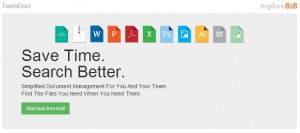
TeamDocR splashpageBased in Berlin, Germany, TeamDocr was launched last month (November 2013) and is a generic (ie: non-industry specific), cloud-based document management solution. Intended to reduce time wasted on fruitless searches for documents, it is not folders-based but uses tags – users apply as many tags as they like to files and can then search for them and related documents easily. Prices start from $15/month for 1GB of storage shared by three users and range up to a business solution offering 120GB of storage for 120 users for $699/month. Existing users of exploreB2B can have start a free trial.


Permanent link to this article: http://extranetevolution.com/2013/12/zutec-stratusvue-teamdocr-more-aec-collaboration-providers/

4Projects joins Unit4BC and Conject in UK Gov Cloudstore

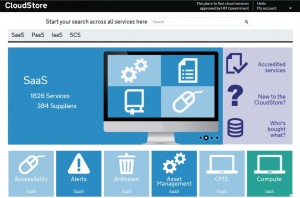
CloudstoreSunderland, UK-based SaaS construction collaboration technology provider 4Projects has been accepted as a supplier for the UK government’s G-Cloud programme (see 4Projects news release), making it available to any government ICT procurer without having to go through the laborious and lengthy OJEU route.

4Projects’ Matt Harris says:

“We are incredibly excited to have been accepted into the G-Cloud Programme, which will enable 4Projects to provide its leading project and BIM collaboration platform to UK government clients in need of our award winning solutions.”

4Projects is not the first vendor to achieve this status: Unit4‘s Business Collaborator platform was added to the UK Government’s Cloudstore in February 2012, and there are others….

4Projects and Unit4 feature among 560 products listed in the EDRM/Collaboration category, which also includes Conject (its NEC3 contract change management system and core Project Control platform are both listed) and Kykloud, alongside numerous more generic systems such as Microsoft’s Sharepoint and Office 365, Drupal, Google Apps, Huddle, Oracle, etc. Kykloud also features in the Asset Management category, as does Idox/McLaren‘s CAFM Explorer toolset.


Permanent link to this article: http://extranetevolution.com/2013/12/4projects-joins-unit4bc-and-conject-in-uk-gov-cloudstore/

Newforma eyes Australia opportunities

The Australasian market for construction collaboration technologies is becoming ever more competitive. As well as home-grown providers such as Aconex, QA’s Teambinder, ProjectCentre (now part of RIB) and Incite (seemingly mainly used on Leighton Holdings projects now), the region has also been targeted by UK-founded firms including Asite (it tripled its Australasian revenues last year), Conject, McLaren and 4Projects (reseller ProjectCollaboration.com.au started promoting 4Projects in 2012; the product was likely to be renamed ‘Viewpoint for Project Collaboration’ to match its post-acquisition US branding – post).

Reviewing the collaboration battleground last month, Australian BIM blogger Matt Rumbelow also included Autodesk (home to Buzzsaw, of course, plus a growing portfolio of cloud-based and mobile BIM tools), Bentley (ProjectWise), Gehry Technologies’ G-Team, DropBox for Business (not really a collaboration product,but the cloud-based file-sharing may meet some team’s needs) and the US-based Newforma.

Newforma to sell direct to ANZ region

Newforma-logoMatt says Newforma is apparently now dispensing with its current local ANZ reseller (SmartSoftware) and will move to a direct sales model managed by its Singapore office in 2014, looking to compete with Aconex et al on their home turf along with the various international Software-as-a-Service providers. In the UK, Matt says they also evolved from a local reseller (NFS, appointed in 2010) to a direct model – resellers clearly help Newforma ‘test the water’ in new regions before putting its own people on the ground. Six vacancies in Melbourne, Sydney and Brisbane are currently open.

Of course, Newforma is not strictly a SaaS vendor – its core platform is more of a peer-to-peer file synchronisation system, not unlike an intranet in some respects. It initially rejected the relevance of the SaaS approach for construction collaboration but in 2012 it acquired a SaaS business, Attolist, and in October 2012 its CEO Ian Howell told me the business was embracing BIM, SaaS and mobile as it sought to expand both its platform and its international operations.

In September 2013, it announced (news release) that the former Attolist (now Newforma Project Cloud) can automatically share data with Newforma Project Center enterprise software and selected Newforma Mobile Apps, making project information available in the office, from the cloud, and on the go. A month earlier it closed a US$5.1 million Series D venture capital round to drive faster growth, develop new products, and expand into new geographic markets; it has since (in November) appointed resellers in Hong Kong and Thailand.

Update (14 January 2014) – The establishment of Newforma Australia was announced in a letter to Australian customers on 7 January from Newforma’s CEO Ian Howell and Mark Hansen of Smartsoftware. It said: “Newforma Australia will manage sales, marketing and account management for the Australia and New Zealand territory…. Smartsoftware… will continue to be our support and services partner….” (though I wouldn’t expect this arrangement to continue beyond 2014).

Permanent link to this article: http://extranetevolution.com/2013/12/newforma-eyes-australia-opportunities/

Former Woobian Bob Leung is now a Genie

GenieBelt logoBob Leung, a co-founder of Woobius, the ‘simply simple’ SaaS construction collaboration solution launched in early 2009, is now applying his architecture (ex Foster + Partners, Make) and his user experience design skills for Geniebelt, the Copenhagen-based developer of mobile construction SaaS solutions (post).

Bob LeungThe fit is good. Bob has a track record of innovating well-designed solutions for architects and other industry professionals. In addition to the core Woobius platform, he also helped develop Woobius Eye, a ground-breaking real-time mobile collaboration solution (post) which won a £23,000 Vodafone Clicks Award in 2009, and Woobius Showcase, an iOS-based marketing and content management platform (pwcom post). He has since applied his entrepreneurship and mobile app expertise via NearPixel, and with his brother Steve developed a LinkedIn-type application for doctors, rLocums. Throughout, Bob’s businesses have also deployed social media strongly to help build industry connections and promote their services

I met Gari Nickson of GenieBelt (not to be confused with Google’s Genie: post) in October and we talked about delivering new and potentially disruptive approaches to collaboration in the construction industry. Last week, I told a conference (post) that the industry cannot continue to rely solely on email-type communication processes, and needs to accommodate the mobile-friendly short-form status updates and real-time messaging tools that are increasingly being deployed on smartphones and tablets. GenieBelt was one of those companies I had in mind, and, with Bob, I think they have someone very much in tune with that vision.

Permanent link to this article: http://extranetevolution.com/2013/12/former-woobian-bob-leung-is-now-a-genie/

MCS Priority1 working with 4Projects

Swansea-based mobile construction solutions developer Priority1 is working increasingly closely with SaaS vendor 4Projects.

Priority1 logoI spoke at Mobile Computing Solutions’ Priority1 user conference, held at BRE near Watford, last week, which was useful as my fellow speakers included Steve Spark of SaaS construction collaboration vendor 4Projects – and another Paul Wilkinson (quality manager at Carillion)!

It was clear from the comments of both Priority1’s founder and MD Richard Scott and Steve Spark that the two companies are developing a closer working relationship whereby 4Projects can take advantage of the Swansea-based developer’s expertise in applications for mobile platforms.

Priority1 expanding

Priority1 has been providing mobile solutions for task management, forms and process control to the UK construction market for over a decade. For most of this time, its solutions were mainly accessed via PDAs, first Palm later Windows Mobile, but in January 2013, after nine months of detailed development and testing, the company launched an Android app allowing users to access Priority1 on tablet devices. Technical manager Gareth Cottrell also told the conference the company had been investing in its Software-as-a-Service capabilities, implementing a private cloud hosting facility in July 2013. And next week (9 December 2013), the company will be launching its business intelligence platform, he said.

Despite the impacts of the global financial crisis and the resulting recession in the UK, Priority1 has seen continued growth in its user base, and the company forecasts a turnover in excess of £1m in its current financial year. The extension of device support from PDA to tablet has clearly been a factor in its expansion, but it doesn’t just develop its own solutions – we heard from BRE how its Building Futures group’s Calibre and SMARTWaste services were also supported on Priority1.

4Projects is clearly seeking to capitalise on Priority1’s experience of working with third parties. Steve Spark (still waiting to learn if he will be leading the Newcastle-based business in 2014 – post) described the company’s investment in its development team since the company’s acquisition by Viewpoint (post) and said that building information modelling (BIM) and mobile functionality were going to be big themes for functionality over the next two years, supported by investment in application programming interfaces (APIs). 4Projects has already released both Apple and Android versions of its 4Mobile applications during 2013 (post), and some of its existing customers – such as Carillion – are increasingly extensive users of Priority1 (the other Paul Wilkinson said that compatibility with 4Projects was a factor in its choice of Priority1 as a mobile quality solution).

Richard Scott (Priority1)MD Richard Scott (right) led an interesting conversation about operating system choices, and it was clear that many Priority1 customers are keen to have Windows 8 mobile support, though their provision might vary depending on whether users were site-based personnel needing smaller but less expensive devices or company executives using tablets mainly in the office.

Web 2.0

Aside from the alliance between Priority1 and 4Projects, I also learned more about Priority1’s gradual extension of social approaches into its software platforms. Its users can share discussions and vote on the enhancements and bug fixes they would like to see (“User voice”); further user support is provided via a (MediaWiki-powered) wiki; it is using YouTube videos and other social tools to support customer service roles; and the updated website now features a blog and Twitter (echoes here of Asite‘s community efforts four years ago), plus a link to its Google+ profile. Priority1’s forthcoming Business Intelligence integration (powered via Yellowfin) will also incorporate sharing, timeline-based conversations and online polling tools.

Permanent link to this article: http://extranetevolution.com/2013/12/mcs-priority1-working-with-4projects/

TrackerPlus enters US LEED market

trackerplus-logoIn May 2012, I had a long look at Islington, London-based environmental consultancy SouthFacing and its TrackerPlus application. This is used to streamline the BREEAM environmental assessment process for members of the design team and allows assessors to submit their assessments directly from the system to BREEAM for quality assurance (QA) and certification. I met with SouthFacing’s Ben Cartmell again on Monday and he told me TrackerPlus can now also be used to compile and submit LEED reports, opening up a new and bigger international market.

BREEAM is primarily used in the UK, while LEED (Leadership in Energy and Environmental Design) is managed by the US Green Building Council. Like BREEAM, it is a rating system to support design, construction, operation, and maintenance of green buildings, helping building owners and operators find and implement ways to be environmentally responsible and resource-efficient. However, LEED is used across a much bigger domestic market and is also extensively used outside the US.

To date, TrackerPlus has been used on almost 2000 developments, and has a user base extending across 100 BRE assessor companies, collectively employing some 400 accredited BREEAM assessors, and reaching out to around 9000 design team members. As the process involves compiling detailed information for regulatory and compliance purposes (information often already created for other design purposes), I have always felt there was an opportunity to integrate the TrackerPlus system – perhaps via some kind of licensing arrangement – into construction collaboration technology platforms – and Ben is now actively considering opportunities in this respect.

A new TrackerPlus website, presenting a combined portal for BREEAM and LEED processes, went live on Monday. The launch of TrackerPlus LEED is the latest step in a development process with USGBC that began in 2010, Ben told me. He says:

“The system now interfaces directly with LEED Online making it a one-stop shop for the management of your LEED assessments. You can carry out pre-assessment charrettes, set up the credit scorecard, edit LEED credit forms and submit for review direct from Tracker Plus LEED without the need to interface with LEED Online. It also has many of the useful features of its BREEAM counterpart such as automated report generation and email reminders.”

US-based professionals will be able to talk to Ben about TrackerPlus LEED in Philadelphia later this week as he will be at GreenBuild 2013.

Permanent link to this article: http://extranetevolution.com/2013/11/trackerplus-enters-us-leed-market/

Could Google disrupt the construction IT market?

With a hint of Google Genie out of the bottle, could the search giant overtake the established AEC IT giants?

Last month, I retweeted and bookmarked an Israeli news article suggesting Google technology could halve construction costs (a story also subsequently picked up by UK magazine Construction Manager – Is Google planning a BIM-busting app for construction?). The reports say Google’s development wing, Google X, is working on a project to offer the architecture, engineering and construction sector the project collaboration equivalent of Google Docs.

Code-named Genie (presumably unrelated to the Copenhagen-based GenieBelt business whose Gari Nickson I met earlier in October), it is apparently a cloud-based platform with online design and analytical tools that would allow designers and construction professionals to collaborate in real time, including planning tools, and advanced analytics and simulation tools. Genie standardises and automates the design and construction processes with unlimited design options, enabling an architect to preserve the building’s uniqueness in the urban environment.

The technology was presented as something that will change the conservative global construction industry through a fundamental and revolutionary change in how buildings are designed, built, and maintained, saving trillions of dollars. … The … team estimated that Genie could save 30-50% in prevailing construction costs and shorten the time from the start of planning to market by 30-60% … [and] estimated that the platform had the potential of generating $120 billion a year for Google.

Vannevar WebsiteThe technology is now being developed by a still somewhat secretive spin-off company, Vannevar Technology Inc, registered in Delaware, and founded by three of the Google X team behind it.

Construction Manager reported that architect and BIM specialist Elrond Burrell believed the UK government’s BIM Task Group had been given a preview of the technology last year. He speculated:

“I remember people on the Task Force and Mark Bew referring to a Google thing that could “do” Level 3 BIM. It sounds like it gives you a situation where you have multiple people collaborating in real time, rather than exchanging static information.”

However, comments on the CM article were sceptical about Google’s ability to deliver an industry-strength, industry-specific solution, citing its failure with SketchUp (now owned by Trimble; though perhaps Google’s people will have learned some lessons from that), the need to focus on data not graphics (again, I suspect this is something that the Vennevar executives will be well aware of – Google’s core business, after all, is about helping us search for and find data), and the cost and time needed to create a powerful solution to rival, say, Autodesk’s Revit.

Cloudy future?

And I suspect there will also be some scepticism among the existing AEC (SaaS and non-SaaS) collaboration vendors – some of whom have been toiling for 10 or 15 years trying to improve the industry’s efficiency and yet it continues to lag behind all other sectors in productivity improvement – largely due to its fragmented structure, its often adversarial culture, and its continued reliance on outdated paper-based or paper-like communication processes. There has been limited merger and acquisition activity among the leading SaaS players – as I wrote in February, there are numerous reasons no single vendor yet dominates the SaaS collaboration sector – but the emergence of new disruptive technologies such as BIM (and the need to manage models and related data in powerful web-based common data environments, CDEs), coupled with the financial and R&D muscle of an ambitious international giant eyeing a market opening, could yet change the market in a decade.

You only have to consider the dent that Google has made in the once-Microsoft-dominated operating system, Office and email market through its Android OS, Google Apps and Gmail offerings to see how the search giant can change the computing world. I have written a cloud computing feature for December 2013 issue (out soon) of the RICS magazine Modus which includes case studies of construction and property industry firms opting for Google Apps, Google Drive cloud storage and Chromebooks to give them greater agility and reduce their business overheads while improving efficiency and information sharing.

And there is Google Earth too, the world’s most ambitious and largest geospatial resource, geolocating and constantly updating data about places and buildings across a hugely searchable Google map of the entire globe. The creation of a new toolset to improve data management relating to new buildings, to me, somehow seems to fit with this vision.

Google Glass

Google Glass (from Wikipedia Commons)In another Google-related conversations, I talked to US construction IT writer Rande Robinson at the Bentley Systems conference last week about mobile devices, and we agreed the wearable, voice-activated Google Glass technology had the potential to immediately change how site workers and maintenance operatives accessed information.

This was reinforced when I saw a UK Google employee, David Keene, demonstrate Google Glass at a London Bloggers Meetup last week. The LBM discussion also covered “Hummingbird“, the latest iteration of Google’s search algorithm, which is designed for conversational or semantic search, to deliver better results for the growing number of users accessing Google services on mobile devices with voice search. Such intuitive web-based (and presumably geo-location-specific) technologies with simple voice-powered interfaces could make a profound difference, hastening more real-time communication and information access.

Wearable technology also featured in a mind-blowing presentation by futurologist Francis Rabuck at Thursday’s COMIT conference in London on construction information mobility (read the Storify stream), where he outlined a wide range of new and potentially disruptive technologies, from internet-connected baseball hats and drones to back-end knowledge engines and 4D building materials.

Permanent link to this article: http://extranetevolution.com/2013/11/could-google-disrupt-the-construction-it-market/

Nemetschek bim+ creates potential common data environment

bimplus logoNemetschek’s bim+ cloud-based service ticks many of the boxes required for a common data environment

Munich, Germany-based software developer Nemetschek has launched bim+, an open, web-based BIM platform for architects, engineers, constructors and owners of real estate:

bim+ allows building models to be directly imported into the bim+ cloud where they can be accessed and edited using innovative apps and services on any computing device (PC, Tablet, Smartphone). … The multi-model collaborative features of bim+ integrate building models created by different software solutions. Satisfying a growing need for collaboration, bim+ is the first-ever solution of its kind to enable the combined use of models of different formats and disciplines, using the best technologies for the Internet, cloud, apps and mobile devices to help all participants in a building process build faster and better.

Nemetschek is well-known to many architects as the developer of design tools including Allplan, Scia, Graphisoft and Vectorworks, but its bim+ collaboration platform is clearly not restricted to its own software stable; Trimble’s Sketchup and Autodesk’s Revit are also highlighted on the website homepage. It aims to enable sharing, visualisation and collaboration between all project team participants, making it a potentially powerful common data environment (CDE).

Moreover, the platform is vendor-independent, open to all popular CAD formats, has an open API, is based on open standards (eg OPEN BIM, IFC), and will be complemented by a range of visual apps (most “coming soon”) and services. This will make bim+ interesting to many UK businesses which are considering how best to respond to the challenges of creating a CDE to meet the UK government’s 2016 public sector BIM mandate and delivering “open shareable asset information”. Much will depend on how it can be configured to suit the requirements laid down in PAS1192-2 and other BIM process documents.

Free bim+ beta ccounts are available, and subscriptions after beta start at €4.90 per user per calendar month. A typical small team (11-20) would pay €450pcm (roughly £380 or $600pcm).

Permanent link to this article: http://extranetevolution.com/2013/11/nemetschek-bim-creates-potential-common-data-environment/

Autodesk launches BIMaaS

Autodesk enables web browser access to its main design tools on a pay-as-you-go basis

autodesk logoOK, Autodesk don’t call it BIMaaS, but its announcement that its main design tools including Autodesk Revit are now accessible via a web browser amounts to the same: “For the first time ever, customers can access full-fledged 3D design … work in a browser without sacrificing performance, power or functionality.”

Anticipating such moves I started to write about BIM-as-a-Service, superceding CADaaS, in 2008, and it’s been a recurring theme since then as design software firms have extended their cloud computing capabilities.

Autodesk says its ongoing strategy is to provide access to its most popular tools from almost anywhere, anytime, regardless of device and without compromising performance. The new capability, enabled in partnership with Amazon Web Services, OTOY and Nvidia, is initially available as a 90-day tech preview and expands the remote access capabilities provided to Autodesk’s subscription and rental plan customers through Autodesk Remote (similar to HP’s RGS – post). Autodesk CTO Jeff Kowalski says:

“Designers and engineers face deadline pressures and efficiency targets that demand work be more mobile than ever. It’s no longer a requirement to run sophisticated 3D design applications such as Inventor, Revit, 3ds Max or Maya on a powerful workstation. Now all you need is a simple browser and an Internet connection. We are excited to be first in the design industry to provide this capability.”


Permanent link to this article: http://extranetevolution.com/2013/11/autodesk-launches-bimaas/

Global SaaS and delivering a good user experience

Could AEC SaaS collaboration vendors deliver zero-wait web experiences to their end customers on any device and over any type of network?

Last week at Bentley Systems‘ Year in Infrastructure conference in London (see previous posts), I listened to a couple of case studies about the use of its collaboration suite ProjectWise – for example, in the delivery by US contractor DPR Construction of a major hospital in San Francisco. One speaker flagged up web performance issues as a factor in successful deployment, and this got me thinking about how vendors can deliver a satisfactory user experience via the cloud.

From local hosting to SaaS

As some readers will know, ProjectWise has been a staple part of the Bentley software portfolio since the late 1990s. Previously known as TeamMate, it was rebranded as ProjectWise in December 1998, and, as project teams sought to enable collaboration via a standard web-browser, it grew a loyal user-base, particularly among users of other Bentley tools such as Microstation. I first encountered the product in 1999 when I wrote a case study for the IT Construction Best Practice Programme (now long gone) on ProjectWise use by London firm, DLG Architects. ProjectWise enabled them to distribute and share design information with other companies in their project teams by offering a web-browser ‘window’ into the data held on their or a contractor’s server.

Bentley Connect at yii2013In the face of competition from pure cloud-based, Software-as-a-Service firms, such local hosting has been pretty much the norm for ProjectWise; it is still primarily presented as a range of server products, supported by various content publishing and design review tools, and many construction organisations and major industry clients remain insistent on hosting the software and associated data in-house. However, the 2012 launch of Bentley’s CONNECT services (post) extended its reach as a cloud-based service, and last week’s announcement of Bentley’s partnership with Microsoft to offer Bentley CONNECT MANAGEservices via the Microsoft Azure Platform-as-a-Service and Infrastructure-as-a-Service will provide even further options.

Incidentally, the alignment is not surprising: Microsoft’s Windows operating systems and its Office suite are used by the vast majority of construction-related businesses. I recall ‘Software-plus-services’ was Microsoft’s declared strategy in 2008 – and it’s a simple description that could be applied to Bentley Systems’ approach (among others).

The expansion of cloud-based capability is a necessity. Globalisation, growth in flexible and mobile working, and the emergence of building information modelling (with, in the UK at least, an increasingly imminent need to share BIM information via a web-based Common Data Environment, CDE) are making knowledge workers more reliant on instant access to accurate, up-to-date information (‘a single version of the truth’) wherever they happen to be.

Web acceleration

This is a growing IT challenge for businesses which host their own collaboration platforms. Design files are increasingly large (and BIM is adding to that pressure), stretching the capacity of many corporate telecommunications networks, and firms are often resorting to local caching to speed up the sharing of frequently requested large files – in the afore-mentioned hospital case study, DPR’s Atul Khanzode highlighted the need to regularly update caches across the team, for example. ‘Differencing’ technologies – such as that offered when ArchiCAD 13 was launched in 2009 (post) – can also be deployed to reduce the bandwidth congestion, along with web acceleration solutions such as Akamai‘s routing optimization and advanced caching (deployed by construction SaaS vendors Aconex and Asite). And HP showed off video compression and WAN optimisation for their screen-sharing remote graphics software yesterday.

Instart Logic targets SaaS providers

instart logicThe latest to enter the web acceleration market is California-based Instart Logic, which has just announced a new vertical product line focused on SaaS providers wanting to deliver premium, zero-wait web experiences to their end customers on any device and over any type of network. Instart Logic argues existing content delivery networks (CDNs) cannot effectively serve highly dynamic web applications or deliver the level of personalisation and data freshness required by SaaS customers. Its product is based on two technology offerings (the news release talks fluent ‘techie’ about a new Inter Proxy Transfer Protocol, framing and multiplexing dynamic transfers, and using Google’s protobuf technology): “Taken together, Global Network Accelerator and Dynamic HTML Streaming combine to provide a substantial boost in performance for dynamic web-based SaaS applications.”

I understand the service is especially useful for those SaaS applications using large amounts of personalised dynamic content or that deliver their service to a dispersed user base (both are the core services for all construction collaboration technology providers, of course). Instart Logic’s HTML streaming technology is able to distinguish between unique and non-unique HTML code. The solution automatically sends non-unique portions to a user first from the closest available server so that they are able to get into the application faster.

Agile project manager provider VersionOne is an early adopter; CTO Ian Cullen says:

“We provide an entirely web-based system to over 50,000 agile development teams worldwide building mission critical code with our agile project management software. Our customers are largely developers. They are extremely intolerant of poor application performance. So we need to make sure that our own application performs at the highest level no matter where our customers are. Instart Logic’s innovative services give VersionOne users fast, fresh updates from constantly-changing projects and improved our performance by 50%.”

AEC acceleration?

As the construction collaboration specialists add further nodes to their SaaS networks, and as BIM use expands CDE demand, such technologies could potentially be invaluable.

Clearly Bentley’s partnership with Microsoft Azure to deliver its CONNECT MANAGEservices will see it substantially expand its global network. And – given that some ProjectWise users are clearly reliant on existing local caching technologies to overcome broadband bottlenecks – it will need to ensure that its customers’ SaaS experience is as least as good if not better than their locally-hosted experiences.

Autodesk is also building its own ecosystem of software-plus-services to support the architecture, engineering and construction (AEC) market, though it doesn’t seem to have promoted its own SaaS collaboration solution, Buzzsaw, which was launched soon after ProjectWise, with anything like the same vigour as Bentley has maintained for ProjectWise (when I visited Autodesk’s Sheffield office earlier this year, we focused much more on Navisworks, Revit and the newer offerings of Autodesk BIM 360 Glue and BIM 360 Field, and Buzzsaw was hardly mentioned). Nonetheless, the various Autodesk 360 cloud-based offerings will increase demands on users’ existing network resources.

Aconex already has several hosting centres and its use of Akamai shows it is aware of the potential speed and user experience issues in delivering SaaS, and other vendors with global aspirations (4Projects, Asite, Conject, RIB, etc) will doubtless be considering the geopolitical as well as technological challenges of hosting data in multiple centres (in August Viewpoint opened a new US hosting centre to support its 4Projects acquisition – post).

Permanent link to this article: http://extranetevolution.com/2013/11/global-saas-and-delivering-a-good-user-experience/

Load more