iSite revenues flat in 2012

iSite PortalThe latest annual results from Styles & Wood Group plc, for the year to 31 December 2012, were published last week (RNS announcement).  This UK property support services group reported revenues down 3% and operating profit up 20%, while its Nottingham-based specialist IT business, iSite – which delivers SaaS-based construction and property management services – reported revenues of £1.466m (up slightly from £1.460m in 2011 – post) – and reflecting a better second-half of 2011 – post) and a drop in profit to £0.107m (from £0.278m in 2011), though this may well be accounted by the business’s higher employee overheads: it grew to 26 staff, from 19 in 2011.

A year ago, group CEO Tony Lenehan was talking about the cross-selling benefit to iSite (formerly known as StoreData) of being part of a contracting group, and the integrated offer to clients is highlighted; the results headlines include:

“Commissioned by both Lloyds Banking Group and Barclays to provide our full suite of property services and solutions including programme and projects delivery, design services and building intelligence support.”

iSite HubDuring the past year, in October 2012, iSite formally launched its ‘Hub’ service for asset management. While iSite Portal  is positioned as the group’s “building intelligence” system, ‘asset-ology’ and the FM award-winning ‘Hub’ (developed in partnership with Nationwide) takes it a stage further, helping companies who outsource to get a single consolidated view of all property and facilities information, both internal and across their supply chains. In the group’s annual report, its iSite description also touches on BIM:

iSite provides clients with technology based property information solutions that store, manage and communicate critical data relating to their property portfolio and associated property activities. This data can include design models, supplier allocations as well as project specific data.

Permanent link to this article: http://extranetevolution.com/2013/05/isite-revenues-flat-in-2012/

Partnerships matter in SaaS collaboration market

Software-as-a-Service construction collaboration vendors will struggle to grow quickly unless they can build effective partnerships with complementary businesses who can help them reach new customers and projects without requiring direct sales team inputs. This message has been reinforced to me three times this week:

First, Anglo-German vendor Conject has congratulated UK-based contractor Mace on winning two awards in the 2013 Building Awards. This relationship dates back over a decade to when Conject were better known as BIW Technologies, and Mace was one of BIW’s early adopters. (In 2006, as BIW’s head of corporate communications, I cited Mace as a customer in the BIW entry to win “Entrepreneur of the Year” at that year’s edition of the Building Awards.)

Second, London-HQed Asite has continued to grow its international network of contractor users, signing a five-year agreement with Bangalore, India-based Synergy, which will use Asite’s Adoddle to provide cloud-based collaborative BIM software services for its capital project programme across India, the Middle East and Asia. (Asite has long maintained a substantial development office in Ahmedabad, and its local base will no doubt grow in the expanding Indian subcontinent market.)

Third, Belgium’s Chapoo has announced that Antwerp-based ALIAS project management consultancy has been certified as a partner for implementation services relating to its Chapoo Premium service.

Permanent link to this article: http://extranetevolution.com/2013/04/partnerships-matter-in-saas-collaboration-market/

First RICS-approved mobile survey templates exclusively delivered by Kykloud

kykloud-logo-whiteThe UK’s Royal Institution of Chartered Surveyors, RICS, has today launched a range of survey templates for mobile devices, exclusively delivered by the integrated surveying and asset management software vendor Kykloud.

Since its launch in early 2012, the north-east England-based business has attracted considerable attention for its time- and cost-saving asset management (post) and surveying (post) capabilities, delivered using a combination of iPad and Software-as-a-Service. Last week it was lauded for its achievements by government minister Chloe Smith at a London BIM conference.

Kykloud-ipadviewThe new RICS approved templates will enable building surveyors and other members of the profession to use mobile technology safe in the knowledge that the reports they produce meet RICS standards. The Kykloud template range includes:

  • dilapidation surveys
  • commercial building surveys
  • stock condition surveys
  • planned maintenance surveys
  • energy and carbon audits
  • housing surveys, and
  • valuation surveys.

Kykloud CEO Ed Bartlett says:

“Over the past 12 months, the benefits of mobile technology to the surveying industry have been proven repeatedly, with surveyors using iPad technology reducing surveying time by up to 50%, increasing accuracy and consistency across portfolio-wide schemes and increasing their competitiveness, resulting in more successful tenders.

“… The RICS approved template surveys will offer reassurance to individuals and organisations who are at present slightly hesitant about using mobile technology.”

The announcement coincides with a RICS conference on building surveying in London, where Kykloud is a sponsor and will be demonstrating the technology. I believe this is the first time RICS has partnered with a software vendor to deliver construction technology services; it previously developed its own online tools – eg: for e-tendering (post) and for JCT contract management (soon to be discontinued; post).

The RICS endorsement of Kykloud echoes similar arrangements elsewhere in the SaaS sector. For example, NEC contract guidelines and flowcharts have been officially licensed to SaaS construction collaboration vendors 4Projects and Conject since December 2010 (post).

Kykloud Mobile Building Surveying from kykloud on Vimeo.

Update (4.30pm, 25 April 2013) – At the invitation of Kykloud, I attended part of the RICS conference mentioned above. In between the refreshment breaks (the Kykloud stand appeared to attract a lot of interest), Ed told me that Kykloud is planning to make its application available across other mobile operating systems later this year – we talked about both Android and Microsoft Surface devices.

Permanent link to this article: http://extranetevolution.com/2013/04/first-rics-approved-mobile-survey-templates-exclusively-delivered-by-kykloud/

4Projects updates amid busy BIM babble

During a busy week of BIM-related meetings and conferences, North-East based businesses such as 4Projects and Kykloud featured several times.

Last week, I was pretty much BIM-ed out (see below), so I had to postpone a couple of blog posts until this week.

4Projects’ new release

4projects logoHaving visited Sunderland and SaaS construction collaboration vendor 4Projects last month, I was interested to read about the latest release of its online platform, announced on 16 April. According to the Viewpoint subsidiary’s news release, key enhancements include:

  • a completely redesigned Matrix Transmittal feature which provides the option to schedule a transmittal automatically at whichever time and frequency is required.  In addition, once a transmittal is created and scheduled the process of notifying the project team is now completely automated
  • an enhanced workflow process that includes a ‘weighted voting’ option.  A ‘quick vote’ feature can override a specified outcome and avoid keeping rejected documents in the workflow, saving time and providing more workflow transparency
  • a feature that makes it much easier to get documents into folders with new email drop-box functionality (developed at the request of end users). I understand that emails previously sent to the email dropbox were converted to a .pdf and all attachments were stored as separate linked items. Now the administrator can configure these emails to be stored in Microsoft’s Outlook .msg format with an option to embed attachments within the .msg file.

BIMHub competition

4Projects’ location in the north-east England BIM hotbed also led to its platform being used as the Common Data Environment for a North East BIMHub competition (news release). Teams were given eight hours to design a school and provide supporting COBie information using collaborative BIM, based on a pre-determined scope. Initial documents and drawings were distributed to teams via 4Projects, which was then used for collaboration.

The competition involved two COBie data drops: a work-in-progress update at 1pm, and a final submission at 5pm. All teams used the 4BIM tool (post) to produce COBie data for the project from their IFC files. 4BIM was also used to view and interrogate the models during judging. The winners were:

  • Best use of Interoperability – Niven
  • Best use of Visualisation – Summers-Inman
  • Best use of Asset Management – Cundall
  • Best Support to SMEs – BIM Academy
  • Overall – Summers-Inman

The Summers-Inman team included, among others, BIM consultant Rapid5D who used Vico Office (post) to move beyond 3D and provide a 4D schedule and 5D cost estimate, and, to “put the icing on the cake”: COBieUK data drops, open source validation, an environmental analysis, and a 6D model for facilities management (thanks to Rapid5D’s James Hunter for the additional information and image).
NEBimHubImage

The competition format was similar to that used in the 48-hour BuildLondonLive contests and, more recently, the BuildQatarLive competition (post) – where Asite’s cBIM platform has provided the common data environment.

BIMming around

During last week, I attended:

  • Monday’s launch of BIM4SMEs at the Building Centre, London (see Su Butcher’s Storify account) – during which there was an honourable mention by government minister Chloe Smith for another north-east England SaaS company, Kykloud (15 February post – also part of the Summers-Inman team above).
  • a meeting about integrated project insurance and BIM
  • BIMnet in London, on Monday evening
  • a Tuesday meeting in Manchester of the Constructing Excellence BIM Task Group
  • Thursday’s ThinkBIM hosted at WSP Group in Leeds, featuring Mark Bew, chair of the Government’s BIM Task Group, and BuildingSmartUK’s Nick Tune, among others (event content here), and
  • a later lecture on BIM and innovation by Mark Bew at Leeds Metropolitan University’s Rose Bowl.

Permanent link to this article: http://extranetevolution.com/2013/04/4projects-updates-amid-busy-bim-babble/

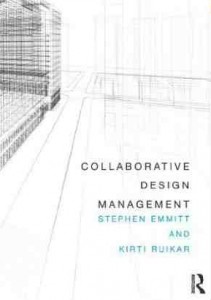
Collaborative design management – still evolving

CollabDesMgmtcoverThe development of the World-wide web during the 1990s started a technology change across architecture, engineering and construction and facilities management that continues to this day. For an often geographically-dispersed, multi-company project delivery team, the ability to send messages and associated attachments electronically was attractive, but email was not the magic bullet that design teams might have anticipated.
Paper-based drawings and documents still dominated, and most of the processes involved in their exchange were simply replicated electronically. It was difficult to ensure everyone worked from most up-to-date version of a drawing. Email ‘conversations’ could not easily be tracked across different companies’ email systems; and people could be swamped with messages needlessly copied to them ‘for information’.

In the late 1990s/early 2000s, web-based construction collaboration applications – ‘extranets’ – emerged as a potential alternative to email and paper-based communications. Instead of each company maintaining its own island of information, a single secure shared repository of project data was created, hosted by specialist Software-as-a-Service (SaaS) providers. So long as they had internet access and a web-browser, project team members could access the latest project information, annotate drawings and documents, and manage common construction processes (requests for information, change orders, etc.) online. An electronic audit trail recorded who did what and when, creating more transparent reporting than was ever possible via email.

The 1994 Latham and 1998 Egan reports also encouraged more collaborative approaches to construction project delivery. In 2002, Accelerating Change identified information technology as a cross-cutting industry issue, and recommended wider adoption of electronic systems to manage design and construction information. All very well, but successful collaboration was – and remains – more about people and processes than technology (vendors often talked about an 80:20 split).

Email, however, is still important, particularly for minor projects undertaken by small teams and involving limited exchange of design information. Other document management systems are also used. These ranged from simple FTP (file transfer protocol) sites, through intranet-type applications such as Microsoft SharePoint, to construction-specific tools that can be hosted by construction businesses.

Building information modelling (BIM), however, poses new challenges. Instead of exchanging various deliverables – written briefs, specifications, bills of quantities, design drawings, visualisations, photographs, contracts, forms, notices, etc. – project teams will be developing and progressively populating accurate digital models of the built asset.

Design collaboration will increasingly be about structured data – not drawings or documents. Models will incorporate large amounts of information, in addition to the dimensions and geometry of the various components and materials comprising the asset, and some data will be hyper-linked to yet further information held in other data sources.

Implicit in the BIM approach is an assumption of collaboration, with designers sharing data with the ultimate client, with contractors, component manufacturers and materials suppliers. This shared, jointly-developed data will be produced to higher degrees of accuracy, and poses new questions about contracts, data ownership, liability, and commercially sensitivity.

And as these issues are resolved, existing project roles and responsibilities are likely to evolve still further.

In some respects, the construction sector is following a path already beaten by the aerospace and automotive industries. Computer-driven design and manufacture created more certainty about what was required and when. Processes became progressively leaner, with greater precision, less waste, shorter supply chains and more just-in-time delivery. Off-site fabrication and modularisation demonstrate that construction is already changing, and some BIM commentators see this trend accelerating.

Ray Crotty, for example, has predicted that seamless BIM data ‘will help unify the industry’s supply chains, freeing construction from its craft origins, transforming it into a modern, sophisticated branch of the manufacturing industry.’ (Building Design review)

For the owner or operator of a built asset, this BIM-enabled, streamlined production process should see design and construction data flow seamlessly into information systems used for operation, maintenance and facilities management. Here it could also be connected to real-time data sources (from environmental indicators such as power consumption, temperature, humidity, light intensity, etc., to business productivity or other indicators showing how fit-for-purpose the asset has proved). Indeed, post-occupancy
evaluation by end-users could become a key building block for design collaboration on future schemes.

[This is an edited version of a contribution to the final chapter (‘Future directions‘) of a new book by Professor Stephen Emmett and Dr Kirti Ruikar of Loughborough University, and published by Routledge.]

Emmitt, S. and Ruikar, K. (2013) Collaborative Design Management, Routledge (April 2013) ISBN – 978-0415620758 (£27.99 paperback, 160 pages). Also available from Amazon.


Permanent link to this article: http://extranetevolution.com/2013/04/collaborative-design-management-still-evolving/

Idox acquires Artesys to grow McLaren EDMS operation

Idox Group, the parent company of engineering document control and construction collaboration and CAFM business McLaren Software, has today announced the £2m (€2.4m) acquisition of French engineering document management (EDMS) specialists Artesys International.

Artesys logoFounded in 2000, based in Rennes, Artesys provides engineering document control solutions and applications supporting the efficient and safe operation of processing plants, mainly in the oil and gas sectors in France and across Africa. It is expected to report revenues of €2.9m and operating profit of €0.4m in the year ended 31 March 2013. Idox CEO Richard Kellett-Clarke says:

“This expansion places our engineering information management division in a stronger position to support the energy & utilities and process manufacturing industries in France and the growing Oil & Gas and Mining industries in Africa.  The acquisition of Artesys will allow us to leverage our recent development work to internationalise our existing McLaren software products and further our strategic objectives of reaching new geographies.”

Strategic fit

McLaren-logoMcLaren Software has an existing office in Paris, a residue of its 2011 CTSpace SaaS collaboration acquisition (post), but this latest acquisition is more about its Enterprise EDMS business which helps EPC contractors, plant owner-operators and other customers deploy on-premise solutions to support major engineering projects. Artesys’s Opidis is used by over 8,000 engineering operations and maintenance professionals to locate validated plant documents and data. The McLaren Enterprise business has existing customers in Europe, the Middle East, US, south-east Asia and Australia, so the Artesys deal adds to its EDMS footprint by reaching into Africa.

Nonetheless, the fit is also complementary insofar as it adds further lifecycle management capabilities to McLaren’s product portfolio; it acquired CAFM business FMx in October 2012 (post), whose customers include engineering giants such as BP, ABB and Balfour Beatty Engineering Services. The process plant sector is also more sophisticated in its use of 3D modelling tools, so the acquisition will boost the wider McLaren division’s building information modelling (BIM) credentials – something highlighted when I met with McLaren’s team last December.  And, given the steady flow of Idox acquisitions over the past couple of years, who’s to say that it won’t make further strategic additions to the McLaren group?

Permanent link to this article: http://extranetevolution.com/2013/04/idox-acquires-artesys-to-grow-mclaren-edms-operation/

BIM, augmented reality and collaboration

COMITReflecting my growing interest in mobile technologies and their application in the architecture, engineering and construction sectors, I have been involved with the UK-based organisation, COMIT (Construction Opportunities in Mobile IT) for some years [Disclosure: in late 2012 I joined the COMIT management board], attending events – like its BIM and mobility conferences (post) – and looking for cross-overs into my core SaaS collaboration interests.

FiatechCOMIT collaborates with the US-based Fiatech organisation, and the two bodies have just released a new report on augmented reality, Advancing Asset Knowledge through the Use of Augmented Reality Technologies (available here). The report covers the first two phases of a three-phase study, involving Bechtel, Bentley Systems, Bosch, Costain, CrossRail, Korec and Network Rail. The project aimed to demonstrate the application of augmented reality and how it can facilitate current industry processes, exchanges of information and collaboration, and used two UK infrastructure projects as a testbed.

Costain/Network Rail AROne of these schemes was Network Rail’s London Bridge station where Costain tested use of AR to show where temporary works (eg: site hoardings, barriers, etc) would be located in the station (I recently wrote about this for an article on BIM for a forthcoming issue of the RICS magazine Building Control; photograph, right, by kind permission of Costain and Network Rail). Fiatech/COMIT believe:

The use of 3D models and handheld devices, coupled with augmented reality technology, has the potential to enable a site operator, engineer, or maintenance technician to better understand advanced modeling data. In addition, it will allow these personnel to work in a more direct and intuitive way than they would with written instructions or electronic manuals.

Having tested AR tools on smartphones and more recently on tablet devices, I will be interested to see if and how SaaS construction collaboration vendors might support augmented reality technology with their platforms. It seems a logical progression for businesses concerned with supporting efficient communication and collaboration – which are increasingly taking place in real time.

[Thanks to Matt Blackwell of Costain for assistance in getting approval to use the photo.]

Permanent link to this article: http://extranetevolution.com/2013/04/bim-augmented-reality-and-collaboration/

BricsCAD, BIM and Chapoo

chapoo-logoThe story of BricsCAD and online AEC collaboration is long and complex (BricsCAD… Bricsnet … Bricsys … Vondle – 2007 postChapoo2012 post), and appears is about to enter a new chapter subtitled “BIM”. Ralph Grabowski‘s CAD business upFront.e-zine reviews the history of BricsCAD’s architectural design software and reports:

Last week…, the company opened its kimono briefly enough to bare the briefest shadow of a plan for architecture. The company is

– writing a BIM module for BricsCAD
– using Chapoo for the online collaboration platform
– employing IFC and AECxml for data exchange
– releasing a beta in a few weeks that will run for a long time

The plan is shadowed in a Bricsys newsletter (PDF) in which Erik de Keyser gives a brief overview of building information modelling (BIM), mentions neutral standard file formats, discusses the need for a single model repository and then continues:

This process requires cooperation between major contractors as well as involvement of smaller sub-contractor with limited IT knowledge, and as such can best be provided by a cloud-based solution with zero installation hurdles and a seamless user experience. [Emphasis added]

At Bricsys we are actively working on two elements of the overall solution:

  • the basic BIM technology with our BricsCAD BIM Module which will be made available for an extended beta over the coming weeks
  • the collaborative platform for the management of BIM models, for which we will use the cloud-based Chapoo Premium service

Much of my focus in recent months has been on the BIM movement in the UK and how British SaaS-based collaboration vendors are responding. Some are well advanced in their developments, while others appear to be, er, biding their time. The BricsCAD/Chapoo integration, consolidated in February (post), has echoes of the combined Autodesk offering of Revit/Buzzsaw, and is further evidence of AEC BIM initiatives starting to take place in mainland Europe.

Update (22 April 2013) – The Chapoo website now features case studies, including one on construction of the Waal bridge in the Netherlands which used the Chapoo Premium service.

Permanent link to this article: http://extranetevolution.com/2013/04/bricscad-bim-and-chapoo/

Fiatech awards UK BIM initiative its highest award

FiatechFiatech, the US-based organisation focused on innovation in the capital projects industry, has chosen the UK Government and the UK construction industry as recipients of its highest honour, the James B. Porter, Jr. Award for Technology Leadership (news release). The award was presented yesterday in Texas to David Philp, Head of Building Information Modelling (BIM) Implementation (BIM Task Group) at the Cabinet Office.

In selecting HM Government and the UK construction industry, Fiatech Director Ray Topping noted:

“Her Majesty’s Government has shown beyond any doubt its leadership role with its BIM program. The BIM movement in the UK has far-reaching implications. We’re encouraged by the vision of both Her Majesty’s Government and the entire UK construction industry, for that vision has significant impact on the engineering and construction industry on a global scale.”

The UK Government and construction industry stand as the fifth recipient of the Porter Award, which is not an annual recognition but one given only when a worthy candidate has been judged to meet the award’s tough criteria by the Fiatech Board of Advisors.

Permanent link to this article: http://extranetevolution.com/2013/03/fiatech-awards-uk-bim-initiative-its-highest-award/

TransBit Technologies develops RoBOTic Document Control Assistants

Could ‘intelligent’ software programs revolutionise hitherto laborious document control processes?

tBits-logoI was recently contacted by Ritesh Tripathi of TransBit Technologies, a software development company based in Hyderabad in India. Its lead product, CollabWrite, is a web-based enterprise content management system which he says is used extensively to capture project records and automate workflows among the multiple firms involved in major engineering, procurement and construction (EPCs), particularly in power, mining and oil and gas.

In its Indian sub-continent core market, CollabWrite has won some substantial client projects, and occasionally competes with international SaaS collaboration vendors such as Aconex. However, there is still considerable untapped potential in these markets, partly due to ongoing cultural and process change challenges. Document controllers are still deployed to manage internal systems, and many document transactions rely on separate email and attachments, or FTP or similar file-sharing tools, and – sometimes – SaaS collaboration or on-premise ECM platforms (Ritesh named Enovia, SharePoint and Documentum). As a result, files still need to be downloaded, validated and entered into internal enterprise systems by document control staff, whose daily work may involve creating cover-sheets and transmittals, stamping drawings, etc. Paper remains important with some items repeatedly scanned, stamped and manually signed (Ritesh showed me examples of drawings that were extensively marked-up by hand, and which went through numerous analogue to digital iterations and file format changes – eg: DWG to TIFF to PDF).

Bring on the RoBOTs

tbits-robotic-imageTo automate and accelerate this document management process, TransBit has developed RoBOTic Document Control Assistants, which can aid human document controllers. These are not physical robots but software tools. Combining computer vision, artificial intelligence, digital image processing and advanced decision-making algorithms, these digital assistants can create cover-sheets and transmittals for out-bound documentation, interrogate incoming digital files, capture data – from drawing title blocks, for example – automatically, manage compliance processes, and, when necessary, highlight exceptions (errors, conflicts, etc). The latter can then be resolved by human document controllers.

Ritesh said the RoBOTic Document Control Assistants can fetch emails from project in-boxes and can be authorised to work with SaaS collaboration platforms and similar systems. In each case, the ‘Assistant’:

  1. fetches the email or transmittal
  2. identifies the type of document and its purpose
  3. visually checks the files, including identifying decision stamps
  4. performs quality checks and data reconciliation with previous transactions
  5. updates the internal system with metadata details of the decision codes, transmittal numbers and files received
  6. notifies relevant people, or initiates other relevant system workflows, and
  7. in case of conflicts, errors, etc, gets the human document controller to process exceptional items.

He demonstrated a process involving transmittal of a complex A3-size image, and the whole document acceptance process was completed in 47 seconds – far faster than could be manually achieved by the fastest human document controller. Ritesh told me that practical simulations had demonstrated that RoBOTic Document Control Assistants could reduce the work of the conventional human document controllers by up to 85%. Such productivity benefits may also be accompanied by improvements in the accuracy of enterprise record systems, and do not involve replacing existing technologies or processes: “This technology is simply an additional server in their datacenter – that can be integrated with the existing ECM.”

My take

In the UK and similar developed economies, the use of SaaS collaboration tools to exchange digital information and manage electronic workflows is well-understood, and since these platforms’ introduction in the late 1990s/early 2000s, the AEC industry has developed the necessary tools and processes to manage the ‘less paper’ (still not quite ‘paperless’) working world. However, in other markets, these approaches are still in their infancy, and many projects and the multiple organisations involved still require centralised internal records management systems.

It was clear from Ritesh’s demonstration that the manpower requirements to run such platforms could be significantly reduced by automation, and he sees opportunities to partner with SaaS vendors (and on-premise ECM providers) to make inroads into the Indian market by providing this layer of technology to extend and expedite routine document management and control. Aconex is clearly on his radar as one firm already active in the region, and the TransBits focus on EPC clients could also be interesting to McLaren Software, which has a track record of supporting major mining, oil & gas and other natural resource projects, to 4Projects which is targeting similar work in Australia (post) and the US, and to QA Software (whose QDMS is deployed by one of TransBit’s customers).

Update (3 June 2013) – Ritesh has forwarded a case study to me with some test results from running the TransBits RoBOTic Document Control Assistants on a Fortescue Metals Group mine project which was using a QA Software EDMS. The simulation results showed:

  • 100% Accuracy in transactions performed by RoBOTic Document Control Assistants
  • 75% of valid test cases processed successfully.
  • 48% of total test Cases processed successfully, meaning ability to reduce the work of human document controllers by about 50%.

Permanent link to this article: http://extranetevolution.com/2013/03/transbit-technologies-develops-robotic-document-control-assistants/

Load more