
Hello, Viewpoint For Projects

Viewpoint UK website September 2015As forewarned at the 4Projects user conference in May 2015, after some 15 years, the 4Projects brandname is being retired by its US owners, Viewpoint Construction Software. The Software-as-a-Service construction collaboration solution that has been a key player in the UK market since 2000 is now known as ‘Viewpoint For Projects‘. The former 4Projects website has been replaced by a new UK-oriented site with Viewpoint For Projects and the former Priority1 application, now Field View, the key offerings.

For those associated with the the sector, this is the latest in a series of industry landscape changes which have seen several of the early UK SaaS brand names disappear (however, if past experiences with other brands hold true, UK users may still refer to 4Projects for some months, even years to come).

BuildOnline, Bidcom, Citadon and various successor brands (eg: Sword, CTSpace) have come and gone, as has Bricsnet; Cadweb and Woobius went bust in 2014; Sarcophagus has faded from view and I rarely hear from Causeway or ePin; StoreData became iSite; Business Collaborator became Unit4 before resurrecting its original name after last year’s MBO; Germany’s Conject acquired and rebranded BIW Technologies, while RIB acquired Docia; and now 4Projects is set to fade from view, replaced by its US parent brand. Among the one-time industry SaaS collaboration leaders based in the UK, only Asite hasn’t changed its name.

4projects logoViewpoint For ProjectsAs a one-time marketeer, I admired the strong simplicity of the 4Projects brand (it was collaboration software for projects, obviously), and it was good to see the prefix applied to other products: 4Retail, 4BIM, 4Mobile, etc. However, having watched the slow – but in places still not complete – disappearance of BIW [my employer 2000-2009] and the equally gradual UK emergence of Conject, I hope that Viewpoint is vigorous in promoting its newly branded UK business, and ensuring consistent use of the new name and branding across all media. It will not want customers and end-users still referring to the product as 4Projects in two or three years’ time.


Permanent link to this article: http://extranetevolution.com/2015/09/hello-viewpoint-for-projects/

Think Project! targets France

Germany’s AEC SaaS leader think project! expands into the French collaboration market, acquiring a majority stake in PLM specialist Lascom AEC.

Thinkproject-logoLascom logoMunich, Germany-based construction collaboration Software-as-a-Service technology provider think project! has acquired a 60% stake (deal value not disclosed) in Lascom AEC – said to be France’s market leader in product lifecycle management (PLM) and cross-enterprise collaboration (CEC).

According to think project!’s news release, Lascom AEC – based near Versailles, just outside Paris (but with a US office in California too) – has a strong customer base and growth position in France, delivering its PLM and CEC solutions to construction companies, private and public asset owners, as well as engineering companies. Customers with major projects in France and abroad include Vinci, Alstom, Eiffage, EDF, Technip, Setec, Lanxess and RATP.

Think project! to date has focused mainly on the central European market (Germany, Austria, Switzerland) where it has developed a strong domestic market position, competing mainly against Conject, and grew its revenues 13% in 2014 (post) and 17% in 2013 (post). It has been developing building information modelling (BIM) capabilities (launched in July 2015), and the Lascom deal will help expand its PLM know-how while giving Lascom the benefit of the think project! group’s experience in BIM and mobile solutions.

Lascom AEC will remain an independent company within the think project! group and retain its own brand and technology base.

Think project! CEO Thomas Backmaier says:

Thomas Bachmaier“France is the second-largest economy in Europe with leading companies in construction and significant clients. Entering the French market with Lascom AEC is a major cornerstone in the international growth strategy of think project! We are very confident that Lascom AEC will contribute to the Group’s continued growth and plan double-digit growth in France in coming years.”

Jean-Louis Henriot, president of Lascom AEC says:

“We are delighted to become part of the think project! Group. It gives us the opportunity to strengthen our AEC (architecture, engineering, construction) focus. Furthermore, we can benefit from the experience and structures of the international project business of think project!”

French AEC SaaS collaboration market

Conject has also expanded into France through acquisition, buying AEC mobile specialist Wapp6 in late 2013 (post).

Historically, another key player in the French collaboration market has been idox plc subsidiary McLaren Software. It built a strong SaaS base as BuildOnline, Sword and later, 2011, CTSpace – post – but has been rather quiet since it launched its business intelligence portal and rejigged its marketing team last year. It also acquired a French business, Artesys, in 2013, but its SaaS offering seemingly only forms a small portion of a largely on-premise engineering information management, EIM, product portfolio.

The mobile AEC BIM market is also being targetted by the expanding Finalcad business (post) and by London-based but French-accented Cadbeam (post). Both of these also list Vinci as a client.

Permanent link to this article: http://extranetevolution.com/2015/09/think-project-targets-france/

OpenECX targeting subcontractors

OpenECX and its WebContractor application provides an end-to-end – purchase order to payment – SaaS-based process management platform.

The UK construction e-commerce sector isn’t one I’ve looked at that closely, particularly when it comes to managing buyer/supplier financial transactions between construction businesses. I have tended only to give it a brief mention if it involves a SaaS collaboration vendor, for example: Asite (whose Adoddle platform incorporates a procurement hub) or Causeway (Tradex) – both of which allow interchange with other hubs via the Hub AllianceCoins ETC is another competitor in this sector, as is another UK-based vendor, OpenECX, which is seemingly positioning itself to compete with Textura too.

OpenECX

OpenECX logoThe trading hub technology underpinning OpenECX was, until April 2015, previously marketed as Adaptris ECX (electronic construction exchange), having been launched in 2012 as a construction-specific business within the system integration specialist Adaptris group by former Coins executive Matthew Jones. Earlier this year, it completed a management buy-out, backed by experienced construction software investor Richard Beaton (who, incidentally, supported the November 2014 Business Collaborator MBO – post), and is now growing its sales and consultancy teams.

OpenECX describes its cloud-based trading hub, eHub3, as “the first fully system agnostic and independent cloud-based trading system for the entire construction industry”, and the company is focused on delivering e-commerce and subcontractor solutions to construction businesses. Trading in 20 countries worldwide, 700+ active trading partners include Hilti, Fergusons, Kier Group and John Sisk and Son.

WebContractor

The materials supply trading hub is OpenECX’s core product, but Matthew is particularly keen to talk about its complementing product: the company’s WebContractor applications for payment service. This provides an end-to-end – purchase order to payment – process management platform to support construction customer-subcontractor commercial relationships, including automating self-billing agreements, e-invoices, purchase orders and authenticated VAT receipts for tax purposes.

Webcontractor-screengrabPayment processes in the UK are increasingly tightly governed by the Construction Act (strictly, the Housing Grants, Construction and Regeneration Act, to give it its full title, plus the Scheme for Construction Contracts (England and Wales) Regulations). This legislation has been progressively tightened as successive governments have sought to clamp down on poor payment practices. Consequently, commercial managers and directors are under pressure to comply with requirements regarding the timely issue of acknowledgements and of notices and other communications to subcontractors under the Act. Matthew says:

We are seeing rocketing interest in WebContractor from main contractors seeking to de-risk their payment processes. An auditable SaaS-based hub like our’s gives both sides a consolidated view, improves visibility of payment progress and so helps foster trust and collaboration.

The platform has similarities with Textura-CPM (post), but has been developed in the UK for the UK, with extensive input from both main contractors and from financial services businesses who are frequently party to construction transactions. OpenECX also offers optional working capital provision (similar to Textura’s EPP) with London-based financial services partner Woodsford Tradebridge.

Once a main contractor opts to use OpenECX it takes about two months to onboard, during which time OpenECX will also start showcasing the system to the company’s subcontractors. Matthew continues:

We can quickly be taking thousands off a main contractor’s overheads if they become enterprise users. However, we can also be flexible about pricing, setting up across a few projects and allowing contractors to use as much or as little of the service as they need and paying just for what they’ve used. We also make set-up easy; our PDF-to-XML process needs no adaptors or APIs – we can start automating the process using a subcontractor’s standard PDF invoice.


Permanent link to this article: http://extranetevolution.com/2015/09/openecx-targeting-subcontractors/

Clark Construction deploys Kahua

Kahua logoClark Construction group, one of the largest general building and civil contractors in the United States, with revenues of over US$4bn per annum has been working with Scott Unger’s construction Platform-as-a-Service specialist Kahua (July 2015 post) on a major business process and workflow reengineering project (news release).

Clark embarked on a study of its business processes with the objective of dramatically reducing costs while improving overall jobsite and team productivity. It selected Kahua’s PaaS offering for its ability to both conform to their business processes and dynamically change to meet their evolving needs. Additionally, Clark favoured Kahua’s platform for collaboration and rapid application development, as well as its online marketplace with a variety of applications to address common construction industry challenges. Steve Stankiewicz, Clark’s applications development manager, said:

“We began this initiative with a goal to reduce costs, improve efficiency by streamlining key business processes, and explore better integration options with our financial systems and other third party applications. We are achieving our objectives and are very pleased with the results.”

Since rolling out Kahua, Clark has realised improved efficiency with data retrieval, as well as seamless integration with accounting systems and other essential applications. Clark has already deployed Kahua on projects across the country totalling more than $2B of work.

Permanent link to this article: http://extranetevolution.com/2015/08/clark-construction-deploys-kahua/

Exit Buzzsaw, enter “Alexandria”?

autodesk logo“A complete, connected solution for construction project teams” is being promised by Autodesk’s “Project Alexandria“. The exact nature of this solution is still under wraps, but you can sign up to get notifications once Autodesk starts spreading the word “soon”. We are told:

Project Alexandria is being built to connect your construction project teams, with capabilities like:

  • Management of all your 2D plans, 3D models and any other project documents
  • Automatic updates to document set versions, and powerful workflows and approvals
  • Anytime, anywhere access to project documents for your entire project team

Project AlexandriaOf course, with the exception of the 3D model management, Autodesk has been offering a construction project team solution since the turn of the century. As I recounted last December, Buzzsaw was its first significant foray into the online collaboration field, and it then acquired Constructware in 2006. More recently, another project, “Project Skyscraper”, became Autodesk A360 Collaboration for Revit, augmenting Autodesk mobile functionality delivered through BIM 360 Field. With images featuring mobile devices, Alexandria is clearly promising something along similar lines for team members needing project document and workflow access via a phone or tablet (already a busy and competitive market sector). Is Buzzsaw being quietly superceded? We will have to wait and see.

Update (3 September 2015) – The Project Alexandria teaser website has been amended and it’s now clear that the project relates to Autodesk BIM 360.


Permanent link to this article: http://extranetevolution.com/2015/08/exit-buzzsaw-enter-alexandria/

Textura promoting early subbie payment

Textura logoThe European arm of US construction payment management corporation Textura is starting to raise its profile in the UK, with early payment of subcontractors part of its service offering.

As I reported just over a year ago (Colin Smith leads Textura European push), Textura Europe is headed by the one-time founder and CEO of BIW Technologies and Conject, Colin Smith, and is based in Slough, Berkshire. Another European office has been established in Munich, Germany, managed by Andrea Trapp (also formerly at Conject).

Paul Bamforth - Textura EuropeDuring the past year, Textura Europe has been developing its core proposition, building a sales pipeline and refining the technology so that it will support UK and other European states’ payment processes. Colin is supported by another construction software veteran Paul Bamforth, right, formerly of Asta (developer of 27Asta PowerProject) and ProjectPlace, who is UK managing director (news release), plus UK-based product development, support and sales specialists.

In the US Textura a decade ago identified that the construction industry remained reliant on paper-based manual processes and decided to create an online invoicing and payment management platform, provided on a Software-as-a-Service (SaaS) basis: construction payment management (CPM). This remains Textura’s core product, and when I met Colin recently he told me the US business now estimates approximately US$2.5 billion in invoices are managed on monthly, with peak daily volumes of payments initiated by the CPM solution in excess of $100 million.

Supply chain finance

Alongside CPM, Textura now also provides a supply chain finance facility, announced in December 2014 (news release) and launched in early 2015, in partnership with Greensill Capital and Morgan Stanley. This ‘Early Payment Program‘ (EPP) enables a general (main) contractor to provide accelerated payment to subcontractors. Textura Corporation executive chairman Patrick Allin explained:

“EPP will address a longstanding structural challenge of the industry – namely, that work in process on a construction project is funded by the subcontractors.  Subcontractors perform the work but are typically paid for that work 30 to 60 to 90 days later. This puts pressure on a subcontractor’s balance sheet and acts to limit a subcontractor’s ability to grow and invest and in some cases leads to business failure.  This is as much of an issue for the general contractors that depend on their subcontractors’ performance as for the subcontractors themselves.  Our technology and Greensill’s expertise and funding will finally enable general contractors to address this structural challenge using Textura CPM and the EPP functionality.  Subcontractors have the potential to be paid up to 30 to 60 days earlier under this program.”

EPP is now being rolled-out alongside Textura-CPM in the UK. Textura’s European operation also provides a green building management tool, Greengrade, to facilitate LEED certification (news release) – which sounds similar to SouthFacing’s TrackerPlus (post) – and a field management tool, Latista (post).

UK marketing

Colin Smith - Textura EuropeAs well as the usual website and social media presences (a contractor payment blog, Twitter, etc), profile-raising activities to date have included a Construction News-hosted webinar on supply chain finance (“Efficient Access to Cash for the Entire Supply Chain, broadcast on 15 July), and dissemination of a survey. And the UK Textura team have been aggressively marketing the company’s services to industry associations and main contractors. Colin said there had been “some pushback” on EPP from businesses whose experience of supply chain finance has been tainted by exposure to schemes operated by some UK-based contractors – “we need to educate the market about our better alternative,” Colin said.

An early success has been achieved. The Building & Engineering Services Association (B&ES) and its umbrella body, the Specialist Engineering Contractors’ Group (SEC Group), have formally announced their support of Textura Europe CPM and EPP as tools for improving payment practices within the construction industry. In total, the SEC Group represents some 60,000 construction industry firms employing over 300,000 people, and accounts for the largest single component (by value) of construction output.

Rob Driscoll, head of B&ES’s Commercial and legal team (and a contributor to the Textura webinar), said:

“To date, the impact and measurement of Government initiatives such as project bank accounts, payment charters, prompt payment codes and revised late measurement legislation are all hampered by lack of visibility. An online payment management system – such as Textura-CPM – would resolve the problem of how to implement and manage payment processes, making monitoring payment performance transparent and easily accessible.”

B&ES and SEC Group are currently lobbying the Government to adopt digitisation across its procurement and payment process within its property portfolio (interestingly, Lex Greensill, CEO of Greensill Capital, is also an advisor to UK Prime Minister David Cameron on supply chain finance). As I tweeted during the Textura webinar, thinking about building information management, BIM: Why make construction design digital and open, but leave payment processes analogue and closed?

Collobaration integration opportunity?

Textura certainly thinks there is an opportunity to improve collaboration by streamlining financial processes and making them more transparent; it has interfaces to ERP systems – Colin mentioned Oracle, COINS, Viewpoint and CMiC – and the continued adoption of BIM, including so-called ‘5D BIM’ where cost information is incorporated into the process, could also help Textura’s European cause.

Also, in the construction collaboration sector, there appears to be growing appetite to incorporate financial reporting functionality alongside design and construction information management. Viewpoint is moving in this direction (post), for example, as are Bentley Systems and Aconex with their acquisitions of, respectively, EADOC (post) and Worksite (post), while Conject’s financial control module is already very mature. Textura-CPM seems to be a perfect extension to such platforms; integration would enable authorised users not only to access and manage design and construction information but also to view, manage and report on related payment transactions.


Permanent link to this article: http://extranetevolution.com/2015/08/textura-europe/

Aconex 2015 revenues up 24%

Aconex logo 2014In its first results announcement since its December 2014 initial public offering, Melbourne, Australia-based SaaS construction collaboration technology provider Aconex has announced that revenues for the year ending 30 June 2015 were up 24% to Au$82.4m (2014: Au$66.2; 2015 results equivalent to £37.6m, US$59.4m or €51.7m) – read Motley Fool, the AFR. This result was ahead of the expectations set at the time of the IPO, and of the forecast at the time of its June 2015 trading update.

The company declared a pre-tax profit (EBITDA) of Au$3m (2014: a loss of Au$2.13m). These numbers vary against previous reports (a loss of Au$3.2m) as the latest EBITDA is “based on core operations, which exclude ASX listing fees expense, foreign currency exchange losses, and gains/losses associated with the Francisco Partners investment” (see Aconex IPO signposts VC exit).

Regional growth varied. Australasian revenues grew by 15% to Au$36.2m; EMEA, in revenue terms, remains important, contributing Au$21.3m (up 29% – though in that region, at €14.4m, it lags behind European-based SaaS construction collaboration providers such as Conject and ThinkProject – post), while revenues in the Americas (Au$14.7m) and in Asia (Au$10.2m) grew by 37% and 35% respectively.

Leigh JasperIn trading recently affected by an international slump in prices, shares in Aconex today closed at Au$3.99, down on a 5 August 2015 peak of Au$4.4, but Aconex CEO Leigh Jasper remains optimistic about the prospects in an under-penetrated global collaboration market, the impacts of three enterprise agreements and its recent acquisitions of US-based ERP vendor Worksite and Leighton’s in-house Australasian competitor, CIMIC/Incite’s Keystone.

He is forecasting annual international revenue growth of 30%and ANZ regional growth of 15% over the ‘next couple of years’. Global equity turmoil led by China’s stockmarket rout could dampen confidence and slow the onset of some large infrastructure and building projects, but has not changed its outlook:

“There’s a confidence element, but if it’s just the share market – the share market in China is such small percentage of the overall economy – I think it may mean that projects slow coming on a bit, but we’ve got long-term clients and long-term revenue.”

Permanent link to this article: http://extranetevolution.com/2015/08/aconex-2015-revenues-up-24/

Conject eyeing cost control future

Conject the ILM groupWith electronic document management increasingly commoditised, Anglo-German SaaS construction collaboration specialist Conject believes the future will increasingly be about how businesses manage cost and programme information.
In just about every part of the supply chain, differentiation has always been difficult in the hugely fragmented architecture, engineering and construction collaboration sector, and it is no different when it comes to technology. Numerous internet startups were launched around the turn of the century, many targeting the construction drawing and document management sector. And the various vendors were all competing to win over initially sceptical construction businesses nervous about web-based technologies, about companies with little or no track records, and about replacing paper-based communications with electronic exchange of information.

Even once the principle became accepted, there was often little to choose between the various vendors; their applications all provided broadly the same functionality, so it often became a question of quality and reliability of service, of trust, and – of course (this is construction, after all) – of price. After the dotcom bubble burst, the surviving vendors gradually began to offer new options. For example, in the early 2000s, Conject (then BIW Technologies) developed Health and Safety File data capture, created a financial control module  that increased visibility of the financial implications of design changes, and added contract change control. These additions helped retain key customers such as Sainsbury’s, Bovis LendLease and Mace while also appealing to new ones, but – excepting financial control – were easily emulated by rival UK-oriented vendors.

Integration

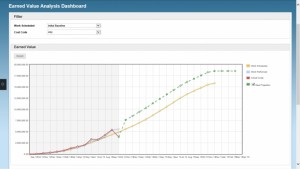
Conject EVMThe benefits of that early development of SaaS cost control expertise are now beginning to be felt, says Conject’s professional services director Nick Sansome. While rival AEC SaaS technology vendors (eg: 4Projects) have started to develop project cost management functionality (post), or have acquired businesses with that expertise (eg: Aconex acquired Worksite last month), the Conject team has been consolidating its now mature financial control toolset, including strengthening the earned value management (EVM) toolset it began promoting nearly two years ago.

However, it is not about trying to replace a customer’s existing systems, but integrating with the various applications they use. “Most construction businesses deploy numerous tools and they no longer work in isolation,” says Nick:

Nick Sansome“By developing APIs [application programming interfaces] with most of the common ERP systems – Oracle, Peoplesoft, Coda, COINS – we can ensure relevant project cost information from Conject Financial Control can be seamlessly exchanged with corporate systems. And we have also been extending our integration with Primavera P6 and Microsoft Project, as neither are particularly effective for EVM. Ultimately, our commercial management toolset will work as part of suite of Conject and non-Conject applications enabling customers to focus on the key time, cost and quality aspects of their projects, to deliver business intelligence from cross-project reporting, and to connect asset information with the project delivery piece.”

New Financial Control enhancements are being developed in parallel with changes to the core Conject project control system. The look and feel of the application is being revamped, with HTML5 used extensively to improve its reach across different devices and operating systems, email integration is being extended, a new iOS mobile application has been launched this week, and BIM-related work (see March 2015 post) in relation to model visualisation, federation and COBie/IFC data management continues. But Nick Sansome sees financial control – not BIM – as the key competitive area:

“All the vendors used to compete on their document management capabilities but these are no longer differentiators – there are many cost-effective solutions out there (Dropbox, Sharepoint, etc) – and in markets like the US document management functionality is practically given away alongside mission-critical tools to manage scheduling and project costs. BIM is making us more data-centric, and it is also increasing the opportunity to incorporate time and cost – so-called 5D BIM – and to be more focused on the asset lifecycle. These are all Conject strengths.”

ConjectPS iOS app screeniOS mobile application

The new iOS application, ConjectPC Mobile, was launched on the Apple iStore this week (Android and Windows variants will be available soon). From their iPhone or iPad, authorised users will be able to access project information and deal with information requests, approval processes, etc, direct from their devices. Notifications are presented in an easy-to-read visual dashboard, showing the number of items and using a traffic light system to indicate levels of urgency.


Permanent link to this article: http://extranetevolution.com/2015/08/conject-eyeing-cost-control-future/

APE Mobile closes Au$2m funding round

APE LogoIn October 2014 I profiled APE Mobile, a Perth, Australia-based developer of a mobile application for the construction and natural resources industries. In the latest sign of positive investor sentiment towards such businesses,* it has announced the successful closure of a Series A funding round led by Jolimont Global and Viburnum Funds.

According to a news release sent to me by founder and CEO Matthew Edwards, APE Mobile was initially looking for Au$1.5m and got access to Au$2m (c £0.94m or US$1.47m), more than originally anticipated. The funds will be used for further product development and to drive growth.

APE Mobile has apparently enjoyed rapid adoption, with monthly revenue growth of 20% in its first year since launch, and it aims to continue to establish itself as the dominant paperless site app in its field in the national and overseas market.

Matthew Edwards said:

“… Since our launch last year we had an amazing response from large enterprises and small contractors alike, with customers so far including Iluka Resources, Calibre Global and Tasman Civil. There’s a massive opportunity for us out there, with the construction and engineering market having over 1 million employees in Australia.

The raising provides us with further financial security and underpins our plans to expand on the East coast of Australia and overseas. We’re thrilled to continue helping increase efficiencies for our customers in the Construction, Mining and Oil & Gas sectors with our essential productivity tools.”

*Previously this year, I have noted successful funding rounds by GenieBelt (€0.7m; February) and Plangrid (US$18m; May). Finalcad raised €2.1m in June 2014, FieldLens closed a US$8m funding round in May 2014, and Sitedesk raised £0.435m in April 2013.

Permanent link to this article: http://extranetevolution.com/2015/08/ape-mobile-closes-au2m-funding-round/

Aconex CIMIC deal absorbs SaaS rival

Aconex logo 2014Melbourne, Australia-based SaaS construction collaboration technology vendor Aconex last week announced a strategic partnership with CIMIC Group. which will also see it absorb a rival Australian AEC SaaS technology provider.

CIMIC (not to be confused with US construction software provider CMiC, or a Shanghai porcelain and stone business) was formerly the Australian contracting giant Leighton Holdings Limited, and changed its name to CIMIC to distance itself from historic corruption allegations (reported the Sydney Morning Herald in March 2015); CIMIC apparently stands for Construction, Infrastructure, Mining and Concessions. The name change follows the acquisition and subsequent restructure of Leighton by Spanish construction group ACS in 2014. ACS was Leighton’s majority shareholder through its ownership of Hochtief.

More pertinent to the AEC collaboration market, Leighton Group also had its own collaboration technology vendor: Incite Keystone, which mainly provided its platform to group companies including Leighton Contractors, Leighton Asia, India and Offshore, Thiess, and John Holland (announced as an Aconex partner in July). Aconex’s agreement with CIMIC will see it:

  • Provide cloud collaboration services for existing and new CIMIC infrastructure and construction projects in eight countries. Aconex says the partnership will generate a minimum of Au$16.5m of committed revenue for the base management of existing and new projects over the next four years.
  • Acquire the intellectual property, assets and certain customer relationships of INCITE Keystone, a global project collaboration platform owned and operated by CIMIC. Aconex will pay CIMIC approximately Au$6.4m in cash for the acquisition of INCITE Keystone intellectual property and assets.
  • Add INCITE Keystone product development and support staff to its workforce.
  • Integrate INCITE Keystone process functionality for infrastructure projects on the Aconex collaboration platform over the next 12 months.
  • Operate the INCITE Keystone platform until all projects currently on it are either completed or transitioned to the Aconex platform.

Incite Keystone

Long-time Extranet Evolution readers may recall my enthusiastic reaction to my first sight of the Keystone platform in 2010 (post). But the innovations the then Incite team were developing and the ambitious plans they had to expand the market beyond Leighton Group and potentially into Europe all evaporated on 14 February 2011. The leadership team were sacked (see St Valentine’s Day massacre leaves Incite almost out-of-sight) and the software development process was reined back – critically damaging, in my view, the potential of Keystone to challenge the indigenous market domination of Aconex.

In July 2012, the Incite implosion appeared to be continuing, with platform users complaining of unreliability, rumours Leighton might switch to a rival AEC software platform – possibly Aconex – and talk of disposal of the business as a non-core operation. At the time, I bemoaned the lost opportunity: “if it had persevered with the Keystone innovations … [and] … grown an external … market for these tools, then today we might have been talking about a lucrative spin-off … rather than a fire sale”. Leighton initially killed off the Keystone brand, then later (2013) resurrected it as part of its Nexus Point Solutions business, but the opportunity had by this time been lost.

Instead, Aconex has been able to pick up the pieces for a modest sum, strengthen its regional position by removing a potential rival platform from the Australasian market, and deepen a relationship with the former Leighton group from whom it had already started to win business (see: Aconex wins Leighton EPC project). And just as it recently announced in relation to its US acquisition of Worksite, Aconex plans to increase research and development costs – albeit “moderately” – for the integration of Keystone process functionality on the Aconex platform, believing this additional functionality will benefit all of its customers and users worldwide.

Aconex CEO Leigh Jasper said:


Leigh Jasper“Our global position as an industry leader is significantly strengthened by this partnership with CIMIC. We’re enhancing the Aconex platform with infrastructure process technology and functionality from INCITE Keystone and adding an experienced team that has successfully served hundreds of large, complex infrastructure projects around the world. We’re also gaining a long-term enterprise commitment from one of the largest contractor groups in Australia and Asia, with projects spanning the globe, and a leader in regional infrastructure development.”

All in all, this looks like a good bit of patient business by Aconex, but also a missed opportunity by some now long-gone Leighton Holdings executives. If they had persevered with the vision set out by Sean Kaye, Scott Crane, Mike Baker, they might now have had a business that was competing with Aconex rather than being consumed by it.

Permanent link to this article: http://extranetevolution.com/2015/08/aconex-cimic-deal-absorbs-saas-rival/

Load more